Hey everyone, it’s Jake from your go-to hex bolt supplier — and today we’re diving into a question I get all the time at the shop: Can hex bolts actually hold up in marine applications? If you’ve ever worked on a boat, a dock, a seawall, or even a pool that’s connected to saltwater, you know how unforgiving that environment is. Salt, humidity, constant exposure to water — it’s not exactly kind to hardware. Let’s break this down, no fancy jargon, just straight talk from someone who’s sold hex bolts to boat mechanics, marina builders, and coastal construction crews for years. Hex Bolt
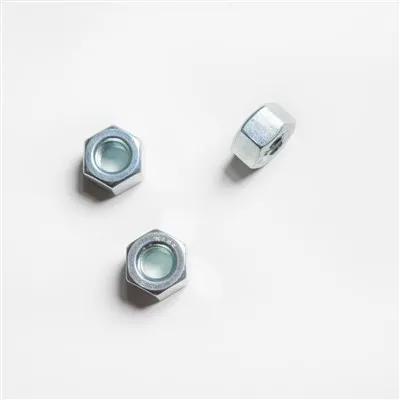
First off, let’s get the basics out of the way: marine applications aren’t just “outdoors” stuff. We’re talking about components that get submerged regularly, splashed with saltwater, or hit with that briny mist that sticks to everything. That salt is a problem because it’s a corrosive little bugger — it breaks down metal way faster than rain or freshwater alone. So if you’re thinking, “I’ll just grab any old hex bolt from the hardware store,” hold up. Not all hex bolts are created equal. The key here is the material, and that’s where most people mess up.
Let’s start with the materials that work, and the ones that definitely don’t. Carbon steel hex bolts — the cheap, silver ones you pick up for a deck project? Yeah, skip those for marine use. Carbon steel will rust through in months if it’s exposed to saltwater. I’ve seen a dock repair job where a guy used regular carbon steel hex bolts for the cleats, and by the end of the first summer, half of them snapped off just from the weight of a small dinghy pulling against them. Not a fun fix.
Now, the good stuff: stainless steel hex bolts. This is the workhorse for marine environments. But not all stainless steel is the same, either. Grade 304 stainless steel is great for freshwater, but saltwater? It’ll corrode over time, especially in areas with high chloride levels (think the Gulf Coast or places near the ocean’s edge). For marine, you want Grade 316 stainless steel. Why’s that different? It has molybdenum added to the mix, which is like a corrosion-resistant superpower. That extra element helps it fight off salt’s attack way better than 304. I’ve had a builder use 316 hex bolts on a new marina’s floating docks three years ago, and they still look almost new — no rust, no pitting, nothing. That’s the stuff you want.
Wait, what about other options? There are also coated hex bolts, like hot-dipped galvanized ones. Galvanized is where steel is coated with zinc to prevent rust. But here’s the catch: hot-dipped galvanized works for some marine stuff — like parts that are rarely submerged, maybe a fence post near the water. If they’re constantly in or splashed with saltwater, the zinc coating will wear down fast, and the steel underneath will start to corrode. It’s a cheaper alternative, but not a long-term solution for heavy-duty marine use. I always tell customers: if it’s a critical component (like a hull fitting, a mooring cleat, or a dock tie-down), spring for 316 stainless. If it’s a non-critical part that’s not submerged, galvanized might cut costs, but don’t expect it to last 10 years like 316 will.
Next up, it’s not just the material — it’s the installation and maintenance, too. Even the best hex bolt in the world can fail if you install it wrong. For marine, you can’t just drill a hole and tighten the bolt. You need to use washers — specifically, stainless steel washers that match your bolt’s material — to distribute the pressure and prevent the bolt from digging into the wood or metal it’s fastening. And don’t over-tighten it! That can strip the threads or crack the material, which lets water seep in and cause corrosion from the inside out.
Maintenance’s another big one. I tell all my marine customers to check their hex bolts once a season — usually before the start of boating season, or after a big storm that kicks up saltwater. Wipe down the bolts with fresh water to remove any salt residue, and inspect for pitting (small holes in the metal) or rust around the threads. If you spot any damage, replace the bolts right away. Ignoring a small amount of pitting can lead to a bolt snapping when you least expect it — which is never a good time when you’re out on the water.
Let’s talk about specific marine projects, because that’s where the question “can hex bolts be used?” really gets concrete. For boat construction: the hull, the deck hardware, the rigging attachments — all of these need hex bolts, and 316 stainless is non-negotiable here. I once had a customer who tried to use 304 on his sailboat’s chainplates, and two years later, a chainplate bolt corroded so bad it almost came loose mid-sail. He had to pay to re-bed the whole chainplate, which cost way more than if he’d just used the right bolts the first time. For dock construction: floating docks, fixed piers, cleat mounts — again, 316 is your guy. Even the bunks that hold boats in storage at a marina — those bolts are exposed to salt air, so they need to hold up too.
What about smaller marine stuff? Like a kayak rack for your garage, or a small boat trailer? Wait, boat trailers — that’s a big one. If you’re launching your trailer in saltwater, the wheels, the frame bolts, the hitch pins — all of those need to be corrosion-resistant. I recommend 316 hex bolts for the trailer’s critical components, and maybe galvanized for less exposed parts, but again, fresh water rinses after every use will help extend their life.
Now, let’s address a common myth: some people think titanium bolts are better for marine use. Titanium is strong and corrosion-resistant, yeah, but it’s way more expensive. Unless you’re building a high-end racing yacht where every ounce matters, 316 stainless is just as effective and way more budget-friendly. I’ve sold titanium bolts to a few professional race teams, but 9 times out of 10, 316 is the sweet spot for most marine applications.
Another thing to consider: thread quality. Hex bolts with coarse threads are standard, but for marine use, you want bolts with uniform, clean threads. If the threads are damaged or too rough, they can catch salt and moisture, leading to corrosion from the inside of the bolt. I make sure all the hex bolts we supply have precision-cut threads, so they go on smoothly and create a tight seal — which is key for keeping water out.
Wait, what about in saltwater vs. freshwater? Freshwater is way less corrosive, so 304 stainless can work there. But if you’re near the coast, even freshwater lakes that are close to the ocean can have higher chloride levels, so it’s better to go with 316 just to be safe. I had a customer on Lake Ontario, which is near the St. Lawrence Seaway (which connects to the Atlantic), and he swore by 304 bolts for years — until a heavy rainstorm washed saltwater from a nearby marina into his lake, and half his 304 bolts rusted. Lesson learned: when in doubt, upgrade to 316.
Let me share a quick story from the shop. Last year, a guy came in panicking because his fishing boat’s steering linkage bolts snapped while he was out in the bay. He’d used hex bolts he bought from a big-box store, and they were 304 stainless. He spent a day stranded, and had to replace not just the bolts, but the linkage itself because the corrosion had spread. We hooked him up with 316 hex bolts, and he came back a month later to say they were holding great, and he’d rinsed the boat with fresh water every time he used it. That’s the difference between using the right material and cutting corners.
So, to answer the original question: Yes, hex bolts absolutely can be used in marine applications — but only if you pick the right material, install them correctly, and maintain them. It’s not about if hex bolts work, it’s about which hex bolts work for your specific marine project.

Now, if you’re planning a marine build, a dock repair, or just need to replace those corroded bolts on your boat, we’ve got you covered. We stock a full range of 316 stainless steel hex bolts, in all sizes you’ll need, plus washers and installation tips tailored for marine environments. Don’t take the risk of using the wrong hardware — reach out to us and we’ll help you pick the perfect bolts for your job, no sales pressure, just honest advice from someone who’s been in the game for years.
Stainless Rods References:
- Davis, J. R. (Ed.). (2001). Corrosion: Understanding the Basics. ASM International.
- Marine Hardware Manufacturers Association. (2019). Best Practices for Corrosion Resistance in Marine Fasteners. MHMA Technical Bulletin.
- International Organization for Standardization. (2017). ISO 3506: Corrosion-Resistant Steels for Fasteners. ISO Standards.
- American Boat and Yacht Council. (2020). ABYC Standards for Marine Fasteners. ABYC Publication.
- NACE International. (2018). Saltwater Corrosion Mitigation for Metal Components. NACE Technical Report.
Jiaxing Jinling Hardware Technolgy Joint Stock Co., Ltd.
As one of the most experienced hex bolt manufacturers and suppliers in China, we also support customized service. Please feel free to buy bulk high-grade hex bolt made in China here from our factory. For quotation and price list, contact us now.
Address: No.32, Shenjiadai, Xuyouche Village, Qinshan Subdistrict, Haiyan County, Zhejiang Province, China
E-mail: jlzxl@jinlingfstn.com
WebSite: https://www.china-nut-factory.com/
