If you’ve ever stood in a valve room at a refinery, water treatment plant, or even a large commercial HVAC system, you’ve likely seen gate valves—large, sturdy, marked with those familiar parallel or wedge-shaped discs, often installed in straight-line runs where full flow is required. As a gate valve supplier with 12 years in the industry, I’ve heard this question a hundred times: “Why not just use a gate valve to throttle flow, if I can get it open a little and control how much stuff passes through?” At first glance, it makes sense. Gate valves are built to handle high pressures and large volumes, so why wouldn’t they work for partial flow? But after seeing firsthand what happens when teams make that mistake—from eroded discs that lead to unplanned shutdowns to full pipeline leaks that cost tens of thousands of dollars in downtime—I can tell you that gate valves and throttling are not a good match. Here’s why, backed by the real-world lessons I’ve lived through working with plant operators and maintenance crews. Gate Valve

First, let’s get clear on terms: throttling is the practice of using a valve to adjust flow rate by partially opening it, instead of fully opening or fully closing it. Gate valves are designed for exactly two positions: fully open (where the disc rises completely out of the flow path, offering almost no restriction) or fully closed (where the disc seats tightly against the body, creating a bubble-tight seal). Their entire engineering is built around those two states. When you compromise that design by throttling, you create a cascade of issues that start with the valve’s internals and ripple out to your entire system.
Let’s start with erosion, the most common problem I see from gate valve throttling. Think of a gate valve’s disc: if it’s a solid wedge, that wedge sits between two seat rings when closed. When you open it partially, say only a quarter turn or halfway, the disc is not fully out of the flow. The fluid (whether it’s water, crude oil, chemical slurry, or natural gas) is forced to squeeze through the narrow gap between the partially lifted disc and the seat ring. That gap is tiny, and the fluid velocity spikes to extreme levels here—sometimes 10 or 20 times the velocity of fully open flow. For perspective, a 6-inch pipe moving 1,000 gallons per minute at full open might hit 15 feet per second, but at a quarter-open gate valve, that velocity jumps to 150 feet per second. Fast-moving fluid isn’t just faster—it’s more abrasive, especially if it has sediment or particulates, which most process fluids do to some degree.
I remember a call two years ago from a mid-sized chemical plant in Ohio. Their maintenance team had installed a 12-inch gate valve on a line carrying caustic soda mixed with sand, used in their pulp processing. They thought throttling the gate would let them adjust flow to their digesters. Six weeks later, the valve started leaking. When we took it apart, the seat ring was gone—literally worn down to nothing by that high-velocity sand blasting through the partial gap. The plant was shut down for three days while we replaced the seat and disc, costing them an estimated $45,000 in lost production. The kicker? It was a simple fix: swap the gate valve for a globe valve, which is designed for throttling, and they haven’t had a problem since. That’s the kind of real cost you don’t see on spec sheets—unplanned downtime, emergency repairs, lost revenue—all from a choice that seemed cheap at the time.
Next, there’s the issue of vibration and pressure instability, which go hand in hand with partial gate valve opening. Fluid moving through a partially open gate valve isn’t smooth. The uneven gap between the disc and seat creates turbulence, which is like a series of small, constant jerks on the valve internals and the surrounding pipe. Over time, that vibration loosens bolts, cracks pipe flanges, and even wears down the valve’s stem threads. Worse, for systems with fluctuating pressure, throttling a gate valve can lead to water hammer—a sudden, destructive pressure surge. When fluid is moving through a partial restriction and you slightly adjust the gate, the flow changes abruptly, creating a shock wave that travels down the pipe. I’ve seen a 4-inch water line in a hotel’s HVAC system rupture because the maintenance team throttled a gate valve to adjust heating flow, and the water hammer cracked the pipe under a concrete slab. The repair required breaking up flooring and replacing 10 feet of pipe, costing the hotel $12,000 in emergency work and lost guest stays. Globe valves, conversely, have a streamlined disc design that controls flow smoothly, reducing turbulence and eliminating the sharp pressure spikes that cause water hammer.
Another often-overlooked problem is seal integrity. Gate valve seats are designed to seal when the disc is fully closed, creating a uniform, tight pressure between the disc and seat. When you throttle, the disc only makes partial contact with the seat, so that seal is broken. Over time, the uneven pressure on the disc can cause it to tilt or wear unevenly, leading to small leaks even when you try to fully close the valve later. For gas systems, that’s a safety hazard—even a tiny leak of natural gas can create an explosive environment. For oil lines, it’s an environmental risk that can result in fines from regulatory agencies. Last year, I worked with a power plant in Texas that had a gate valve on a natural gas feed line. They’d been throttling it to adjust furnace pressure for years, and eventually, the partial contact wore a micro-crack in the seat. By the time they noticed, the valve was leaking 500 cubic feet of gas per hour, forcing a plant evacuation. They had to call in a hazmat team, and the valve had to be replaced at a cost of $70,000, plus several hours of lost power generation. A properly sized globe valve would have handled that flow adjustment without breaking the seat’s seal.
Wait, but what about low-pressure systems? Couldn’t a gate valve work for throttling there? I get that question all the time from small business owners or facilities managers who think their 2-inch water line doesn’t have enough pressure to cause problems. But even at low pressure, the velocity issue still holds. Take a garden hose, for example—if you partially close the gate valve at the spigot, the hose will vibrate and pulse, right? That’s the same turbulence and vibration we’re talking about, just on a smaller scale. Over years of that pulsing, the spigot valve will start to leak, just like the industrial ones. I had a customer who ran a 10,000-square-foot warehouse, and they used a gate valve to throttle water to their cooling system. After three years, the valve started dripping, and when we took it apart, the disc’s edge was worn down from partial contact. If they’d used a globe valve, it would have lasted the life of the warehouse without that issue. So even for small, low-pressure systems, gate valves aren’t the right choice for throttling.
Now, let’s address the counterargument I hear: “Gate valves are cheaper than globe valves, so I’ll just use the gate valve and replace it every few years.” On paper, that looks like a cost saver, but when you factor in downtime, emergency repairs, and safety risks, it’s actually far more expensive. Let’s do a quick math example. A 6-inch gate valve costs around $800, while a comparable globe valve is around $1,200. That’s a $400 difference upfront. But if you replace that gate valve every two years, that’s $400 every two years, or $200 per year. If you use the globe valve, it lasts 10 years (that’s our standard warranty for throttling service), so that’s $120 per year. But wait, that ignores the hidden costs: if the gate valve fails unexpectedly, downtime can cost $10,000 or more per day for industrial operations. I had a refinery customer who tried to save $500 on a gate valve for a 10-inch line, and when it failed mid-throttle, the unit was down for 12 hours, costing them $180,000. That’s the kind of number that makes the upfront $400 difference laughable.
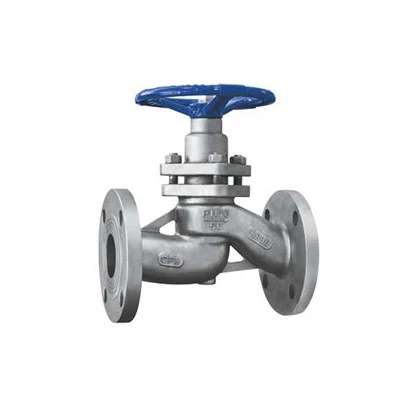
As a gate valve supplier, I’m not here to say gate valves are bad—they’re incredibly reliable for their intended purpose: full open or full closed. When you need a valve that won’t restrict flow when you need maximum volume, or a tight seal when you need to shut off flow entirely, gate valves are the best choice. But when throttling is required, they’re the wrong tool for the job. It’s like using a screwdriver to hammer a nail—you can do it, but you’ll break the screwdriver and damage the nail. The right tool for throttling is a globe valve, or in some cases, a ball valve with a V-notched disc, which are designed to adjust flow smoothly without damaging the valve or the system.
Safety Valve I’ve spent 12 years working with customers, watching their mistakes, and helping them fix them. I’ve seen gate valves fail in throttling service after service, and I’ve seen the cost of those failures. At the end of the day, it’s about choosing the right valve for the job, not just grabbing the cheapest one or the one you already have in stock. If you’re designing a new system, or dealing with a valve that’s failing because you’re using it to throttle, my team and I can help you select the right valve for your specific flow requirements, pressure, and fluid type. We don’t just sell valves—we help our customers avoid the headaches of unplanned downtime, expensive repairs, and safety risks that come from using the wrong valve for the job. If you’d like to discuss your application, need a quote, or just have questions about which valve is right for you, feel free to reach out to our team to connect for a procurement conversation.
References
- Valve Technology Association. (2021). Design and Application of Valves for Flow Control. VTA Press.
- American National Standards Institute. (2019). ANSI/ISA-75.01.01: Control Valves – Sizing Equations for Fluid Flow. ANSI.
- Miller, J. (2020). Industrial Valve Failures: Root Causes and Prevention Strategies. Industrial Maintenance Magazine, Vol. 42, No. 3, pp. 18–25.
- Petrochemical Safety Institute. (2022). Flow Control Best Practices for Refinery Process Systems. PSI Technical Bulletin 2022-04.
Wenzhou Starry Valve Co., Ltd.
Wenzhou Starry Valve Co., Ltd. is one of the most professional gate valve manufacturers and suppliers in China, also supports customized service with low price. Please feel free to buy the newest gate valve made in China here from our factory. Welcome to contact us for pricelist.
Address: No.4900, 3rd Road, Binhai Industrial Park, Wenzhou Economic & Technological Development Zone, Wenzhou City
E-mail: starryvalves@163.com
WebSite: https://www.starryvalves.com/
