Hey everyone, if you’ve ever walked into a busy café at 8 a.m. and watched a barista crank out a perfect latte in what feels like 10 seconds flat, you’ve probably used a semi-automatic commercial coffee machine without even realizing the wizardry behind it. I’ve been supplying these machines to coffee shops, restaurants, and even small boutique roasters for over 8 years now, and I still get questions all the time: “What exactly is a semi-automatic commercial coffee machine? Why not just go full automatic? And is it even worth the investment for my business?” Let’s break this down like we’re chatting over a post-shift americano—no stuffy jargon, just real talk from someone who’s set up more of these than I can count. Commercial Coffee Machines

First off, let’s get the basics straight, no fluff. A semi-automatic commercial coffee machine is the workhorse of specialty coffee spots. It’s the middle kid between manual machines (think the old-school ones where you have to hand-pump every part of the espresso shot) and full automatic machines (the ones that press a button and dump a ready latte in your cup). The key difference? You control the water flow and extraction time yourself, but the machine does the heavy lifting—heating water to the exact 195-205°F espresso sweet spot, pumping that water at 9 bar of pressure (that’s the gold standard for good espresso, trust me), and holding consistent temperature across the group heads. No more guessing if your water’s too hot or too cold; the machine handles that, so you can focus on the stuff that makes coffee taste amazing: tamping the grounds right, pulling the shot at the perfect time, and steaming milk like a pro.
Wait, let’s make that pressure part make sense because I get that number sounds random. 9 bar isn’t a pressure to blow up a balloon—it’s the amount of force needed to push hot water through finely ground espresso at the right speed. Too little pressure, and you get a watery, weak shot that tastes like burnt dishwater. Too much, and it’s bitter, over-extracted garbage. Semi-autos lock in that pressure every single time (barring a small, regular maintenance check), so even a barista who’s still learning can pull a solid shot most days. That’s why they’re the go-to for 90% of the commercial spots I work with, not the flashy full-autos that some big chains use.
Now, let’s talk about how they actually work, because seeing it in action is way better than reading a spec sheet. I walked a new café owner through setting up a three-group semi-auto last month, so I’ll use that example. Let’s say a barista needs to pull a double espresso and steam a milk for a flat white. First, they grab a portafilter (that little metal basket thing) and add their freshly ground espresso—usually 18-20g for a double, depending on the machine. They tamp it down firmly and evenly (a good tamp is like pressing a tennis ball into a pool noodle, if that helps) to make sure water flows through all the grounds at the same rate. Then they snap the portafilter into the group head (the part that heats the water), press a button to start the shot, and watch the golden brown crema (that frothy top on a good espresso) flow into the cup. Once the shot hits the right amount—usually 36-40ml for a double—they hit the stop button. That’s the semi part: they decide when the shot ends, not the machine. After that, they twist the steam wand (another part of the machine) into a milk jug, turn the steam on, and aerate the milk to get that creamy microfoam that makes lattes look like works of art. The machine handles heating the steam wand, so they don’t have to boil water on a separate stove.
Compare that to manual machines, where you’d have to pump the water yourself, measure pressure by feel, and even steam milk over a separate burner—no wonder manual machines are mostly for tiny, boutique spots with only one barista pulling a dozen shots a day. Full automatics? They do everything: grind the beans, tamp, pull the shot, steam milk, even dump the used grounds. That sounds great until you realize they’re less flexible—if you want a slightly longer shot for a customer who likes their lattes extra strong, you can’t adjust mid-pull, and they cost 2-3x more than a comparable semi-auto. Plus, most regulars can tell the difference between a shot pulled by a human barista adjusting on the fly and a machine pumping out 50 identical shots in a row. That’s where semi-autos shine.
Let’s get real about why semi-automatic commercial coffee machines are the backbone of a profitable coffee business. I see too many new owners jump into full automatics because they think it’s “easier” or “more high-tech,” but they miss the biggest perks. First: consistency, but human-led consistency. Like I said earlier, the machine handles the temperature and pressure—two of the biggest variables in bad espresso—so your shots will taste the same whether it’s 8 a.m. rush or 2 p.m. lull. But because you control the extraction, you can tweak for different beans, different roast levels, or even a customer’s specific request. I had a client last year who roasts their own beans, and they use their semi-auto to pull shorter shots for light roasts and longer shots for dark roasts—something a full automatic would never let them do.
Second: durability. Semi-autos are built to run all day, every day. The ones I supply are heavy-duty, with commercial-grade boilers that heat 10-20 cups of water at a time, so you don’t have to wait 5 minutes for water to reheat between rushes. I’ve had a semi-auto at a small bakery that’s been running 12 hours a day, 6 days a week, for 7 years—only maintenance we do is descaling every 3 months and replacing the group head gaskets once a year. Full automatics have way more moving parts (all those grinders, pistons, and waste mechanisms) that break more often, and manual machines just can’t keep up with a rush of 50+ customers an hour.
Third: cost. Let’s be honest, running a coffee shop is expensive, and every dollar counts. A good entry-level semi-auto is around $3,000-$5,000, mid-range is $5,000-$8,000, and high-end for a busy café is $8,000-$12,000. Full automatics of comparable size start at $10,000 and go way up, not to mention higher maintenance costs and more frequent repairs. If you’re a new café with a tight budget, putting that extra $5,000 toward marketing or a better coffee grinder is way smarter than blowing it on a machine that doesn’t let your baristas do their best work.
Wait, but I should also call out the downsides—no product is perfect. Semi-autos require a skilled barista, right? If your staff doesn’t know how to tamp, time shots, and steam milk, you’re going to get bad coffee. That’s why I always tell new owners to budget for barista training when they buy a machine from me—because a $5,000 machine is useless if your staff can’t use it right. Also, they’re more hands-on, so you’ll need to have a routine for cleaning: wiping down group heads after every use, backflushing the machine weekly, descaling every 2-3 months. Skip that, and you’ll get oily, stale-tasting coffee. But honestly, that’s part of the process—if you don’t care enough to clean your machine, maybe coffee isn’t the industry for you anyway.
Let’s also talk about who a semi-automatic is for, because that’s a big question I get all the time. If you’re a busy café, roastery, restaurant with a coffee bar, or even a hotel lobby that serves specialty drinks? Semi-auto is your call. If you’re a tiny coffee cart that does under 50 shots a day? A manual might work, but I still recommend a small semi-auto for the consistency. If you’re a big chain that serves 500+ drinks a day? Full automatic is fine for you, but you’re also serving a lot of people who just want a quick coffee, not a specialty beverage. If you’re a boutique spot that prides itself on the quality of every drink your barista pulls? Semi-auto is non-negotiable.
I’ve seen this play out firsthand with two clients I started working with 4 years ago. One bought a top-of-the-line full automatic for their 1,000 sq ft café in downtown Portland, thinking it would save time and keep costs low. Six months later, they were calling me every other week for repairs, and their Yelp reviews were full of comments like “all their lattes taste the same—generic.” They switched to a three-group semi-auto last year, hired a barista who’s passionate about extraction, and their reviews now talk about “amazing, unique coffee that tastes like it’s made with care.” The other client, a small bakery in the suburbs, stuck with a mid-range semi-auto, and they’ve doubled their drink sales in 3 years because regulars come in specifically for their lattes—they can taste the difference.
Another thing I love about semi-automatic machines: they’re customizable. I can help a café pick a machine with two group heads for a small space, or three for a busy rush, with a PID temperature controller (that’s the thing that keeps the water temp consistent, no guesswork) if they want extra precision, or a dual boiler so they can steam milk and pull shots at the same time (game-changer for rush hour). I even helped a dog-friendly café add a cute, custom wood panel to the front of their machine to match their decor—small touch, but it makes a big difference for their brand.
Wait, let’s address a common myth I hear: “Semi-automatic machines are only for espresso.” No way! Most of them have a steam wand for milk, plus you can use them to make pour-over coffee (some even have a hot water spout for that) or even tea for your non-coffee customers. My sister runs a brunch spot that uses their semi-auto to make lattes, espressos for their affogatos, and even hot water for their herbal teas—all from the same machine.
At the end of the day, when a café comes to me asking about commercial coffee machines, I don’t just push the most expensive one. I ask them how many customers they serve a day, what kind of coffee they want to serve, what their budget is, and if their barista team is trained or needs support. 9 times out of 10, a semi-automatic is the best fit. It’s the sweet spot between control and reliability, it makes consistent, great-tasting coffee, and it won’t break the bank.
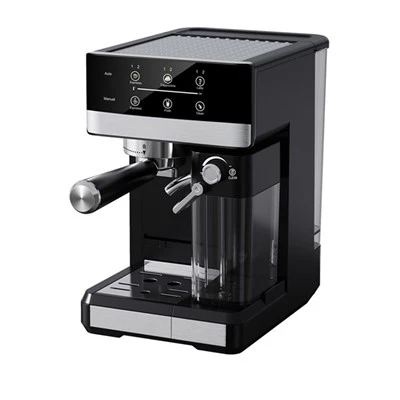
If you’re in the market for a commercial coffee machine and want to chat through what’s right for your spot, I’m here to help. We can go over different models, maintenance plans, even training options—no pressure, just honest advice from someone who’s been in the game long enough to know what works and what doesn’t. Don’t hesitate to reach out and let’s get your spot serving better coffee.
Home Espresso Machine References:
- Specialty Coffee Association. (2021). SCA Brewing and Espresso Standards.
- Coffee Machine Association. (2022). Commercial Espresso Machine Buyer’s Guide.
- National Restaurant Association. (2023). Kitchen Equipment Durability Report for Foodservice Operations.
Foshan City Moccona Electric Co., Ltd.
With abundant experience, we are one of the leading manufacturers and suppliers of commercial coffee machines in China. We warmly welcome you to buy bulk durable commercial coffee machines from our factory. If you have any enquiry about cooperation, please feel free to email us.
Address: Room 202, Building 16, Tongde Intelligent Manufacturing Park (TDIMP), No.9 Guizhou Avenue East, Shangjia Community, Ronggui Street, Shunde District, Foshan City, Guangdong Province
E-mail: tim@mocconaelectric.com
WebSite: https://www.mocconaelec.com/
