Hey there, if you work in industrial automation, you’ve probably interacted with pneumatic actuators without even realizing it. These workhorses are behind everything from opening a valve on a chemical processing line to moving a conveyor belt in a packaging plant. As someone who’s been supplying valve components for over a decade, I’ve seen firsthand how a small hiccup in any of their parts can throw an entire operation off schedule. Today, let’s break down the core components that make a pneumatic actuator tick, no stuffy textbook jargon required. Valve Components
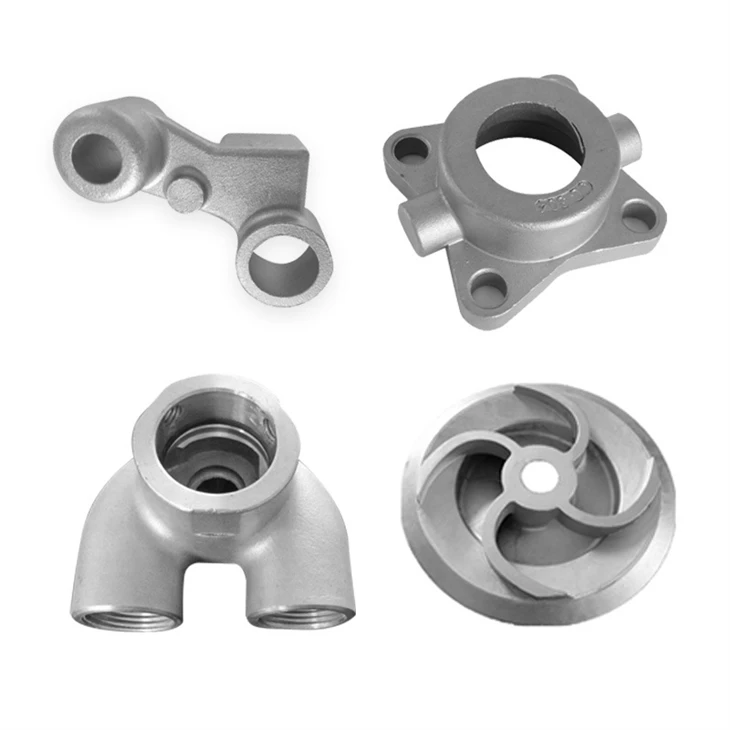
First, let’s get the basics straight: a pneumatic actuator turns compressed air into mechanical motion, usually linear or rotary. Think of it like a super fancy air-powered lever. But it’s not just one big hunk of metal—its performance depends on every tiny part working in sync. Let’s start with the part that holds it all together: the actuator body. This is the outer shell, usually made from cast aluminum, steel, or sometimes stainless steel for harsh environments. Aluminum is the go-to for most general uses because it’s light and corrosion-resistant, but steel steps up for high-pressure applications (think refineries or heavy manufacturing) where extra strength matters. I’ve seen guys try to cut corners with cheap, thin aluminum bodies for outdoor water treatment plants, and within a year, they were rusting out. Lesson learned: the body isn’t just a container—it’s the foundation that keeps everything sealed and stable.
Next up, the power source itself: compressed air. Wait, is that a component? Kinda, but let’s talk about the parts that control that air flow. First, air ports. These are the two (sometimes more) holes on the actuator body where you hook up your airline. For linear actuators, one port sends air in to push the piston forward, the other pulls it back. For rotary actuators, it’s similar but for turning motion. Pro tip from our team: always make sure your air ports match your airline size. If you use a ¼-inch port with a ½-inch line, you’re wasting air and slowing down the actuator. We see this all the time with new installers who guess instead of checking specs.
Now, the heart of the linear pneumatic actuator: the piston. That’s the round disc inside the body that moves back and forth. Its job is to catch the air pressure and translate that into force. Pistons are usually made of lightweight materials like aluminum or fiberglass, and they ride on a rod that sticks out of the body. Wait, that rod is the piston rod—super important. It’s the part that connects the actuator to whatever you’re moving (like a valve stem, conveyor arm, etc.). Piston rods take a beating: they’re exposed to dust, moisture, and constant friction, so they’re almost always coated in hard chrome or stainless steel to prevent corrosion and wear. I once got a emergency call from a brewery where a corroded piston rod on a tank valve had broken, shutting down fermentation for 12 hours. We rushed a replacement rod out, but it could’ve been avoided with a simple coating check.
Seals are another unsung hero here. If air leaks out, the actuator loses power, and that’s bad news. There are a few key seals: piston seals, rod seals, and end caps seals. Piston seals are on the edge of the piston, keeping air from moving around it instead of pushing it. Rod seals wrap around the piston rod, keeping air in and dust or water out. End cap seals sit where the body meets the two ends (the cap that covers the front of the piston and the back), sealing those gaps. Most seals are made from nitrile rubber (Buna-N) for general use, but if you’re working with chemicals or extreme temps, you’ll need Viton or EPDM. Last year, a food processing customer switched to Viton seals because their process used steam, which ate through regular nitrile. That small change cut their actuator failure rate by 80%. We always make sure to ask clients about their environment before recommending seals—one size definitely doesn’t fit all.
What about the rotary actuators, those that turn instead of push? They have a slightly different setup, but the core components are similar, with a twist: the output shaft. Instead of a straight piston rod, rotary actuators have a shaft that sticks out, usually with a spline or keyway to attach to a valve or other rotating part. These are common for ball valves and butterfly valves, where you need to open and close a round gate. I’ve seen rotary actuators on water treatment control valves last 15+ years because their seals and shafts are built for consistent, low-stress turning, while on-off rotary actuators used in a metal stamping plant might need replacement every 5 years from constant high-force cycles.
Now, let’s talk about the parts that control when the actuator moves. Without these, it’s just a hunk of metal with air in it. First, the solenoid valve. This is the control device that sends compressed air to the right port at the right time. It’s like a switch for the air: when you hit a button or get a signal from a PLC (programmable logic controller), the solenoid switches, sending air to move the piston. Solenoids come in 2-way, 3-way, 4-way—don’t get overwhelmed, just know that a 4-way solenoid is standard for most actuators because it lets you control both forward and backward motion. We stock a ton of these, and most of the time when an actuator stops working, it’s not the actuator itself—it’s a bad solenoid. It’s cheaper to replace a $50 solenoid than a whole $500 actuator, so we always tell customers to check that first.
Then there’s the air filter regulator. This is a small but critical component that cleans the compressed air and adjusts its pressure. Compressed air from a plant line has dust, moisture, and oil, all of which will eat away at seals and pistons over time. The filter catches those contaminants, and the regulator makes sure the air pressure is consistent—too high, and you’ll blow seals or bend piston rods; too low, and the actuator won’t have enough force to move the valve. I had a client once skip the air filter to save $20, and within 6 months, their entire line of actuators had seized up from dirty air. That ended up costing them $10,000 in replacements and downtime—way more than the filter would’ve cost. Moral of the story: don’t skip the small parts.
Now, what about mounting kits? Wait, is that a component? For valve actuators, yes. The actuator needs to mount to the valve body, and mounting kits make that easy. They include brackets, bolts, couplings, and keyways to line up the actuator and valve perfectly. If the mount is off even a little, the actuator can bind, wear out faster, or not work at all. We make custom mounting kits too, because every valve is a little different—some are NPT, some are flanged, so a one-size-fits-all kit won’t cut it. Last quarter, a customer ordered a standard kit for a butterfly valve, and it didn’t fit because their valve had a metric shaft instead of imperial. We swapped it for a custom metric kit the next day, and they were back up and running by noon.
Another thing we see a lot of: position sensors. These are small devices that tell you exactly where the actuator is—like if the valve is fully open or fully closed. They send a signal back to the control room, so you don’t have to guess if a tank is open or closed. Sensors can be magnetic (most common for pneumatic actuators) or inductive, and they attach to the outside of the actuator body near the piston. I’ve had customers ask if they need sensors, and for small, simple lines it’s optional, but for critical applications like chemical processing or water distribution, they’re non-negotiable. You don’t want a valve stuck half-open causing a spill or a water main break.
Wait, let’s clear up a common mix-up: pneumatic actuators vs. hydraulic actuators. Hydraulics use oil, pneumatics use air, which is cheaper, cleaner, and safer for most industrial uses. That’s why 70% of the valve actuators we supply are pneumatic. But their components are similar in theory, just built differently—hydraulic parts handle higher pressure, but pneumatic parts are lighter and easier to maintain.
Now, let’s get real about maintenance. Even the best components won’t last forever if you skip basic upkeep. Every 6 months, we recommend doing a quick check: listen for air leaks around the rod or ports, wipe down the piston rod to check for scratches, inspect seals for cracks, and test the pressure regulator. Most small issues here are easy to fix before they turn into big problems. I had a regular client who did these checks, and when their rod seal started leaking, we swapped it in 10 minutes, no downtime. If they’d ignored it, it would’ve led to a full actuator replacement.
At the end of the day, every component of a pneumatic actuator plays a part. You can have a top-of-the-line actuator body, but if your seal is cheap, it’ll fail. You can have a great piston, but if your solenoid is wobbly, it won’t move. That’s why when we supply valve components, we don’t just sell parts—we help clients match the right parts to their application. Whether you’re a small packaging shop or a big refinery, we’ve got the components that fit your needs, no overcharging, no vague specs.
If you’re dealing with actuator failures, need to replace a worn part, or are building a new line and want to get it right the first time, reach out to our team. We don’t do pushy sales—we answer questions, send sample parts, and even help you figure out what size and type of actuator you need. No generic quotes, no confusing jargon, just straightforward help for your valve and automation needs. Don’t let a bad component stall your operation—let’s connect and find the right parts for you.
Forklift Parts References:
- Pneumatic Actuator Design and Application Guide, Fluid Power Industry Association, 2022
- Industrial Valve Automation Components, Global Automation Report, 2023
- Seal Material Compatibility for Pneumatic Systems, Manufacturing Engineering Journal, 2021
- Preventive Maintenance Best Practices for Pneumatic Actuators, Plant Operations Magazine, 2022
Taizhou Liuhuan Machinery Co., Ltd.
As one of the most professional valve components manufacturers and suppliers in China, we’re featured by quality products and good service. Please rest assured to buy customized valve components made in China here from our factory. For quotation, contact us now.
Address: Xinyuan Industrial Zone, Damaiyu Street, Yuhuan City, Zhejiang Province,China
E-mail: tzlhmachining@gmail.com
WebSite: https://www.tzlhmachining.com/
