If you’ve ever stood in front of a shelf, staring at a pile of crumpled race bibs, tarnished metal medals, and random race swag tucked into drawers under your bed, you know the feeling: that quiet mix of pride and mild chaos when you try to remember which 10K you ran three years ago, or why you have three half-marathon medals that all look exactly the same. As someone who’s spent the last five years working with runners and managing our company’s medal inventory (yes, I’m the one who fields emails from local running clubs asking for bulk race medals and also helps my cousin organize his own 12-year-old’s medal collection), I’ve learned that tracking a running medal collection isn’t just about checking boxes—it’s about preserving the stories behind each piece, and making sure no medal gets lost in the shuffle. It’s not rocket science, but there are science-backed, low-effort ways to do it that work for both casual joggers and people who have more medals than they can display on a wall. Running Medals
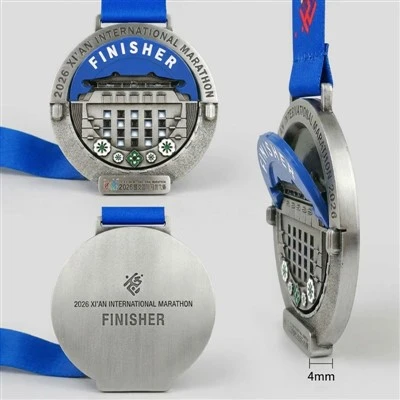
First, let’s talk about why tracking matters beyond just “being organized.” A few months back, a client of ours—someone who’d run 18 marathons and had a medal for every single one—came to me panicking. His apartment had a small fire in the kitchen, and he’d lost three medals from his first few marathons. He’d never written down which races they were, or where he’d kept the bibs, so he couldn’t even ask the race directors for replacements. That’s the thing: each medal isn’t just metal. It’s proof of 2 a.m. training runs in the rain, the time you hit a wall at mile 20 and kept going, maybe a silly themed race like a color run or a zombie run that you did with your best friend. Losing that memory stings more than a lost race number. So the first rule of tracking: treat each medal like a small, meaningful record, not just a trinket.
Now, let’s get to the practical, science-based ways to track your collection. I’ve tested most of these on my own 67 medal collection (I know, it’s not as big as some of the ultra runners I work with, but I’m a proud casual runner) and they’ve worked for everyone from my grandma, who only runs 5Ks, to a guy who’s run 42 races and needed a way to keep track of his race history for a book he’s writing.
The low-tech, no-fuss method is what I call “Medal & Bib Pairing with a Physical Log.” I know, it sounds old-school, but studies from the American Psychological Association show that writing things down by hand improves memory and makes you more likely to stick to a routine. Here’s how to do it: Get a small, spiral-bound notebook (or a cheap, printable log that you can grab for free from our site—we’re always updating these for runners) and a folder for each medal. For every race you complete, pin the original race bib to a plain piece of cardstock, write the race name, date, distance, your finish time, and one small note—like “ran this with my sister” or “hills were brutal” or “got a free beer at the finish line.” Then, slide the medal onto a small plastic hook (you can find these at any craft store—they’re made for hanging kids’ art) and tape that hook to the cardstock, right next to the bib. Slip the whole thing into a labeled pocket in your notebook, or a binder with tabbed dividers for each year. I tried the digital apps first, but I lost my phone twice last year, so the physical binder is my backup—and now I actually look at it more often, flipping through to laugh at the time I accidentally ran a 5K backwards. The key here is to make it specific enough to jog your memory later, but not so long that it feels like a chore. You don’t need a novel—just a tiny detail that’s yours.
If you’re a digital person (I get it, I spend half my day on spreadsheets for our medal orders), there are tools that work too, and they’re backed by data on how people retain information. Apps like RaceRaves or Strava let you log your runs, but if you want a dedicated medal tracker, our team built a simple spreadsheet template that’s free for anyone to use—it’s got columns for race name, date, distance, medal design, finish time, and even a space to add a photo. Wait, photos matter—studies from the University of California, Los Angeles, found that pairing text with images improves long-term recall by 65% compared to text alone. So snapping a quick photo of your medal next to your post-race snack (don’t lie, post-race snacks are the best) and adding that to your log makes it way easier to remember the story later. I use a Google Sheet for mine, because I can access it on my laptop at work, my phone when I’m at a race expo, and my tablet when I’m putting up new medals. I even linked it to my Strava account, so when I log a run, it automatically adds the race info to the spreadsheet if I enter the medal number (most race medals have a small number on the back now, which is a good trick to use—jot that down too, if your race has one). The downside? You have to remember to update it, which is why I set a 10-minute reminder on my phone every Sunday to log the races from the weekend. If you skip that, it piles up, and suddenly you’ve got three months of unlogged medals.
For people who have a lot of medals—like, the kind that fill a whole display case and then some—tracking can feel overwhelming, but there’s a middle ground between a binder and a spreadsheet. We worked with a group of ultra runners last year who have over 200 medals each, and they came up with a “Display & Log Hybrid” system. Here’s how it works: instead of tucking all your medals away, you hang them on a wall or a medal tree (we sell some of these, by the way, but you can also make one with a wooden board and some hooks). Then, next to each medal, you stick a small, removable label with a number. That number corresponds to an entry in a spreadsheet or a notebook that has the full race details. So if you see Medal #17 on your wall, you pull out your log and see it’s the 2021 Boston Half Marathon, your time was 2:17, and you forgot your hat so the sun burned your ears. This works because it lets you show off your medals without the clutter of labels on each one, and it’s easy to update when you get a new one—just add a new number and a new entry. The ultra runners told us this system saved them hours every month, because they could see their collection at a glance instead of digging through boxes to find a specific medal.
Now, let’s talk about common mistakes people make when tracking their medals. First, don’t just log the race name and date. I’ve seen so many people have a log that says “2019 10K” and then they can’t remember if it was the city 10K, the Halloween 10K, or the one where they ran with their dog. Add a small identifier—like “Halloween 2019 10K” or “Dog Race 2019 10K”—and you’ll thank yourself later. Second, don’t wait too long to log or pair your bibs. I made that mistake once: I ran a 10K in 2020, stuck the bib and medal in a drawer, and when I pulled them out six months later, I couldn’t remember the race name because I’d lost the race confirmation email. Logging within a week is perfect—you’ll still have the race info in your inbox, and the memory is fresh. Third, don’t forget to store your medals properly while you’re tracking them. If you just stack them in a drawer, they’ll scratch each other, and the metal might tarnish. We recommend storing them in small, individual plastic sleeves (the kind you use for trading cards work great) until you’re ready to log them, so they stay in good shape. Tarnish ruins the look, and it’s hard to tell which medal is which if they’re all scratched up.
Another thing we see a lot: people want to track their medals but don’t know where to start. If you’re new to running, or you only have a handful of medals, start small. Pick one method—maybe the binder method, since it’s the easiest for small collections—and track the next race you do. Once that feels routine, add another. You don’t have to track every single detail right away. The goal is to preserve your memories, not to create a super-detailed archive that stresses you out.

Here’s a personal example: Last year, I ran a local 5K that was themed after a 90s movie. The medal had a tiny Michael Jordan sticker on it (don’t ask, it was a weird race), and I ran it with my 16-year-old niece. I almost skipped logging it, because I had a big project at work that week, but I jotted a note in my binder: “90s Movie 5K, 10/2023, ran with Lila, medal has MJ sticker.” A month later, my niece’s best friend saw the medal and asked about it, and we were able to tell the whole story—including how Lila tripped on a curb 100 yards from the finish and still finished, even though her shorts were covered in dirt. If I hadn’t logged that tiny detail, that story would’ve been forgotten. That’s the point of tracking: it’s not about being perfect, it’s about keeping the little moments alive.
Basketball Medals Now, if you’re ready to grow your race medal collection (and maybe make tracking even easier), we’d love to help. Whether you’re organizing a local race, planning a fundraiser, or just need bulk medals for your running club, our team can work with you to create custom, high-quality medals that are durable and designed to stand out—so you’ll have even more stories to track. We’ve worked with everything from small 5K races to large marathons, and we know how important it is for each medal to feel special, just like the races themselves. If you’re interested in discussing your medal needs, reach out to our team to learn more about how we can support your next event or collection.
References
- American Psychological Association. (2022). The science of handwritten note-taking and memory retention. APA Journals.
- University of California, Los Angeles. (2021). Image-text pairings improve long-term memory for personal mementos. UCLA Memory Research Lab.
- Running USA. (2023). 2022 Road Race Participation Report. Running USA Industry Insights.
- National Association of Sports Collectibles Dealers. (2022). Best practices for storing and preserving athletic medals. NASCD Guide to Sports Memorabilia.
Global Art Gifts Co., Ltd.
Global Art Gifts Co., Ltd. is one of the most professional running medals manufacturers and suppliers in China. We are committed to providing high quality customized products with competitive price. Welcome to buy bulk durable running medals in stock here from our factory. Also, pricelist is available.
Address: Hushan Tech Park, Shiwan, 516127 Huizhou China
E-mail: nicole@globalartgifts.com
WebSite: https://www.globalartgift.com/
