Hey everyone, let’s cut to the chase—if you’re in the fastener, automotive, or heavy machinery game, you’ve probably heard the term cold heading thrown around, but have you ever stopped to wonder what makes the whole process work seamlessly? Let me break it down for you: I’m a cold heading dies supplier, and trust me, those dies aren’t just random metal chunks—they’re the unsung heroes that turn plain wire into every tiny part you use daily. Cold Heading Dies
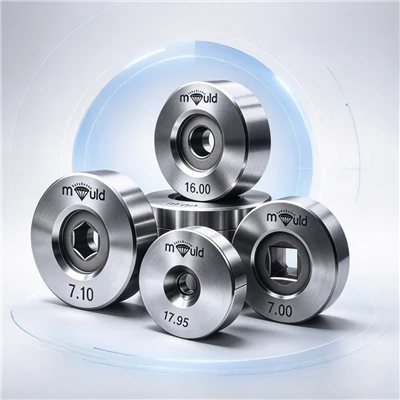
First off, let’s nail what cold heading even is, in case you’re new. Unlike hot forging, where metal’s heated up to make it malleable, cold heading forms metal at room temperature (or super close to it). That’s a game-changer because it’s faster, uses less energy, and makes parts way more consistent. But here’s the catch: you can’t just push a steel wire through a machine and get a bolt or screw without the right dies. Those dies are the customized tooling that shapes the metal into the exact profile you need—no mess, no extra material waste, no finishing headaches later.
Now, what are these dies actually used for? Let’s start with the basics: fasteners. Bolts, screws, nuts, rivets—you name it. Think about the bolts holding your car’s wheels on, or the tiny screws in your phone, or the rivets in your jeans. All of those are cold headed, and the dies I supply are what carve the threads on the bolt shank, form the hex head, or shape the flange on a rivet. No dies? You’d be stuck with wobbly, inconsistent fasteners that break way too easy. I’ve worked with shops that tried to cut corners with cheap dies, and they ended up redoing half their runs—total waste of time and cash.
But it’s not just small fasteners. Cold heading dies are also used for a ton of automotive components that don’t look like “fasteners” at first glance. Stuff like axle pins, valve stems, transmission parts, and even suspension hardware. Let’s take valve stems for example: those have to fit perfectly into an engine’s cylinder head, right? Too loose and you get leaks, too tight and you crack the metal. My dies are precision-ground to hit tolerances within microns—like, way smaller than the width of a human hair. That’s how you get parts that work reliably under high pressure and constant use.
Heavy machinery is another big one. Construction equipment, farm tractors, mining gear—all those use massive cold headed parts. Think big bolts for crane booms, pins for bulldozer blades, or spacers for conveyor systems. These parts have to withstand insane torque and heavy loads, so the dies need to be made from tough materials too—usually high-grade tool steel, sometimes with coatings like titanium nitride to make them last longer. I don’t just sell dies; I customize them for each job. If a customer needs a 2-inch axle pin for a new farm tractor, I adjust the die’s profile, hardness, and finish to match their exact wire size and production speed.
Wait, let’s not sleep on consumer goods, either. Yeah, your kitchen appliance’s hinge pin? Cold headed. The rivets holding your bike’s frame together? Cold headed. Even the parts in power tools that you use every weekend—all shaped with cold heading dies. A few months back, I worked with a company that makes power drills; they used to machine their pins from solid steel, which wasted 30% of the material. When they switched to cold heading with the right dies, material waste dropped to almost zero, and their part strength actually went up because cold working metal makes it denser. That’s a win-win for everyone.
Now, why does the die’s quality matter so much? I see it all the time: a customer comes to me frustrated because their production line is breaking constantly, their parts are inconsistent, or they’re changing dies way too often. Most of the time, it’s because they bought cheap dies from some random supplier that cut corners on material or machining. My dies are made to handle high cycle counts—some can run 100,000+ parts before they need a refresh. Cheap dies might only make 10,000 parts before they wear down, meaning downtime, wasted material, and higher cost per part. That’s the mistake a lot of new shops make: they look for the lowest price, not the right value.
Let me walk you through a quick example of how a die is used in action to make a bolt. First, the cold heading machine pulls a steel wire through a straightener, cuts it to length, and feeds it into the first station. That’s where the first die does its job: it shapes the tip of the bolt, cuts the head blank, and gets the metal ready for the next station. Then it moves to a second die station, which forms the hex head, trims any extra material, and threads the shank. Some bolts even go to a third station for finishing touches. If any of those dies are off by even a tiny bit, the bolt won’t thread right, it might strip under torque, or it’ll get stuck in the machine. I’ve had customers send me bad parts, and 9 times out of 10, it’s a worn or misaligned die causing the problem.
Another thing I want to clarify: cold heading dies aren’t one-size-fits-all. Sure, there are standard dies for common ¼-inch bolts, but most custom parts need a custom die. If you’re making a specialty fastener for a medical device (think tiny screws for surgical instruments), the die has to be super smooth to avoid scratching the metal, which is critical for safety. If you’re making a part for aerospace, the die has to be even more precise because aerospace parts have zero room for error. I work with customers across all these industries—from medical device makers to aerospace shops—because one size never fits all.
Now, let’s talk about the little-known use case: electrical components. Yeah, the pins in your wall outlets, or the terminals in your laptop charger—those are cold headed too. They need to be conductive, strong, and corrosion-resistant, so cold heading is perfect because it doesn’t mess with the metal’s conductivity like some other processes. The dies shape the thin copper or brass wire into the exact terminal shape, making sure it fits snugly into connectors without falling out. I didn’t even realize how many random parts use cold heading until I started this job—once you start paying attention, you see it everywhere.
Here’s a reality check for anyone in the industry: if you’re using cold heading, investing in good dies isn’t an expense, it’s an investment. I’ve had a customer that switched to my dies and saw their production downtime drop by 40% right away. They were changing dies every 2 weeks before, now they go 8 weeks between changes. That’s less time waiting for new dies, less time fixing jams, more parts shipped. For a shop making millions of parts a year, that adds up to thousands of dollars in savings, easy.
I also do repair and reconditioning for dies, by the way. A lot of people think once a die is worn out, you throw it away. But if it’s made from good tool steel, I can grind out the worn areas, re-cut the profile, and harden it again for a fraction of the cost of a new die. That’s a huge perk for small to mid-sized shops that don’t want to dump cash on new dies every time something wears. I’ve saved customers thousands doing reconditioning work, and they come back because they know I’m not just trying to sell them a new die every time— I’m trying to help their business run better.
Let’s address a common question I get: can cold heading dies only be used for steel? No way. I’ve made dies for brass, copper, aluminum, even stainless steel. Aluminum is tricky because it’s soft and can gall (stick to the die), so I use special coatings on those dies to prevent that. Stainless steel is tough because it’s corrosion-resistant, but it’s also hard on dies, so I use higher-grade tool steel and better heat treatment to make them last. The material of the die has to match the material being formed— that’s where my experience comes in, I know exactly what works for each job.
So who should care about cold heading dies? If you’re a production manager at a fastener shop, an automotive parts maker, a construction equipment manufacturer, even a small shop making custom parts—these dies are the backbone of your production. You can’t make quality parts without them, plain and simple. And it’s not just about making them; it’s about getting dies that are made to last, customized to your needs, and supported by a supplier that knows what they’re doing.
I’ve been doing this for long enough to know a good die from a bad one. I’ve seen the difference a well-made die makes in a production line: smoother runs, less waste, higher quality parts, happier customers. If you’re dealing with constant issues with your cold heading process—jams, inconsistent parts, short die life—odds are, it’s time to switch your die supplier.

If you’re ready to stop dealing with the headache of bad dies and start getting tooling that works for your production, hit me up. I’ll walk through your needs, help you pick the right die material and design, even do a reconditioning quote if you have old dies lying around. No sales pitches, no pressure, just straight talk about what your shop needs to run better.
PCD Dies References:
- "Cold Forging: Fundamentals and Applications" by John M. Allwood, Butterworth-Heinemann, 2012
- "Tool Steel Die Manufacturing for Cold Forming" by ASM International, 2018
- Fastener Industry Association Annual Report, 2023
- "Cold Heading Process Optimization" by Manufacturing Engineering Magazine, Q3 2022
Hejian Strains Of Hard Alloy Mould Co., Ltd.
As one of the most professional cold heading dies manufacturers and suppliers in China, we’re featured by quality products and good service. Please rest assured to wholesale durable cold heading dies made in China here from our factory. Also, custom service is available.
Address: Tangzhuang Industrial Park, Hejian City, Hebei Province
E-mail: limei@mouldzy.com
WebSite: https://www.mouldzy.com/
