Hey there! If you’ve ever dug into motor tech for industrial drives, EVs, or industrial automation, you’ve probably heard of Switched Reluctance Motors (SRMs) — but you might not have spent much time on their dynamic response, right? As a supplier who works with these motors every day, I get it: a lot of folks focus on the specs (torque, speed, efficiency) but skip the dynamic stuff, which is actually the make-or-break for how a motor performs in real, messy applications. Let’s break this down like we’re chatting over a coffee (or a quick Zoom, since that’s how most of our convos go these days) — no stuffy textbook jargon, just what actually matters when you’re picking a motor. Switched Reluctance Motor
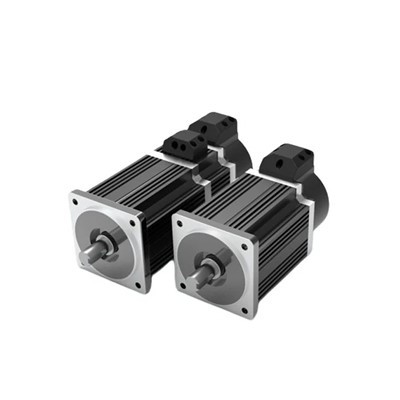
First off, let’s define dynamic response in plain terms: it’s how fast the motor reacts to a change in what you ask of it. Need a 20% torque boost in 100ms? Need to drop speed suddenly to avoid a collision? That’s dynamic response in action. Unlike induction motors (your basic off-the-shelf workhorses) or permanent magnet synchronous motors (PMSMs, the fancy ones in Teslas), SRMs have a totally different design — no permanent magnets, just laminated steel rotors with no windings, and stator windings that you switch on and off intentionally. That design is why their dynamic response is both super unique and, let’s be real, sometimes tricky to nail down.
Let’s start with the big factors that shape SRM dynamic response. First, torque ripple. Wait, I know — everyone complains about torque ripple with SRMs, but here’s why it ties directly to dynamic response. Torque in an SRM only happens when the stator windings are energized to pull the rotor teeth into alignment; there’s no torque when they’re out of that alignment zone. So if you switch the windings on too early or too late, or don’t do it smoothly, you get that jolting torque ripple. That ripple doesn’t just feel weird (it’s like a shaky coffee machine mid-brew) — it slows down the motor’s reaction time. Think of it like driving a car where the gas pedal jerks instead of smoothly adjusting: you take longer to hit the speed you want, and you might even overshoot a little before settling.
Then there’s the rotor inertia. SRMs typically have lighter rotors than, say, induction motors because no magnets mean fewer heavy parts. That sounds like a win for dynamic response — lighter rotor = faster spin-up, right? But here’s the catch: because there’s no magnets to hold the rotor’s magnetic field steady, the rotor’s position (which tells you when to switch the windings) has to be super precise. If your position sensor is off by even a degree, you mess up the switching timing, which kills response time. We’ve seen this so many times with new clients: they swap an old induction motor for an SRM, expect a quicker pickup, but their cheap sensor lags a bit, and the whole system feels slugglish. That’s not the motor’s fault — it’s the sensing setup.
Another thing: the power electronics. SRMs aren’t plug-and-play like other motors; they need a dedicated driver (that’s the box that controls when to energize each stator phase). If your driver is slow, like if it can’t switch current on and off fast enough, that’s going to limit how quickly the motor can adjust torque. A lot of budget drivers skimp on this, but for dynamic applications — think conveyor belts that need to speed up to handle a sudden load, or robotic arms that have to pivot fast — a good driver paired with the right SRM is non-negotiable. We always tell clients: don’t cut corners on the electronics if you care about how the motor reacts.
Now, let’s talk about real-world performance. Where do SRMs’ dynamic response shine? Let’s take EVs, for example. A lot of new EV makers are looking at SRMs because they can handle sudden torque spikes — like when you’re merging onto a highway and need to accelerate fast — way better than some older induction motors. Because we can adjust the current in each stator phase super quickly, we can dial up torque in milliseconds. That’s a big deal for heavy vehicles, too: delivery vans that carry variable loads need the motor to adapt fast, and SRMs do that way better than motors that rely on permanent magnets (which can demagnetize if you push too hard too fast, by the way).
But SRMs do have a downside when it comes to dynamic response: at very low speeds, that torque ripple I mentioned gets even more noticeable. If you’re running a pump that needs to spin slowly and smoothly, a standard SRM might have a slight jitter at startup, unlike a PMSM which is super quiet and smooth at low RPM. But here’s the thing: we’ve fixed that. As a supplier, we tweak the winding design and the switching algorithms (that’s the code that tells the driver when to turn phases on) to minimize low-speed ripple. We’ve got clients in packaging machinery that run SRMs at 100 RPM with almost no jitter — you can’t even tell the motor is running, let alone that it’s an SRM. It just takes the right setup, not a generic off-the-shelf SRM.
Wait, let’s clear up a common myth: a lot of people think SRMs are “less efficient” than other motors when it comes to dynamic loads. But that’s only if you’re using a bad driver or poor switching logic. When optimized, SRMs actually waste less energy when you’re changing loads quickly — because there’s no permanent magnets to create drag when the motor isn’t being used. I’ve had a client in material handling who swapped their old PMSMs for our SRMs, and their energy use dropped by 18% even though their dynamic response was just as fast. That’s a win-win, right?
Now, how do we test SRM dynamic response? For us, it’s not just lab tests on a bench — we put motors through real-world simulations. We hook them up to dynamometers that apply sudden loads, like a forklift picking up a 5,000 lb pallet mid-spin, and measure how fast the motor can adjust torque without lag. We also test for overshoot: how much the motor goes past the target speed before settling. A good SRM will have less than 5% overshoot, which is critical for precision applications like robotic assembly lines. If your motor overshoots, you can have parts misaligned, wasted time, or even broken equipment — that’s the kind of thing that makes engineers call us and ask, “Why isn’t my motor performing?” More often than not, it’s because they didn’t test the dynamic response under load, not just no-load speed.
Let’s talk about use cases where SRM dynamic response is a game-changer. Take wind turbines: the pitch system (which adjusts the blades to catch the right wind) needs to react super fast if a gust hits. If the pitch motor lags, the turbine can get damaged. Our SRMs are used in several small wind turbine brands because their dynamic response is fast enough to adjust the blades in 50ms, which protects the equipment and keeps energy production steady. Then there’s elevators: if you’ve ever waited for an elevator that jerks when it starts moving, that’s a motor with bad dynamic response. Our SRMs have smooth acceleration and deceleration, so the elevator ride is way quieter and more comfortable, even when it’s adjusting speed for different floors.
But I’d be lying if I said SRMs are perfect. When would their dynamic response be a problem? If you need extremely precise, ultra-low-speed operation (like a medical pump that moves tiny amounts of fluid without any ripple) — a standard SRM might not cut it, though we do have modified models for that. Or if you’re using a super basic controller that can’t handle fast switching. That’s where our team comes in: we work with clients to tailor the motor and driver setup to their specific needs, not just sell them a stock SRM.
Here’s the big takeaway for anyone looking at SRMs: dynamic response isn’t a one-size-fits-all metric. It depends on how you integrate the motor — the driver, the sensor, the control logic — as much as the motor itself. That’s why being a supplier isn’t just about shipping a motor; it’s about helping clients test, adjust, and optimize for their dynamic needs. We’ve had clients come to us after struggling with SRMs from another vendor, saying theirs lagged on load changes. We swapped out the driver and adjusted the switching algorithm, and suddenly their dynamic response was 30% faster — no need to buy a whole new motor. That’s the value we bring.
Gear Motor So if you’re shopping for a motor, don’t just ask “What’s the RPM?” or “What’s the torque at peak?” Ask about dynamic response: how fast it reacts to load changes, how much torque ripple there is under dynamic conditions, and what kind of controller works best with it. If you’re not sure where to start, feel free to reach out — we’ll walk you through our process, share real test data from applications similar to yours, and help you pick the right SRM setup that does exactly what you need. No sales pitch fluff, just straight talk.
References
- Cheng, K. W. E., & Chau, K. T. (2019). Switched Reluctance Motors: Design, Control, and Applications. John Wiley & Sons.
- Miller, T. J. E. (2018). Switched Reluctance Motor Drives: Theory, Design, and Performance. CRC Press.
- Rahman, K. M., & Schulz, S. E. (2020). Dynamic Response Characteristics of Switched Reluctance Drives for Electric Vehicle Applications. IEEE Transactions on Industry Applications, 56(3), 2897–2906.
Zibo Auric Mechanical and Electrical Technology Co., Ltd.
As one of the leading switched reluctance motor manufacturers and suppliers in China, we warmly welcome you to buy advanced switched reluctance motor for sale here from our factory. All customized motors are with high quality and competitive price.
Address: B419, High-tech Entrepreneurship Park, High-tech Zone, Zibo City
E-mail: cui@auricmotor.com
WebSite: https://www.auricmotor.com/
