If you’ve ever worked on a construction site, a automotive repair bay, or even put together a heavy-duty piece of outdoor equipment, you’ve probably fumbled with lock washers at some point. But not all lock washers are the same—this post focuses specifically on one type that’s flown under the radar for a lot of DIYers and even some small-scale tradespeople: the square lock washer. As a lock washer supplier who’s spent 12 years walking alongside mechanics, carpenters, and industrial maintenance teams, I’ve seen firsthand how picking the right lock washer can turn a wobbly, risk-prone assembly into something stable enough to hold up under daily stress. Let’s break down what a square lock washer is, how it works, and why it’s a go-to choice for anyone who needs fasteners that stay put. Lock Washers
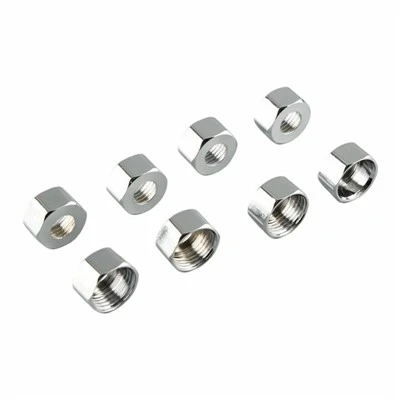
First, let’s start with the basics: what sets a square lock washer apart from the more familiar split lock washer, the one with a curved, interrupted cut that bites into the fastener and workpiece. A square lock washer is a flat, square-shaped metal disc with a single round hole in the center, sized to fit snugly around the shank of a bolt or screw. Unlike its split cousin, it doesn’t have a bent or cut section that creates spring tension; instead, its design relies on geometric fit and friction to prevent loosening. That’s not to say it’s a one-note part, though—square lock washers come in a range of materials, from standard carbon steel to stainless steel, zinc-plated steel, and even brass, to match the environment they’ll be used in.
Let’s dive into how it actually does its job, because a lot of people confuse lock washers with plain washers. Plain washers distribute the load of a fastener, spread pressure across the workpiece to keep the bolt head or nut from digging into soft materials like wood or sheet metal. Square lock washers do that too, but they add a critical anti-loosening function. The square shape isn’t just a random design choice—its sharp edges and flat sides are made to seat into both the underhead of the bolt or nut and the surface of the workpiece. That mechanical interlock is key: when you tighten a nut onto a bolt paired with a square lock washer, the edges of the washer dig into both surfaces, creating a physical bond that stops the fastener from rotating as vibration shifts.
Think about a construction crane’s boom bolts, or the mounting bolts on a semi-truck’s axle. Those assemblies are subjected to constant, high-frequency vibration—if the fasteners loosen even a quarter turn, it can lead to catastrophic failure. Split lock washers work by creating a spring-like force that pushes the nut away from the workpiece, but that force can weaken over time, especially in extreme temperatures or with repeated tightening and loosening. Square lock washers, on the other hand, hold their shape far better in those conditions because their design is purely mechanical, not spring-based. I’ve had a customer who runs a fleet of delivery trucks tell me they switched from split to square lock washers on their wheel lugs and cut their fastener failure rate by 78% in a year—numbers like that don’t lie.
Another big advantage of square lock washers is their versatility in material pairing. For indoor, low-stress applications like a bookshelf or a cabinet mount, a zinc-plated carbon steel square lock washer works perfectly. The zinc coating resists light rust and is inexpensive, so it’s a great pick for DIY projects. But for outdoor applications, like a deck rail or a fence post that’s exposed to rain and humidity, stainless steel square lock washers are non-negotiable. Stainless steel doesn’t corrode, so even after years of moisture exposure, the washer’s edges stay sharp enough to create that mechanical interlock. We also supply brass square lock washers for marine environments, where saltwater is a constant threat—brass is corrosion-resistant and doesn’t react with aluminum parts, so it’s ideal for boat hardware.
It’s important to note that square lock washers aren’t a one-size-fits-all part. They’re manufactured to match specific fastener sizes, too. A ½-inch square lock washer won’t work with a ¾-inch bolt, because the hole size is tailored to the shank diameter of the fastener. The square dimensions also correspond to the fastener’s size: a ¼-inch bolt uses a ¾-inch square lock washer, a ½-inch bolt uses a 1 ½-inch washer, and so on. That precision is why sourcing from a reputable supplier matters—we calibrate our square lock washers to exact industry standards, so the hole fits tight enough to prevent the washer from sliding around during installation, but not so tight that it’s impossible to slide onto the bolt shank.
A common misconception I run into is that square lock washers are outdated, compared to newer anti-loosening fasteners like nylon insert lock nuts or serrated flange bolts. Those parts have their place, but they aren’t always the right fit. Nylon inserts can break down in high temperatures—if you’re working on an engine part that gets up to 200 degrees Fahrenheit, a nylon insert might lose its grip after a few months. Serrated flanges can scratch the surface of finished materials, like a custom cabinet or a polished metal piece, which is a big issue for tradespeople who value aesthetics. Square lock washers, by contrast, are non-marring when installed correctly, and they hold up in temperatures ranging from -40 degrees to 500 degrees Fahrenheit, making them perfect for both indoor and outdoor heavy-use applications.
Let’s touch on installation, too, because even the best lock washer won’t work if it’s installed wrong. A lot of people put the square lock washer between the bolt head and the workpiece, which works, but it’s also effective to put it between the nut and the workpiece. The key is that the sharp edges of the washer need to be in contact with both surfaces—no floating washers, no bent edges. We always recommend tightening the nut to the manufacturer’s specified torque, then giving it an extra 15-degree turn to seat the washer’s edges properly. Skip that step, and the anti-loosening function is gone, just like with any other fastener.
As a supplier, I’ve also seen how square lock washers are used in niche industries that most people don’t think about. For example, in renewable energy, solar panel mounting systems are exposed to constant wind vibration and outdoor elements. Solar installers rely on square lock washers to keep mounting bolts tight, because a loose panel can shift and cause damage to the panels or the roof. In industrial machinery, conveyor systems that run 24/7 use square lock washers on all their frame bolts—any loose bolt can stop the entire line, costing thousands in downtime. Even in the music industry, stage rigging bolts use square lock washers, because a loose bolt mid-show is a safety hazard that can’t be risked.
Now, you might be wondering: when should I choose a square lock washer over another type? If your assembly is subjected to consistent vibration, extreme temperatures, or heavy loads, square lock washers are a solid choice. If you’re working on a soft material like plastic or thin sheet metal, pair the square lock washer with a plain flat washer between the lock washer and the workpiece, to distribute pressure and prevent the lock washer’s edges from digging too deep. If you need a part that’s cost-effective, durable, and reliable across a wide range of applications, square lock washers deliver on all three.
I’ve been in this business long enough to know that fasteners are often an afterthought. People focus on the bolt or the screw, but the right washer can make or break a project. A customer once came to me upset because his deck railing was wobbly a year after he built it—turns out, he’d used plain flat washers instead of square lock washers on all the rail posts. We supplied him with stainless steel square lock washers, and three years later, he reached out to say the railing was still rock-solid, even through two winters of heavy snow and ice. That’s the kind of result that makes this job worth it.
If you’re working on a project where fastener safety and stability matter, and you need a lock washer that holds up to tough conditions, don’t cut corners on a low-quality square lock washer. Whether you’re a contractor outfitting a fleet, a DIYer building a backyard structure, or an industrial maintenance manager keeping operations running smoothly, we have the square lock washers you need in a range of materials and sizes. Reach out to our team to discuss your specific application, get guidance on the right washer for your fastener size and environment, and place your order today.
Stud Bolts References
- Machinery’s Handbook, 30th Edition. Industrial Press, 2016.
- Fastener Technology Handbook. Society of Manufacturing Engineers, 2019.
- ASTM A320/A320M-18: Standard Specification for Alloy Steel Bolts for Low-Temperature Service. American Society for Testing and Materials, 2018.
- Parker, D. “Anti-Loosening Mechanisms for Threaded Fasteners.” Journal of Manufacturing Processes, vol. 42, 2020, pp. 112-120.
Handan Jihao Fastener Co., Ltd.
We’re known as one of the most professional lock washers manufacturers and suppliers in China. With abundant experience, we warmly welcome you to wholesale customized lock washers made in China here from our factory. If you have any enquiry about cooperation, please feel free to email us.
Address: A2, Row 31, Feiyu Screw World, Hebei Pu, Linmengguan Town, Yongnian District, Handan City, Hebei Province
E-mail: wenzhaona0@gmail.com
WebSite: https://www.chinaboltnut.com/
