As a polyether TPU supplier with over a decade of hands-on experience working with manufacturers across automotive, medical, and consumer goods sectors, I’ve learned that product quality isn’t just a buzzword—it’s the difference between a batch that powers a client’s new line of durable phone cases and one that cracks after a month, or a medical component that meets FDA biocompatibility standards and one that gets rejected at final inspection. Polyether TPU, with its unique mix of flexibility, hydrolysis resistance, and low temperature toughness, is prized for high-performance applications, but its quality relies on every step of the supply chain, from raw material selection to post-production testing. Over the years, I’ve watched too many quality issues stem from shortcuts that seem small at the time, so today I’m breaking down the concrete, actionable steps we take at our facility to ensure every polyether TPU shipment leaves our yard ready to perform as intended. Polyether TPU
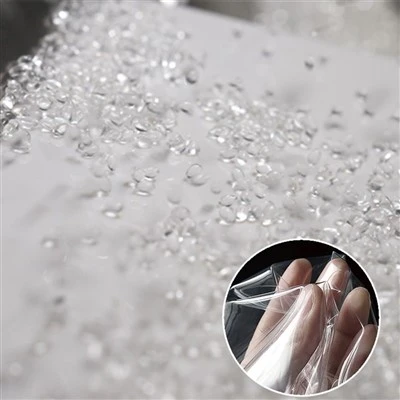
Let’s start where quality begins: raw material validation. Too many suppliers cut corners here by sourcing generic polyols or chain extenders that save a few cents per pound but wreak havoc on the final product. For polyether TPU specifically, the base polyether polyol is the backbone—this is what gives the resin its resistance to oils, moisture, and cold weather, so if that polyol is of low molecular weight or has residual water content, you’ll end up with a TPU that’s too brittle or prone to foaming during extrusion. At our company, we don’t just take suppliers’ COAs (Certificates of Analysis) at face value. Every batch of polyether polyol, isocyanate, and chain extender arrives at our lab, where our chemists run three critical tests before it even hits the production line: hydroxyl value, water content via Karl Fischer titration, and viscosity at 25°C. Last year, for example, we had a polyol supplier send a batch that claimed 0.05% water content, but our testing picked up 0.12%—a small difference that would have led to bubbling in finished automotive seals, which would have failed their pressure tests. We rejected the entire batch on the spot, and that’s a call we never regret. We also audit our raw material suppliers twice a year, not just via Zoom calls—we show up at their facilities unannounced to check their storage conditions (polyols need to be kept in airtight, temperature-controlled tanks to prevent moisture absorption) and their batch tracking systems. A reliable raw material partner isn’t someone who quotes the lowest price; it’s someone who can consistently meet our strict in-house specs, because if they slip up, we’re the ones left holding the rejected product for our clients.
Next, process control during manufacturing—this is where consistent quality lives, and it’s the area where we’ve invested the most in our facility over the past five years. Polyether TPU is produced via a two-step polymerization process: prepolymer formation and chain extension. If either step is off, the molecular weight distribution (MWD) of the final resin will be uneven, leading to finished parts that have some areas that are too soft and some that are too hard, or worse, inconsistent tensile strength. Let’s break down our process steps to make this tangible. First, during prepolymer formation, we strictly control the reaction temperature to within ±1°C—even a 2°C spike can cause side reactions that create hard, brittle micro-domains in the TPU. We use automated temperature sensors that adjust our jacketed reactors in real time, not just manual thermometers that require operator checks every hour. Then, when it’s time for chain extension, we measure the stoichiometric balance of isocyanate and hydroxyl groups to within 0.1%—this is called the NCO/OH index, and a deviation of even 0.5% can lead to a TPU that’s either under-crosslinked (weak, prone to tearing) or over-crosslinked (too rigid). We also have a full-time process engineer on-site during every production run, not just a shift supervisor who’s handling paperwork. I’ll give you a recent example: a client came to us with a batch of polyether TPU pellets that had 15% variation in melt flow index (MFI) across the batch. After digging in, we found their previous supplier had been running reactor temperatures for half-shifts at full capacity and half-shifts at lower capacity, leading to uneven molecular weight. Our process isn’t perfect, but we have standard operating procedures (SOPs) that require every parameter to be logged electronically, with alerts if it drifts outside our set limits—no exceptions. We also test every production batch mid-run and at the end of the run, not just the first and last 500 pounds. That mid-run test catches issues like a slightly misaligned screw on our extruder before it can ruin 10,000 pounds of resin.
Once the polyether TPU is produced as pellets, the downstream processing (when our clients extrude, mold, or cast our resin into parts) is where our quality support really adds value, because we know that even the highest-quality resin can be ruined if processed incorrectly. A lot of our clients are small to medium manufacturers who might not have a team of polymer engineers on staff, so we’ve built our quality assurance to include hands-on support, not just a COA. First, we provide detailed processing guidelines for every grade of polyether TPU we sell. For example, our medical-grade polyether TPU (used in catheter components) has a specific drying requirement: it needs to be dried at 80°C for 4 hours at <0.01% moisture content before extrusion. If a client skips that drying step, the moisture will react with the resin during processing, causing bubbles in the catheter wall that would make it unusable for medical applications. We don’t just send a one-page sheet—we hold pre-shipment training calls for new clients, walk them through our drying and extrusion settings, and even send a senior applications engineer to their facility for a full day of support if they’re running a new line. Last year, a startup making wearable fitness bands called us because their first batch of our polyether TPU was streaky and prone to tearing during molding. Our applications engineer visited their plant, realized they were using a drying temperature 20°C lower than our guideline, and adjusted their settings—their next run was 98% good parts, and they’ve been a repeat client ever since. We also work with clients to adjust our resin grade if their specific processing equipment is different. For example, a client using a small 10mm extruder might need a slightly lower MFI grade than a large automotive molder that uses a 100mm extruder, because lower MFI resin flows better through smaller, tighter extruders. We don’t sell a one-size-fits-all grade, and that’s why our clients come back—we tailor the resin to their processing capabilities, not the other way around.
Now, testing and verification—this is the final check before a shipment leaves our facility, and it’s not just for show. We have an in-house testing lab that’s ISO 17025 accredited, which means our test results are recognized globally, a must for clients exporting to regions with strict regulations like the EU or Japan. For every batch of polyether TPU, we run six core tests to ensure it meets both our internal specs and the client’s specific requirements. First, we test tensile strength and elongation at break: our standard polyether TPU has a tensile strength of ≥30 MPa and elongation of ≥500%, but we can adjust this for custom grades, like a high-modulus grade for industrial hoses that needs 45 MPa tensile strength. Second, we test hydrolysis resistance, which is a key advantage of polyether TPU over polyester TPU—our resins retain ≥80% of their tensile strength after 1,000 hours of aging in 70°C water, a critical spec for outdoor furniture parts or automotive under-the-hood components. Third, we test biocompatibility for our medical grades, following ISO 10993 standards, which includes cytotoxicity, sensitization, and irritation tests—no untested resin leaves our lab for medical use. Fourth, we test moisture absorption, because even 0.03% absorption can cause issues in parts used in humid environments. Fifth, we test Melt Flow Index (MFI) at 190°C with a 2.16 kg weight, ensuring consistent flow for processing. Sixth, we do a visual inspection of every pellet batch to remove any discolored or agglomerated pellets—sometimes a stray pellet from a previous run can get into the batch, and we pick those out manually and with an air classifier to ensure a uniform product. We also keep a 25-pound sample of every batch for two years, so if a client has a quality issue down the line, we can pull the sample and test it to identify if the issue was our resin or their processing. That level of accountability builds trust, and we’ve had clients come to us years after first working with us because they know we stand behind our products.
One thing I’ve learned over the years is that quality isn’t just about following standards—it’s about communication. Too many suppliers treat a sale as the end of the relationship, but at our company, we consider our clients’ success our success. That means we check in with clients 30 days after they receive a shipment to ask if they’ve had any issues with processing, and if they have, we troubleshoot with them immediately instead of waiting for a formal complaint. Last quarter, a client making garden hoses reported that our polyether TPU was sticking a bit to their extrusion die. We realized the die temperature they were using was slightly higher than our recommendation, so we sent them a new grade with a slightly higher molecular weight that processed better at their die temp, and the issue was resolved in 48 hours, no charge, no fine print. We also share our quality data transparently—our COAs for every batch are available online 24/7 for clients to access, and we’ll share raw test data if a client needs it for regulatory documentation. For small businesses that don’t have a dedicated quality team, that transparency is invaluable, because it means they don’t have to wonder if the resin they’re using is compliant or consistent.
Of course, there are always challenges. Raw material prices fluctuate, and sometimes suppliers have shortages, but we never compromise on quality to cut costs. A few years ago, there was a global shortage of MDI, a key isocyanate used in polyether TPU, and many suppliers started mixing in cheaper, lower-grade MDI to make up for the shortage. We chose to pause production for two weeks instead, working with our existing MDI supplier to secure a dedicated allocation, because we knew that mixing in low-grade MDI would lead to TPU with inconsistent hardness and poor durability. That pause cost us a month of revenue, but it saved us from losing three key clients who would have left for a supplier that cut corners, and that’s a trade-off we’ll always make. We also invest in regular upgrades to our equipment—last year we replaced our 15-year-old reactor system with a new automated one that has better temperature control, and we’re adding a Fourier-Transform Infrared Spectrometer (FTIR) to our lab next month, which will let us test the chemical composition of every pellet batch in real time, not just after a 24-hour lab test. Technology isn’t the answer to every quality issue, but it’s a tool that helps us catch problems faster and be more consistent.
At the end of the day, ensuring the quality of polyether TPU products boils down to three core principles: never cutting corners on raw materials, controlling every step of production to be consistent, and standing by our clients with testing and support, not just a product. If you’re a manufacturer working with polyether TPU for automotive seals, medical tubing, industrial hoses, or any high-performance application, I know that finding a reliable supplier is hard—there are plenty of companies that quote low prices and deliver inconsistent product, but at our facility, quality is in every batch we ship.

If you’re ready to discuss your specific polyether TPU needs, want to request a sample, or have questions about our testing or process control, don’t hesitate to reach out to our team. We’re here to help you find the right grade for your application and ensure your final parts meet your quality standards, no matter how strict they are.
Polyether TPU References:
- "Thermoplastic Polyurethanes: Properties, Materials, and Applications", Hanser Publishers, 2019
- ISO 10993-5:2009, Biological evaluation of medical devices — Part 5: Tests for in vitro cytotoxicity
- "Polyether vs. Polyester TPU: Performance Differences in End-Use Applications", Journal of Applied Polymer Science, Vol. 137, No. 12, 2020
- ASTM D412-16, Standard Test Methods for Vulcanized Rubber and Thermoplastic Elastomers—Tension
Singbon New Materials(Shandong) Co., Ltd.
With abundant experience, we are one of the most reliable polyether TPU manufacturers and suppliers in China. We warmly welcome you to wholesale advanced polyether TPU at low price from our factory. If you have any enquiry about quotation and free sample, please feel free to email us.
Address: Qixia Cuiping Industrial Park Yantai City, Shandong Province, China.
E-mail: DBG1@singbonpu.com
WebSite: https://www.tpusingbon.com/
