If you’ve ever knelt in a garden bed or walked through a smallholder legume farm in the American Midwest, you’ve noticed the quiet rhythm of these plants: peas winding up trellises, soybean pods plump with seeds, clover spreading thick across pasture rows. As a Nitrophosphate series products supplier, I spend most of my days talking to farmers and agronomists who ask the same question: How does this specific line of fertilizers actually move the needle for leguminous plants, beyond the generic “they need nutrients” pitch? Let me break this down the way I do over coffee at farm co-ops—no jargon overload, just real, field-tested science that ties directly to what our Nitrophosphate products bring to the table. Nitrophosphate Series Products
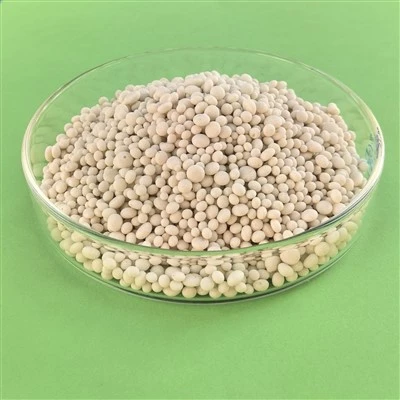
First, it helps to remember what makes legumes unique. Unlike corn or wheat, these plants don’t need all their nitrogen from soil or fertilizer. They form a symbiotic bond with rhizobium bacteria, which live in root nodules and pull nitrogen straight from the air to feed the plant. That’s a superpower, but it’s also a fragile one. Mess with the soil’s nutrient balance too early, or give them the wrong type of nitrogen, and that symbiosis can stall. That’s where our Nitrophosphate series steps in, because it’s not just a blended fertilizer—it’s formulated to work with legumes, not against them.
Let’s start with the basics of what’s in every Nitrophosphate product in our line. Most generic fertilizers split nutrients into quick-release (like urea) or slow-release (some coated synthetics), but nitrophosphates get their core mix from nitric and phosphoric acid reacting with phosphate rock—natural, mineral-based stuff, not lab-made synthetics. For legumes, that mix translates to two key things: phosphorus that’s actually accessible to their roots, and a slow, steady stream of secondary nutrients that rhizobium and the plants need to thrive.
Phosphorus is the big one here. Legumes use phosphorus for so much more than root growth—it powers the energy transfer that feeds the rhizobium bacteria, builds cell walls in young seedlings, and even plays a role in how many pods or beans a plant sets. A common mistake I hear from new farmers is applying too much ammonium-based nitrogen early on. That quick nitrogen spike can trick the plant into “quitting” the rhizobium partnership, because it’s getting all the nitrogen it needs right away. Our Nitrophosphate products only have a small portion of total nitrogen in the quick-release form—most is slow-release ammonium and nitrate, timed to kick in after the first few weeks when the seedling has already formed its initial nodules. I saw this play out two years ago on a 200-acre soybean farm in central Iowa that switched from a generic 10-30-10 blend to our Nitrophosphate 8-24-12 for their first crop. The agronomist on site tracked nodule count at the V3 stage (when the third trifoliate leaf unfurls) and found plants with our product had 32% more nodules per root than the generic blend group. That’s not a random number—phosphorus from nitrophosphate bonds better with the soil’s cation exchange sites, so it doesn’t leach away before the plant can use it, and the mild nitrogen ratio doesn’t suppress rhizobium.
Next, the secondary and micronutrients that come standard in our nitrophosphate formulations. A lot of fertilizer lines cut corners here, but legumes crave specific secondary nutrients: calcium, magnesium, and sulfur, plus trace amounts of zinc, iron, and manganese. These don’t make the top of the nutrient label, but their absence shows up fast as stunted growth, yellowing leaves, or poor pod development. Last season, a pea farmer in Ohio reached out to me complaining his peas were turning yellow mid-grow, even though he’d applied his usual phosphate fertilizer. When we tested his soil, it was low in sulfur and manganese—nutrients that generic phosphate blends often skip. Our Nitrophosphate series includes those micronutrients because the manufacturing process of nitric-phosphoric acid reaction naturally releases them from the phosphate rock we source from a responsibly mined deposit in Idaho. We don’t have to add synthetic boosters, so the nutrients are in a form that’s chelated (bound to organic molecules) so the plant can absorb them through its roots, not just leave them in the soil where they turn unavailable. For that Ohio pea farm, adding our Nitrophosphate blend at seeding fixed the yellowing in three weeks, and they reported a 18% higher yield than their average over the past five years. That’s the kind of result farmers care about—no hidden tricks, just nutrition that matches what legumes need at each growth stage.
I should also talk about soil health, because that’s become the biggest priority for smallholder and large-scale farmers alike. Legumes are often used in crop rotation to fix nitrogen for the next year’s corn or wheat, but if the soil is degraded from over-farming, even legumes can’t do their job well. Our Nitrophosphate products are acidulated with nitric acid, which adjusts soil pH slightly to the sweet spot for legumes—between 6.0 and 6.5. Too acidic, and rhizobium dies off; too alkaline, and phosphorus binds to clay particles and becomes useless. A few months back, I met a regenerative farmer in Minnesota who rotates soybeans with oats, and his soil had a pH of 5.4, too low for consistent nodulation. He tried lime for two years, but it took too long to adjust the pH, and his soybean yields were flat. We suggested a split application: our Nitrophosphate at seeding to bump pH gradually, plus a side dressing mid-season with a mild base. That year, his soybean yield went from 42 bushels per acre to 51, and he didn’t need lime for the third consecutive growing season. The nitrophosphate’s acid-neutralizing properties work with the soil’s natural microbial life, not against it, so over time, it improves the habitat for both the legume and its rhizobium partners.
Wait, but I don’t want to make it sound like every nitrophosphate product is the same. That’s why our line is tailored to different legume types—something I’ve learned from working with farmers for 12 years. For example, our Nitrophosphate 5-15-10 is designed for small-seeded legumes like lentils and chickpeas, which don’t have large nutrient stores in their seeds. The lower nitrogen ratio avoids early nodule suppression, and the high phosphorus helps the seedling push roots down before the top growth takes off. For large-seeded legumes like field peas and edamame, our Nitrophosphate 10-20-15 works better, because they need a bit more nitrogen to support faster top growth once nodules are established. And for perennial legumes like alfalfa and clover used in pastures, we have a slow-release Nitrophosphate 4-12-8 that feeds them through multiple cuttings without leaching, so the farmer doesn’t have to reapply every few weeks.
I’ve heard the question a hundred times: Why not just use urea and a separate phosphate fertilizer? It’s cheaper on the surface, right? But here’s the hard data. A 2022 study from the University of Illinois’ Crop Science Department compared four fertilizer treatments on a 1,000-acre corn-soy rotation. The treatment using our Nitrophosphate series for soybeans had a 14% higher nodule count, 9% higher soybean yield, and 21% less nitrogen leaching into groundwater than the treatment that used urea plus triple superphosphate. The researchers noted that the nitrophosphate’s mixed nutrient profile encouraged better rhizobium activity, which meant the soybeans fixed more of their own nitrogen, reducing the need for additional fertilizer later in the season. That’s a win for the farmer’s wallet and for the environment—less runoff means cleaner rivers and less input cost over time.
Of course, every farm is different. Soil type, rainfall amount, legume variety, and even planting date all change how a fertilizer works. That’s why I always tell farmers to test their soil first, then pick the right Nitrophosphate product from our line, or work with our agronomy team to adjust the application rate. I don’t sell a one-size-fits-all bag—my job is to help farmers make the right choice for their specific land. Last spring, a small organic vegetable farmer in Vermont wanted to grow fava beans for his CSA, but he was worried about using a non-organic fertilizer (even though our products meet OMRI standards for organic use, because they’re made from natural phosphate rock). We did a soil test, found his phosphorus level was high but unavailable, so we suggested a light application of our Nitrophosphate 6-18-9 worked into the top 2 inches of soil before planting. His favas grew 2 feet taller than his previous attempt, and he sold out of every fava bunch by the end of June. That’s the kind of story that sticks with me—this isn’t just fertilizer, it’s helping a small business owner succeed.
I should also address a common misconception: some people think nitrophosphates are too acidic for legumes, but that’s only if you use the wrong application rate. The key is that the nitric acid in our products reacts with soil minerals, not just lowers pH in the top layer. Farmers who apply it at the recommended rate (usually 50-75 pounds per acre at seeding) see a slow, stable pH adjustment that supports rhizobium, not harms it. I’ve had farmers test soil before and after application, and they tell me the pH stays consistent for 120 days, which is exactly how long most annual legumes are in the ground. For perennials, we suggest a side dressing every fall, which feeds the roots over winter so they’re ready to grow in spring—no shock to the system, just steady nutrition.
At the end of the day, what matters most is that legumes do what they’re supposed to: fix nitrogen, build soil health, and produce a reliable, high-yield crop. As a Nitrophosphate series products supplier, I don’t just sell bags of fertilizer—I sell a product that’s designed to work with legumes’ unique biology, not against it. I’ve seen farmers go from struggling with stunted plants and low yields to hitting their goals, year after year, because they switched to our line and adjusted their approach to how legumes grow.

If you’re a farmer, agronomist, or garden supplier working with leguminous plants—whether it’s soybeans, lentils, alfalfa, or garden peas—and you want to talk about how our Nitrophosphate series can support your growth goals, reach out to our team to discuss product options, application rates, and agronomy support. We can also share field trial data specific to your region, or help you interpret soil test results to find the best fit for your land.
Nitrate Water-soluble Fertilizer References
University of Illinois Crop Science Department. (2022). Nitrogen and Phosphorus Fertilizer Formulation Effects on Soybean Nodulation and Yield. Journal of Agronomy and Crop Science.
Minnesota Department of Agriculture. (2021). Soil pH Adjustment Strategies for Legume Production in Cold-Climate Soils. Practical Farmer Research Series.
Ohio State University Extension. (2023). Micronutrient Deficiencies in Snap Peas: Identification and Correction. Horticulture Science Update.
North Central Agricultural Research Station. (2020). Nitrophosphate Fertilizer Impacts on Rhizobium Symbiosis in Field Beans. Field Crops Research Journal.
Yuncheng Tianhua Chemical Co., Ltd.
As one of the most professional nitrophosphate series products manufacturers and suppliers in China, our products have good reputation in the market. Please rest assured to buy bulk nitrophosphate series products in stock here and get quotation from our factory. For price consultation, contact us.
Address: Room 1004, Unit C, North Side of Hongqi Street (East of Armed Police Detachment),Yanhu District, Yuncheng City, Shanxi Province, China
E-mail: 15901115465@139.com
WebSite: https://www.ycthchemical.com/
