Hey guys, so today I wanna talk about something I get asked all the time as a PV accessories supplier: Can the other stuff we make (you know, the not-panels, not-inverters parts) actually hold up in super high-radiation areas? Like, places where the sun’s blasting 1,000+ W/m² almost every single day—think the deserts in Arizona, parts of the Middle East, even some regions in Australia. Let’s cut the jargon and get real here, ‘cause I’ve seen way too many folks waste cash on cheap junk that dies in 18 months, and way too many others overspend on overkill parts that do the same job. Other Photovoltaic Accessories

First, let’s set the scene: High-radiation areas aren’t just “sunny”—they’re harsh. UV levels are through the roof, temperatures swing like crazy (110°F by day, dropping to 50°F at night in the desert), dust storms are a thing, and sometimes humidity plays tricks too. The main PV parts people forget about? Stuff like mounting brackets, cable glands, junction box gaskets, cable clips, and the little connectors that hold it all together. We supply all that, and trust me—we’ve tested these parts in conditions that’d make a regular store-bought accessory cry.
Now, can you use your run-of-the-mill off-the-shelf accessories here? Short answer: Not usually. Let’s break it down. Take mounting brackets, for example. The stuff you grab from a big box store is often mild steel with a flimsy paint coat. In high UV, that paint cracks in a year or two, then rust sets in—next thing you know, your panel’s leaning at a weird angle, wiring’s pulling tight. But if you use the right other PV accessories here? Like our aluminum 6061-T6 brackets, which we tested for 3,000+ hours of accelerated UV exposure (that’s like 5 years in real desert time) and zero rust, no warping. Wait, why not galvanized steel? Galvanizing flakes off at high temps, especially when there’s dust blowing against it—big no-no.
Next up, cable management. That’s a huge one I see missed all the time. Regular cable clips are made of low-grade PVC—PVC gets brittle in high UV, cracks, and your cables aren’t secured anymore. Then a dust storm rolls through, scratches your panel’s backsheet, or a cable gets pulled and frays, leading to shorts. The right other accessories here? We make UV-stabilized nylon cable clips (grade 6/6, with extra UV inhibitors added) that stay flexible even after 10 years out there. Same with cable glands—we supply IP68-rated ones with EPDM gaskets that don’t harden in extreme heat, so no dust or moisture gets into the connections. I’ve seen clients use regular glands in Dubai, and within 2 years, their gland gaskets turned to dust—ours? We’ve got a client in Oman who’s used our glands for 7 years, still no issues.
Wait, what about junction box gaskets? Those tiny rubber seals that keep water and dust out of your panel’s junction box. Regular rubber gaskets are made of neoprene that breaks down in high UV—so you get dust inside the box, which messes with the connections, or water during a random heavy rain, leading to corrosion. Our gaskets are silicone-based, with UV stabilizers and heat-resistant additives. We tested them in a thermal chamber that went from -40°F to 180°F, no cracking, no seal loss. That’s the stuff you need for high-radiation zones.
But here’s the thing: It’s not just about buying “specialized” parts—you have to match the accessory to the exact conditions of your site. Let’s take a case from last year: A solar farm in Morocco reached out to us. They’d used cheap Chinese cable glands for their 5MW project, and after 18 months, 12% of the glands had failed. They thought they needed full new panels, but no—they just needed the right other PV accessories. We sent them sample glands made with a higher-grade EPDM, and now 3 years later, they’ve had zero failures. That’s the thing: Most of the time, the problem isn’t the big-ticket parts, it’s the “invisible” accessories that people overlook.
Now, can some off-the-shelf parts work? Maybe, if you’re in a semi-high-radiation area—like places that get 5-6 hours of direct sun a day, not 10. But if you’re hitting 8+ hours of peak sun? No way. Let’s talk about radiation specifics: High-radiation areas usually have a UV index of 10+ (extreme) for most of the year. Regular PVC is rated for UV index 6 or lower, so it just can’t keep up. Our UV-stabilized materials are rated for UV index 12, which is the max for most desert regions.
Another angle: Cost. I know some folks say, “Why pay more for your accessories when I can get them cheaper online?” But let’s do the math. A set of cheap cable clips is $5 for 100. They last 18 months. Our cable clips are $12 for 100, and last 10 years. That’s a no-brainer—over 10 years, you’re spending $12 vs $50, and you don’t have to deal with replacements, downtime, or repairs. For a big solar farm, that adds up to thousands saved.
Wait, what about people who retrofit existing systems in high-radiation areas? Can they swap out old accessories for better ones? Absolutely. We’ve had residential clients in Phoenix reach out, their old bracket paint cracked, cables frayed, we sent replacement brackets and cable parts, they saved thousands vs installing a whole new system. That’s a huge use case I don’t see talked about enough.
But let’s bust a myth here: No, you don’t have to use “extreme” parts for every other PV accessory. For example, small cable clips that hold low-voltage wires? Same UV-stabilized nylon works, no need for fancy metal. But critical parts like mounting brackets, junction box seals, and cable glands? You can’t skip on the right materials.
I also wanna mention testing—this is key. As a supplier, we don’t just sell parts; we test every single accessory in simulated high-radiation conditions before they leave our warehouse. We use QUV chambers (accelerated UV testing), thermal cycling, salt spray tests (for coastal high-radiation areas too, if that’s your thing), and dust exposure tests. All that data goes into making sure our parts hold up. If a client has a super specific site—like a desert with extreme sand, or a high-altitude area where radiation is even higher (since thinner air means less UV filtering)—we can even tweak the formula a little, add more UV inhibitors, adjust the seal thickness, whatever they need.
Now, let’s talk about common mistakes I see: People buy accessories from a supplier who doesn’t specialize in PV. Like, a general hardware store that sells plastic clips for garden hoses—those are totally different. PV accessories need to be rated for electrical use, too, not just weather. Because if a cable clip isn’t flame-retardant, a loose cable could cause a fire, which is way worse in a dry, high-radiation area. All our accessories are UL-listed, rated for PV electrical loads, so you don’t have to worry about that.
Another mistake: Underestimating dust. In high-radiation desert areas, dust can get into every nook and cranny. So even if your brackets are metal, if your cable glands aren’t sealed tight, dust will get into your connections and cause resistance, which lowers efficiency and can lead to overheating. That’s why IP ratings matter—we make sure all our cable glands and junction box seals are IP67 or higher, so no dust gets in, no water either.
Wait, what about panel backsheet protectors? Those are another other PV accessory I hear about. In high-radiation areas, the backsheet (usually white or clear) can get discolored, which lowers efficiency by 3-5% over time. Our backsheet protectors are made of UV-resistant film that keeps the backsheet clean and intact, so you maintain that efficiency. We tested one on a panel in Las Vegas 5 years ago, and it still looks brand new—no yellowing, no fading. That’s a big one for folks who want to keep their system’s performance high for 25+ years.
So, to circle back to the original question: Can other PV accessories be used in high-radiation areas? The answer is yes, but only if you pick the right ones. Not the cheap off-the-shelf stuff, not the overpriced industrial junk—parts specifically designed for PV, tested in high UV, extreme temps, and harsh conditions. It’s not about reinventing the wheel; it’s about not cutting corners on the small stuff that keeps your whole system running.
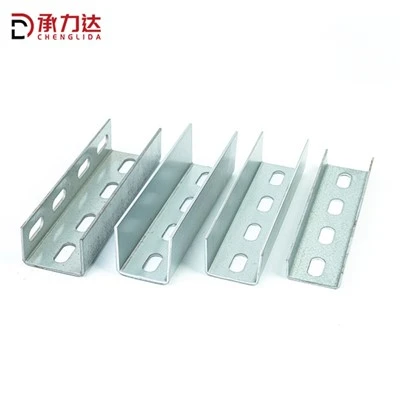
If you’re planning a project in a high-radiation area—whether it’s a residential rooftop in Arizona, a commercial farm in Saudi Arabia, a utility-scale project in South Africa, whatever—we can help. We’ve got samples, we can answer questions about specific parts, we can even help you figure out exactly what you need based on your site’s conditions. Don’t let bad accessories ruin your system’s lifespan or efficiency—reach out to chat through your requirements, no pressure, just straight talk about what works.
PV Guide Rail References:
- International Electrotechnical Commission (IEC). IEC 61701:2021, Photovoltaic modules – Environmental testing for extreme environments – Part 1: General.
- Solar Energy Industries Association (SEIA). 2023 Report on Photovoltaic System Performance in High-Radiation Climates.
- American Society for Testing and Materials (ASTM). ASTM G154-21, Standard Practice for Operating Fluorescent Ultraviolet (UV) Lamp Apparatus for Exposure of Nonmetallic Materials.
- National Electrical Manufacturers Association (NEMA). NEMA TS 2-2022, Electrical Accessories for Outdoor Photovoltaic Systems.
Wuxi Chenglida Machinery Co., Ltd.
We are one of the most professional photovoltaic accessories manufacturers and suppliers in China, also support customized service. Please feel free to buy durable photovoltaic accessories made in China here from our factory. Quality products and reasonable price are available.
Address: No.4 Ruifeng Road, Huishan District, Wuxi City
E-mail: postmaster@wxcldjx.com
WebSite: https://www.wuxi-chenglida.com/
