Hey there, fellow pontoon lovers and future water adventurers! Let’s cut to the chase—if you’re looking at buying a pontoon from us (we’re your go-to supplier, for the record), there’s one non-negotiable safety thing we always chat about upfront, and it’s not just how fast it’ll go or how many cool cup holders it has. It’s visibility. Yeah, that boring-sounding stuff? It’s the reason so many day trips end with a laugh instead of a panic call to the coast guard. Let’s break this down like we’re chatting over a post-launch beer, no stuffy rulebook jargon allowed. Pontoon Boats
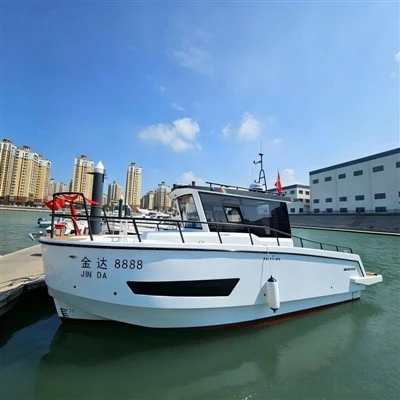
First, let’s get real: what actually counts as visibility for a pontoon? Unlike speedboats with that low-slung cockpit, pontoons sit high on the water, which is a plus—your view of the lake (or river, or bay) is unbeatable. But that same high platform also means you’ve got a few unique blind spots and legal hoops to jump through that smaller boats don’t. We’ve had new customers show up ready to test a boat and skip checking these boxes, and honestly? We gently side-eye them because we’ve seen the mess that happens when visibility is an afterthought.
Let’s start with the two main people on any pontoon: the captain and the guests. The captain’s visibility is the big one, right? The U.S. Coast Guard (USCG) and most state boatiing rules—wait, no, let’s not say USCG like it’s a foreign word—most official boatiing rules (the ones that matter, so you don’t get a ticket) require the captain to have a clear 360-degree view of the water, no obstructions. For pontoons, what blocks that? Stuff like oversized speaker stacks mounted on the front deck, a grill strapped to the port rail, even a giant inflatable floating lounge tied off the starboard side. Wait, we had a customer once show up with a 10-foot tiki bar they wanted bolted to the bow—we had to talk them down from that, because even if you’re staring straight ahead, when you need to turn left to avoid a jet ski, that tiki bar would hide half the water. So the rule of thumb here: if you can’t see past it when you’re sitting in the driver’s seat, don’t put it there. We always point out on our boats that we leave 18 inches of clear space on both sides of the helm, and zero obstructions forward—we designed the consoles that way for a reason.
Then there’s the blind spot that trips up everyone: the rear of the boat, specifically when you’re pulling skiers or tubers. Wait, if you’ve ever watched someone drop a tube, you know how bad that blind spot is. Most states require pontoons to have a mirror system for the driver when towing, right? Because if you turn around to check on the kid on the tube, you can’t see oncoming boats. So what kind of mirror works? Not those cheap stick-on ones you get at the dollar store. We swear by the two-mirror setup we put on every boat we sell: a side-view mirror on each A-pillar, mounted high enough that it’s above the wake. Let’s test that logic—if you’re sitting in the driver’s seat, can you see the entire wake length (at least 100 feet back) in both mirrors? If yes, that’s good. If not, you need taller mirrors, not smaller ones. We’ve had customers complain that our mirrors “block too much view” until they try a set of our budget aftermarket ones that are mounted 3 inches lower, and suddenly they can’t see if the tube’s wobbly or if a fishing boat is coming up behind them. Lesson there: size and height matter more than you think.
Next up, personal visibility for everyone on board, not just the captain. Wait, a lot of new pontoon owners think “visibility” only applies to the driver, but no—what about when you’re pulling someone from the water? If someone falls off the tube, you need to spot them fast, right? So we require all our boats to have what’s called a “bow observer” seat, but let’s be real—don’t call it that. It’s the front bench that’s facing backward, so someone sitting there can scan the water behind the boat when towing. If your pontoon only has forward-facing seats up front, you’re just guessing if someone’s in the water, and that’s a lawsuit waiting to happen (not to mention super dangerous). We add that extra forward/reversable bench for free on all our mid-range and premium models, because it’s not a luxury—it’s a visibility must-have.
Then there’s the legal stuff. Let’s get specific, since we sell to customers all over the U.S. and even a few in Canada. For boats under 20 feet, most states require a navigation light setup that lets other boats see you not just the other way around. Wait, that’s a key point—visibility goes both ways! If your pontoon is dark at dusk or night, a speedboat coming around a bend won’t see you and boom, collision. So what lights do you need? A white stern light (mounted at least 3 feet high, so it’s visible for 2 miles), a red sidelight on the port (left) side, and green sidelight on the starboard (right) side, each visible for 1 mile. But here’s the pontoon-specific trick: since pontoons have those two big floats on the sides, mounting the sidelights too low means the other side’s light will block it. Wait, no—if you put the port side light low on the port pontoon, and starboard on the starboard, when you’re moving, the two lights don’t cross, so oncoming boats can tell which way you’re going. We test every light setup on our boats before they leave the lot—we stand 2 miles away at dusk and make sure no gaps, no overlaps. Cheap lights are a waste, by the way; we only stock LED lights because they’re brighter, last longer, and don’t get as hot (so no melted wiring at the dock).
Wait, what about bad weather? We’ve had customers ask, “Do I need better visibility when it’s foggy or rainy?” Short answer: YES. Pontoons sit higher, which actually helps in fog because you’re above the mist, but the problem is that your windows (if you have a bimini top with side panels) can fog up or get raindrops on them, blocking the view. So here’s a pro tip we give all our customers: if you’re buying a bimini, get the clear side panels that zip off, not the tinted ones. Tinted panels look cool, but when it’s raining and you need to see a boat 50 feet away, tint just makes it harder. Also, keep a microfiber cloth in the glove box—we even throw a free one in every boat we sell, because wiping raindrops off the windshield or side panels is a 10-second fix that makes all the difference.
Another thing we don’t talk about enough: group size. If you’re hauling 10 people on a 22-foot pontoon (we don’t recommend that, but we see it all the time), you’ve got people standing on the deck, blocking the driver’s view. No, we’re not blaming the passengers—we’re saying the boat should have enough open deck space, and maybe a reinforced railing that’s low enough (not 3 feet high, like some cheap boats) so the driver can see over it. Wait, we had a customer buy a budget pontoon from another supplier last year, and he came to us saying he couldn’t see past the 4-foot high port railing when he had 6 people on the left side. So he had to take 2 people off every time he wanted to go anywhere, which ruined his weekends. That’s the kind of mistake we help you avoid by designing our boats with 30-inch high rails, so you can see over them even if there’s a crowd.
Wait, let’s get real about common misconceptions. A lot of people think “visibility” means just the driver’s line of sight, but no—it also means being able to see debris on the water. Pontoons are wide, so you have a bigger platform, which is great for lounging but can mean you don’t see a log or a sandbar that’s just below the surface. So what’s the fix? We add a small, curved “bow guard” to the front of every pontoon we sell, made of soft rubber, so if you do hit something, it doesn’t scratch the aluminum, but also, the curved shape lets you see under the water better—you can spot shallow areas or debris before you run over it. That’s a small add-on, but it’s saved so many of our customers from tearing up a prop or getting stuck in mud.
Now, let’s talk about how we factor all this into the pontoons we sell. As a pontoon supplier, we don’t just slap parts together and call it a day. Every model we design has the helm positioned dead center of the boat, not off to the side like some cheap imports. That way, the captain has a balanced view of both sides, no craning their neck to see around a console. We also test every blind spot during our sea trials—we take the boat out with a test driver, a spotter in the bow, and we measure how far back you can see another boat. If it’s less than 100 feet, we adjust the mirrors, move the console, or lower the bimini top until it works. We don’t cut corners here, because we’ve seen what happens when visibility is an afterthought.
Here’s a quick checklist we give every new customer before they take their boat out on the water for the first time (no need to save it—we’ll email you a copy when you chat with us):
- Clear the helm of all non-essential stuff—no coolers, speakers, or decor blocking your forward view.
- Test the rear mirrors: can you see the entire wake (at least 100 feet) on both sides?
- Check your navigation lights: are they visible from 1 mile away (side lights) and 2 miles back (stern light)?
- If you’re towing, have a bow observer ready to spot tubers/skiers.
- Keep the side panels (on your bimini) zipped off when visibility is low, and have a microfiber cloth handy.
Wait, and one last thing: if you’re not sure about your current pontoon’s visibility, or you’re looking to buy a new one, hit us up. We’re not pushy salespeople—we just want you to have fun on the water without the stress of avoiding hazards or getting a ticket. We’ve got models for every budget, from small 18-foot ones for fishing trips to big 25-foot ones for group lake days, and every single one is built with visibility front and center (pun totally intended).
Wait, let’s make sure we didn’t miss anything. Oh, what about rivers vs. lakes? Rivers have faster currents and more oncoming boats, right? So on river-ready pontoons, we add extra side mirrors—like a third one on the rear of the console—to see boats coming up from behind while you’re navigating a bend. That’s a custom tweak we do for river customers, because generic pontoons don’t account for that.
Another thing: people with bad eyesight. If you wear glasses, don’t get the tinted side panels. We have a lot of customers who wear prescription glasses, and they say tinted panels make the water look darker, so they can’t see as well. We also recommend anti-glare treatment for the windshield—free on all our premium models, because glare from the sun on the water is a huge visibility killer, way more than most people realize.
Let’s wrap this up. Visibility isn’t the sexiest part of buying a pontoon, but it’s the most important. It keeps you safe, it keeps your passengers safe, and it makes every day on the lake way more enjoyable (no swerving to avoid a boat you didn’t see). As a pontoon supplier, we spend hours testing every visibility feature on our boats because we care about your time on the water, not just making a sale.
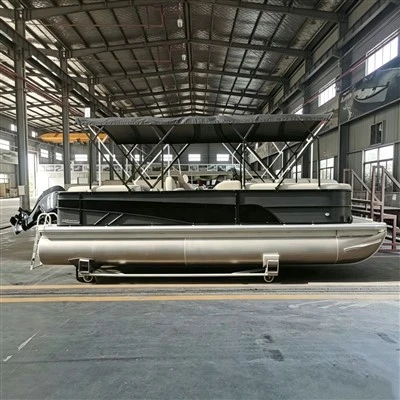
If you’re ready to chat about which pontoon fits your needs, or you have questions about adjusting visibility on the one you already have, reach out to us. We’re here to help, no pressure, no weird fine print. Let’s make your next lake trip the best one yet—safe, fun, and totally worry-free.
Patrol Boats References:
National Marine Manufacturers Association. (2022). Recreational Boat Safety Standards: Visibility Requirements for Pontoon Vessels.
U.S. Coast Guard Auxiliary. (2021). Boating Visibility Best Practices for Inland and Coastal Waters.
Boating Magazine. (2023). Common Pontoon Blind Spots and How to Mitigate Them.
Longkou Jinda Shipping Co., Ltd.
With abundant experience, we are one of the most professional pontoon boats manufacturers and suppliers in China. Please feel free to buy high quality pontoon boats made in China here from our factory. We also accept customized orders.
Address: North of Shuangyu Village, Xingjia Sub-district, Longkou City, Yantai City, Shandong Province
E-mail: Leo99999@qq.com
WebSite: https://www.jindaship.com/
