If you’ve ever looked up at a commercial jet soaring overhead, or a fighter jet executing a tight turn, you might not think about the super tough metal parts holding those machines together— but Inconel is basically the unsung hero behind that. I’ve been working with Inconel as a supplier for almost a decade now, and let me tell you, it’s not your average steel or aluminum. It’s the stuff that lets aerospace engines and components survive conditions that would melt most other materials instantly. Inconel

So first, let’s break down what Inconel actually is, for anyone who’s ever heard the term and assumed it’s just another fancy metal. It’s a family of nickel-chromium superalloys, right? The name itself comes from “inconel”— short for “inconel” alloys, a trademarked name originally developed by Special Metals back in the mid-20th century. Don’t overcomplicate it: they mix mostly nickel, with a big chunk of chromium, and toss in small amounts of elements like iron, molybdenum, or columbium depending on the specific grade. That blend is what makes it perfect for aerospace, which is an industry where parts can be exposed to temps upwards of 2,000°F, intense pressure, and corrosive gasses all at once.
Let’s talk about why regular metals fail in aerospace scenarios, and Inconel doesn’t. Aluminum is light, but it starts to soften around 400°F— way too low for jet engine turbine blades that sit right next to the combustion chamber. Steel is stronger at lower temps, but it can rust in the hot, oxygen-rich exhaust gasses from engines, and it’s way heavier than Inconel, which kills fuel efficiency every time. Inconel? It resists oxidation and corrosion at those extreme high temps, it doesn’t lose its strength even when it’s glowing red, and it can handle the pressure cycles from takeoff and landing over and over without cracking. That’s why it’s the go-to for so many critical aerospace parts.
Now, where is Inconel used specifically in aerospace? Let’s start with the big one: turbine engines. The hottest parts of a jet engine— the turbine blades, the combustor liners, the exhaust nozzles— are almost always made of Inconel. Wait, even the new generation of next-gen jet engines like the GEnx or the Pratt & Whitney PW1000G? Yep, they use advanced Inconel grades that can run even hotter, which actually helps boost fuel efficiency because you don’t need to burn as much fuel to hit those high temps. Without Inconel, those blades would warp or erode in a matter of hours instead of thousands of flight hours.
But it’s not just engines. Airframes also use Inconel parts, especially around high-stress areas like wing roots, landing gear attachments, and the heat shields that protect satellite components during re-entry. Satellites and spacecraft? They rely on Inconel too— it can handle the extreme cold of space (down to -450°F) and then the searing heat when a craft comes back into Earth’s atmosphere, and it’s resistant to the tiny micrometeoroid impacts that ping off satellites all the time. Even rocket parts, like the thrust chambers and the bell nozzles that direct exhaust, use Inconel because rocket engines run way hotter than commercial jet engines, and Inconel’s strength doesn’t drop there.
Wait, let’s clear up a common mix-up: Inconel vs. other superalloys like Hastelloy or Waspaloy. A lot of folks new to the industry mix them up, but here’s the quick breakdown. Hastelloy is also nickel-chromium, but it’s more focused on corrosion resistance in acidic environments, which is more for chemical processing than aerospace. Waspaloy is another nickel superalloy, but it’s often used for lower-stress turbine parts because it’s a bit easier to machine than Inconel. Inconel’s sweet spot is exactly the high-temperature, high-stress needs of aerospace— that’s why it’s the number one pick for our industry.
Now, as an Inconel supplier, I get asked all the time: why not just use a cheaper metal? Let’s be real, Inconel isn’t cheap. It costs more than regular steel because the raw materials (nickel and those specialty alloying elements) are pricey, and machining it is a pain— it’s hard, it wears down cutting tools way faster, and you have to heat treat it properly to get its full strength. But here’s the thing: the cost savings of using Inconel way outweigh the upfront expense. If a turbine blade made of a cheaper metal only lasts 500 flight hours, you have to pull the engine for replacement every few months, which costs airlines millions in downtime. An Inconel blade can last 10,000+ flight hours, so the total cost over the life of the aircraft is way lower. Plus, safer parts mean less risk of in-flight failures, which is non-negotiable in aerospace.
Another big point about Inconel: it’s recyclable. Aerospace parts are built to last, but when they do reach the end of their service life, Inconel can be melted down and reused without losing much of its material properties. That’s a huge win for the industry these days, as more companies push for sustainable manufacturing. We work with a lot of aerospace OEMs that prioritize recycled Inconel for new parts, so that’s become a big part of our supply chain too.
Wait, let’s talk about specific Inconel grades, because not all are the same. The two most common ones we supply for aerospace are Inconel 718 and Inconel 625. Inconel 718 is the workhorse— it’s easy to weld, it has great strength up to 1,300°F, and it’s used for turbine disks, shafts, and structural parts. Inconel 625 is all about corrosion and oxidation resistance, so it’s used for exhaust systems, heat exchangers, and parts that sit right next to hot gasses. There’s also Inconel X-750, which is used for springs and fasteners because it holds its shape at extreme temps. If someone tells you they need an Inconel part for aerospace, the first question we ask is which grade, because that’s half the battle to get the right material.
I’ve seen first-hand how Inconel has evolved too. Back in the 1950s, Inconel was mostly used for industrial furnaces, not aerospace. When the first commercial jet engines came out, engineers realized their existing materials weren’t cutting it (pun totally intended), so they started modifying Inconel to handle higher temps. Now, with 3D printing becoming bigger in aerospace, we even supply Inconel powder for additive manufacturing. You can print complex turbine blades with internal cooling channels that would be impossible to machine from a solid block, and Inconel works perfectly for that because it doesn’t crack during the printing process. That’s a game-changer for cutting down part weight and engine efficiency.
But let’s be honest, it’s not all smooth sailing with Inconel. There are challenges, especially for suppliers. It’s a dense material, so it adds a bit of weight compared to some lighter alloys, which is a tradeoff for its heat resistance. Also, because it’s so widely used, there’s a lot of counterfeit Inconel out there, especially for lower-tier aerospace parts. That’s why we test every batch of Inconel we supply with spectroscopy to make sure it’s the right alloy composition— no cutting corners here, because a fake Inconel part can fail mid-flight, which is catastrophic.
So why does this matter to anyone who works in aerospace, whether you’re an OEM, a maintenance shop, or a project manager? Every time you step on a plane, the parts that keep you safe are made with Inconel. It’s not just a metal— it’s the engineering that makes air travel reliable, and space exploration possible. As we move to supersonic jets, electric aircraft (wait, even electric planes use Inconel for their motor components and heat shields!), and deeper space missions, Inconel is going to be even more important. We’re already working on new Inconel grades that can handle temps over 2,200°F for next-gen hypersonic vehicles— that’s the stuff that’s going to get us to Mars someday, no joke.
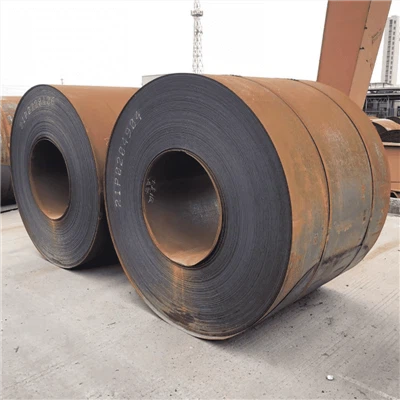
If you’re in the aerospace industry and you need quality Inconel parts, whether it’s raw stock, machined components, or 3D printing powder, we’ve got you covered. We specialize in aerospace-grade Inconel, we test every batch to meet strict industry standards, and we can work with you on custom orders for specific projects. Don’t waste time with subpar materials that will cause downtime or safety risks— reach out to us to talk through your Inconel needs today.
Stainless Steel Pipe or Tube References
- “Superalloys: For Extreme Environments,” Special Metals Corporation, 2023.
- Aerospace Materials Handbook, SAE International, 2022.
- “Inconel Alloys in Aerospace Applications,” Journal of Aircraft Materials, Vol. 45, No. 2, 2021.
- Additive Manufacturing of Superalloys for Aerospace, NASA Technical Report, 2020.
- Corrosion Resistance of Nickel-Chromium Alloys, NACE International, 2019.
Jiangsu Cunrui Metal Products Co., Ltd.
As one of the most experienced inconel manufacturers in China, we also support customized service. Please rest assured to buy cheap inconel for sale here from our factory. If you have any enquiry about pricelist and free sample, please feel free to email us.
Address: 32-117,119, Nanfang Stalnless Steel Trading Conter, Wuxi,Jiangsu, China
E-mail: karen@cunruimetal.com
WebSite: https://www.cunruimetals.com/
