Hey there, if you’ve ever stood back and glanced up at a telecommunication tower—those skeletal metal giants dotting every highway, suburb, and even remote mountain pass—you’ve probably wondered, “How much electricity do these things even gobble up?” As someone who’s been in the telecommunication tower supply game for over a decade, I get that question all the time. Clients often come to me worried about two big things: running costs and sustainability, and honestly, that’s why we designed the towers we build to be as efficient as possible. Let’s break this down like I’d talk to a buddy over a coffee, no stuffy jargon promise. Telecommunication Tower
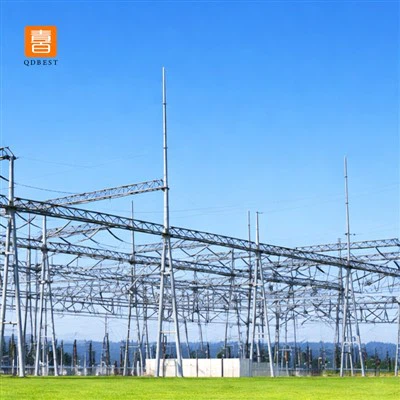
First off, there’s no one-size-fits-all number, right? A tiny tower sitting on a rooftop in the middle of a city is way different from a massive tower in the outback that’s supporting 10 different carriers. Let’s start with the basic setup: every tower’s core gear is radio access network (RAN) equipment—think the transceivers that send your texts, stream Netflix, and let you take calls. Then there’s the power supply itself, batteries for backup, and heating/cooling units (super important if your tower is in a place that’s freezing or sweltering).
From what I’ve seen working with towers across North America and parts of Europe, the average small-to-medium tower (the ones you spot every few miles on a highway) uses between 3,000 to 8,000 kilowatt-hours (kWh) per month. Wait, let me put that in perspective for you—your average American home uses about 900 kWh in a month, so that’s like 3 to 8 houses’ worth of electricity. But hold up, that’s just the average. A big macro tower (the 200-foot ones out in rural areas) can hit 15,000 to 25,000 kWh a month, while a tiny micro tower on a city street corner? More like 500 to 2,000 kWh. It’s all about what’s connected to it.
Now, why the huge range? Let’s talk RAN gear. Each carrier’s transceiver (that’s the box that talks to your phone) uses power based on how many people are using it at once. If you’re in a busy downtown during rush hour, that transceiver is cranking out more signal, so it uses more power. In the middle of the night, when barely anyone is on their phone, it dials back—kind of like how your laptop uses less battery when you’re not doing heavy work. Newer 5G gear is actually way more efficient than old 4G stuff, but 5G has more small cells, right? So a dense 5G network with lots of micro towers might add up to similar total power use as a 4G macro network, just spread out instead of in one big tower.
Then there’s the infrastructure that keeps the tower running, and that’s the part people forget. Battery backup systems—those big lead-acid or lithium-ion banks—use a little power just to sit there ready to kick in if the grid goes down. And heating, especially in places like Canada or the northern US, where temperatures drop way below freezing, the tower has to keep its gear warm so it doesn’t break. In desert areas, you need big air conditioners to keep the RAN from overheating. Those units can eat up 30% of the tower’s total power, easy. I’ve had clients in Arizona tell me their cooling systems alone use 4,000 kWh a month in the summer—crazy, right?
Wait, let’s get into the numbers with actual examples because that’s what makes it real. Last year, we supplied a medium tower to a carrier in Ohio. It had two transceivers, a small battery bank, and a basic HVAC system. Their monthly power bill came to around 5,200 kWh. Then there was a big macro tower we put in rural Montana for a regional provider—four transceivers, a bigger battery, and a heater that runs 24/7 in winter—they clocked in at 18,700 kWh a month. And a micro tower in Manhattan we did for a new ISP? Only 1,100 kWh, since it’s small and mostly supports street-level devices.
Now, here’s the thing: power use isn’t just a “how much” question—it’s also about how to reduce it without dropping signal quality. That’s where our towers come in. When we design a tower for a client, we don’t just slap on the cheapest RAN gear. We use energy-efficient transceivers that automatically adjust power based on traffic (that’s called “power scaling” for the tech folks), and we prioritize lithium-ion batteries over old lead-acid ones because they use less power to charge and last longer. We also work with clients to size the HVAC system correctly—no overcooling or overheating, which wastes tons of energy.
Another big factor: renewable energy. So many of our clients are asking about solar panels now. If you put solar on a tower, you can cut grid power use by 50% or more. The Montana tower I mentioned earlier added a 10 kW solar array, and now they only use 6,000 kWh from the grid a month, even in the winter when days are short. We’re seeing more hybrid setups—solar plus a small wind turbine—for remote towers, which is a win for everyone, especially carriers trying to hit their sustainability goals.
I get it, a lot of people think telecom towers are energy hogs, but that’s not the whole story. Compared to other infrastructure—like data centers, which can use millions of kWh a month—telecom towers are way more efficient, and new tech is making them even better. The International Telecommunication Union (ITU) did a study a couple years back that said global telecom network power use grew by only 2% a year, even as data traffic exploded by 30% a year, all because of more efficient gear. That’s a big deal.
But let’s be honest, there are still places where power use is higher than it needs to be. Older towers built 10+ years ago with 3G gear are way less efficient than today’s 5G systems. That’s why so many carriers are upgrading their networks—they cut their power bills and get better signal at the same time. We’ve had clients upgrade from 3G to 5G on a mid-sized tower and cut their monthly power use by 25% without adding any more transceivers. It’s a no-brainer.
Now, if you’re a carrier, property owner, or even a municipality looking to install or upgrade telecom towers, power use is one of the most important factors to nail down. You don’t want a tower that runs up your electric bill for years, and you definitely don’t want one that’s unreliable because it’s not sized right. We’ve been doing this long enough to help you figure out exactly what size tower you need, what gear will work best, and how to keep power costs low.
Whether you’re putting a small micro tower on a city block or a macro tower out in the countryside, we can tailor a solution that fits your needs. No one-size-fits-all, no pushy sales pitches—just honest advice and towers that are built to last and use power smartly. If you’re tired of overpaying for tower power or dealing with old, inefficient gear, hit us up to chat. We can walk you through the numbers, show you real examples of towers we’ve built, and help you find a setup that’s cost-effective and sustainable.

At the end of the day, telecom towers are the backbone of our connected world, and their power use doesn’t have to be a headache. It’s all about understanding the variables, using the right gear, and partnering with someone who knows the ins and outs of tower infrastructure. We’ve helped hundreds of clients get this right, and we can help you too. So if you’re ready to stop guessing about tower power use and start getting the efficiency you need, reach out to start the conversation.
Angle Steel Tower References
International Telecommunication Union. (2021). Global Telecommunication Sector Energy Efficiency Report.
Federal Communications Commission. (2022). Telecom Infrastructure Power Consumption Analysis.
Wireless Infrastructure Association. (2023). Tower Energy Efficiency Best Practices.
Qingdao BEST Steel Structure Co., Ltd.
Qingdao BEST Steel Structure Co., Ltd. is one of the most professional telecommunication tower manufacturers and suppliers in China. We warmly welcome you to buy customized telecommunication tower made in China here from our factory. If you have any enquiry about OEM service, please feel free to email us.
Address: Jiaobei Industrial Park, Qingdao, China
E-mail: salesmanager@qdbsstower.com
WebSite: https://www.qdbsstower.com/
