If you’ve ever walked through a retail store and glanced at the colorful stand holding chips, toothpaste, or seasonal snacks right beside the checkout aisle, you’ve probably wondered: how does that flimsy-looking cardboard hold up 20 pounds of product for weeks on end? As a cardboard floor display stand supplier who’s been in this business for 12 years, I get questions like this at trade shows, in email inquiries, and even from regular customers who assume cardboard is just thin, easy-to-bend paper. The truth is, the strength of a floor display stand isn’t random—it’s engineered, tested, and tailored to exactly what it needs to hold, and that’s the difference between a display that sells products and one that collapses mid-shift, costing you lost sales and extra labor. Cardboard Floor Display Stand

Let’s start with the basics: not all cardboard is the same, and for floor displays, the material we use is corrugated fiberboard, a layered structure that’s way sturdier than the flat cardboard you use for a school project. Corrugated board has three core layers: a smooth outer liner (the flat, paper-thin layer you see on the surface), a fluted inner middle layer (the wavy part that looks like a series of tiny tunnels), and a matching inner liner glued to the other side of the flutes. The flute size is the first big factor in strength, and it’s not one-size-fits-all for floor stands.
There are four main flute types: A, B, C, and E. E-flute is super thin, only about 1.5mm thick, and it’s great for small, lightweight displays that sit on a countertop, like makeup testers. B-flute is a little thicker, around 2.5mm, but the flutes are smaller, so it’s rigid—ideal for small floor displays holding under 10 pounds. A-flute, at 4.5mm, is very thick, with large flutes that have a lot of empty space, making it good for cushioning, but it’s too bouncy for heavy floor stands because it compresses too easily. That leaves C-flute, at about 3.5mm thick, as the sweet spot for most floor display stands. The C-flute’s middle size gives it a perfect balance of rigidity and impact resistance: it’s thick enough to hold up to 50, even 70 pounds, but not so thick that it adds unnecessary cost or bulk.
Wait, but even the same flute type can have different strength levels, right? That’s where the liner board comes in. The outer liners of corrugated board are made from two types of paper: test liner and kraft liner. Test liner is made from recycled paper, so it’s cheaper, but it’s weaker, more prone to tearing, and it gets soggy easily if a spill happens. Kraft liner is made from long, strong wood pulp, usually softwood from pine or spruce, and it’s way more durable. For a floor display stand that’s going to be in a high-traffic retail store, where it might get bumped by a shopping cart, knocked by a kid, or exposed to a spilled soda, we always use double-kraft liners—both the inner and outer layers are kraft. That adds tensile strength, the ability to resist being pulled apart, and edge crush strength, which is how much force it takes to crush the edge of the board.
Another key measurement we rely on is the burst strength of the cardboard. Burst strength is the pressure needed to push a metal ball through the board, and it’s measured in pounds per square inch (PSI). Standard corrugated board for retail displays usually has a burst strength of 200 to 400 PSI, but for floor stands, we bump that up to 450 to 550 PSI. That extra burst strength means the board won’t tear if a customer grabs a product hard, or if the display is stacked during shipping and storage before it’s even assembled.
But here’s what a lot of customers don’t realize: the strength of the cardboard isn’t just about the raw material—it’s also about how it’s designed into the display. A thick, high-strength C-flute board is useless if your stand has flimsy, narrow supports, or if the base is only the size of a sheet of paper. That’s why as a supplier, we don’t just cut a sheet of corrugated board into a shape and send it off; we test every design to make sure it can handle the load it’s meant to carry.
For example, a floor stand holding 40 pounds of snack bars needs a base that’s at least 18 inches by 12 inches. The base is the foundation, so if it’s too small, the display will tip over when someone leans against it. We also add cross-bracing inside the display—thin strips of corrugated board glued between the vertical sides of the stand—to reinforce it. That cross-bracing turns the flat, single layer of board into a rigid structure that distributes the weight evenly, instead of all the pressure being on one side. We also use locking tabs and slots instead of adhesive where possible, because those mechanical connections are way stronger than glue for repetitive assembly and disassembly, which happens when retail stores rearrange their floor plans every few months.
I want to be clear: we don’t overbuild displays either. Some suppliers will use extra-thick A-flute board just to charge more, but that’s unnecessary and adds cost that gets passed on to you. Our team has years of experience matching the exact cardboard strength to your product: if you’re displaying a single pack of 6-pack soda, you don’t need a 500 PSI board, so we use a lighter, more cost-effective C-flute with a 400 PSI burst strength. If you’re displaying 12 cases of water, which is 60 pounds, we step up to a 500 PSI double-kraft C-flute, and reinforce the base with a full layer of extra board to add extra stability.
Another test we run is the drop test. When we ship displays to a retail warehouse, they might get dropped from a forklift, or bumped during unloading. We drop our fully assembled floor stands from 3 feet, which is the average height a display might be mishandled, and check for any cracks, bent flutes, or loose supports. If a display breaks in the drop test, we adjust the cardboard strength or the design before it leaves our facility. We also do load tests, where we place the full product load on the display for 72 hours, to make sure it doesn’t sag—sagging might not seem like a big deal, but if the base of the display bows, it can tip over, or the products can slide off, leading to lost sales.
What about environmental factors? A lot of retailers want sustainable displays, so they ask if high-strength cardboard can be recyclable. The short answer is yes. The kraft liners we use are 100% recyclable, and the corrugated board we source is often made from post-consumer recycled paper, with a small percentage of new wood pulp to add strength. We also make sure all our displays can be flattened after use, so they take up less space in recycling bins, which adds to their sustainability value. Unlike plastic displays, which are often single-use and end up in landfills, cardboard displays are biodegradable and easy to recycle, which is a big plus for retailers who are hitting their ESG goals.
I’ve seen too many clients switch to cheaper floor displays only to regret it. Last year, a small grocery chain ordered displays from a supplier who used low-quality test liner B-flute boards, and half the stands collapsed within a week of being put up. They had to pull all the displays, restack the products, and hire extra staff to fix the mess, which cost them thousands of dollars in lost sales and labor. That’s why we prioritize strength, but we also prioritize transparency: we’ll tell you exactly what kind of cardboard we’re using, what its strength measurements are, and how that matches your product needs. We don’t use jargon to confuse you; if you ask, we’ll show you the burst strength tests, the load test data, and the design schematics so you know exactly what you’re getting.
At the end of the day, the strength of a cardboard floor display stand is about more than just holding weight. It’s about protecting your products, reducing labor costs for your team, and making sure your display looks professional and attractive for customers. A flimsy display sends the message that your product isn’t worth investing in, while a sturdy, well-built display signals quality and reliability. That’s why we don’t cut corners on the cardboard we use, or on the design that turns that cardboard into a functional, high-performing display.
If you’re looking for a floor display stand that’s built to last, tailored to your products, and priced fairly, I’d love to chat with you. We’ve worked with small boutique brands and large national retailers alike, and we can help you design a display that fits your exact needs. Whether you’re launching a new snack line, need seasonal displays for holidays, or restocking your checkout aisle products, we have the expertise to build a stand that stands up to the demands of retail.
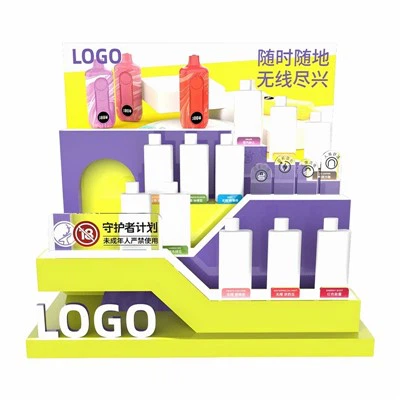
If you’re ready to discuss your project, feel free to reach out to us directly. We can share sample displays, test data, and custom design options to make sure you get the exact strength and design you need for your floor stands.
Floor Display Stands References
- Technical Association of the Pulp and Paper Industry (TAPPI). (2020). Standard Test Method for Bursting Strength of Paper and Paperboard. TAPPI T 403 om-20.
- Corrugated Container Association (CCA). (2019). Corrugated Fiberboard Technical Guidelines for Retail Displays. CCA Publication 123.
- National Retail Federation (NRF). (2021). Retail Display Efficiency Report: Reducing Labor and Loss from In-Store Displays. NRF Research Series.
- Forest Stewardship Council (FSC). (2022). Sustainable Corrugated Board Certification Standards. FSC International.
Guangzhou Guangjie Display Products Manufacturing Co., Ltd.
We’re well-known as one of the leading cardboard floor display stand manufacturers in China, also support customized service. Welcome to buy bulk high quality cardboard floor display stand at competitive price from our factory. If you have any enquiry about pricelist and quotation, please feel free to email us.
Address: No. 16-1 Lilv Road, Dashi Street, Panyu District, Guangzhou City, Guangdong Province
E-mail: guangjie_dp888@163.com
WebSite: https://www.gjdisplaystand.com/
