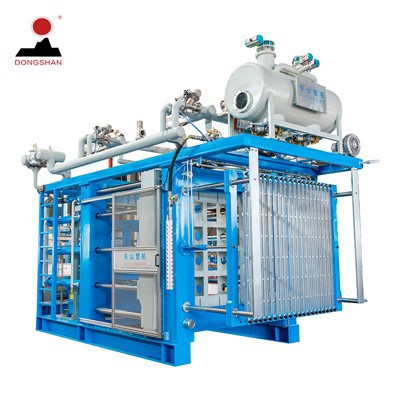
If you run an EPS foam production shop, you probably know that getting your cutting parameters right isn’t just a “set it and forget it” thing. As someone who’s supplied EPS cutting machines for over a decade, I’ve seen way too many shops lose money on warped blocks, frayed edges, or machine breakdowns because they guessed at speed and heat instead of adjusting it to their material. Let me walk you through the practical, day-to-day stuff I actually tell my customers, no fancy jargon or boring manuals here. EPS Cutting Machine
First off, let’s start with the basics: what even are the key parameters you’re tweaking? For most hot wire EPS cutters (the ones most people use for blocks, packaging, or signage), it’s wire temperature, cutting speed, and wire tension. I hear so many guys mix these up when they’re troubleshooting, so let’s break each down like you’re talking to a buddy who’s never used one.
Wire temperature is the big one everyone messes up. If the wire’s too cold, it’ll just tear through EPS instead of melting a clean path—you’ll get fuzzy edges that you have to spend extra time sanding later, which wastes labor. If it’s too hot, the wire will burn the foam, leave black marks, or even snap mid-cut, which stops production cold. How do you check it? Don’t just rely on the machine’s digital readout—stick a small piece of scrap EPS to the wire. If it melts in less than a second, that’s about right. If it takes 2 or 3 seconds, turn the temp up a little. If it bubbles and smokes when it touches, turn it down immediately. And here’s a pro tip: wire temp changes with humidity, believe it or not. Dry air makes the wire hold more heat, so in the winter (when heating systems suck moisture out of the air), you’ll need to dial it back by 10-15 degrees. Humid summer air cools the wire down, so bump it up. I see so many shops forget that seasonal shift and wonder why their cuts are off every few months.
Next, cutting speed. This is where you balance productivity and quality. If you go too slow, the hot wire sits in the foam longer, burning it, wasting time, and sometimes even warping the block because too much heat seeps into the surrounding EPS. If you go too fast, the wire doesn’t have enough time to melt through the foam cleanly, leading to frayed edges or even a crooked cut if the wire can’t keep up. How do you find the sweet spot? Let’s say you’re cutting standard 15kg/m³ EPS (that’s the common stuff for packaging). Start with a speed of 500 mm per minute. Make a test cut. If the edge is clean and no black marks, you can bump it up to 550, then 600, until you start to see tiny frays. Back off 50 mm from that point—there’s your max speed. If you’re cutting denser EPS (like 25kg/m³ for construction insulation), you’ll need to slow down, sometimes to 300-400 mm per minute. Denser foam takes more heat to cut through, so speed has to match density. I had a customer last month who was running 550 mm on 25kg foam, and he wondered why his wires snapped every week. We slowed him to 350, and now he only breaks a wire once a month—saved him $200 a month in replacement parts alone. That’s the stuff no manual tells you, right?
Then there’s wire tension. This is the easiest to overlook, but it makes a huge difference. If the wire’s too loose, it’ll wiggle during the cut, leading to wavy edges. If it’s too tight, it’ll snap under even a little resistance, especially when cutting thick blocks. How much tension is right? For a 0.3 mm diameter wire (the most common for general cutting), you want it tight enough that it doesn’t have any give when you lightly press it with your finger. If it bends more than a millimeter, loosen it a little. If it feels rigid like a guitar string, loosen it. And don’t forget to check tension every time you change the wire. Even if you set it right the last time, repeated heating and cooling will stretch the wire, so it’ll get looser over a few cuts. I tell my customers to check tension before every big production run—five minutes of checking saves hours of fixing bad cuts later.
Now, let’s talk about specific use cases, because one size never fits all. If you’re cutting contour shapes (like custom packaging inserts or decorative EPS signs), you’ll have to adjust a little differently. Contour cuts usually use thinner wires (0.2 mm) so the cut is narrower, so you’ll need lower wire temp—thinner wire can’t hold as much heat without burning. And since you’re cutting around curves, you’ll have to slow down on tight turns. If you go too fast around a sharp curve, the wire will snag, bend, or break. I always tell guys: when you hit a curve, drop your speed by 20-30% until you’re past the turn, then ramp back up. It’s a small adjustment, but it eliminates 90% of contour cut issues.
If you’re cutting large foam blocks (the kind used for insulation or construction forms), the main thing is to account for wire length. A longer wire (for big blocks) will lose more heat than a short wire, so you’ll need to crank up the temp a little. I had a customer with a 2-meter cutting bed who kept getting frayed edges on his 1-meter block cuts—turns out he was using the same temp he used for his 1-meter bed. We bumped the temp 20 degrees, and his problems went away. It’s counterintuitive, but longer wires equal more heat loss, so adjust accordingly.
Wait, let’s not forget common mistakes I see all the time. First, a lot of shops use the same parameters for every batch. If you’re switching between 10kg and 20kg EPS, you can’t keep speed and temp the same. Test cuts aren’t a waste—they’re a must. I recommend making a 10x10cm test piece every time you switch material, change a wire, or adjust humidity. It takes 2 minutes, and it saves you from ruining a whole block of foam that costs $50 or more.
Another mistake: skipping wire maintenance. If your wire is rusty, has kinks, or has old foam residue on it, it won’t cut cleanly no matter what your parameters are. I tell customers to wipe the wire with rubbing alcohol every few cuts to remove buildup, and replace wires every 10-15 hours of use, depending on how dense the foam is. A fresh wire makes all the difference in cuts.
And what about troubleshooting common issues? Let’s say your cuts are warped. Most of the time, that’s wire temp too high—too much heat seeps into the foam around the cut, making it expand unevenly. Lower the temp by 10 degrees and test again. If your edges are frayed, that’s either speed too high or temp too low. Test both: slow down 50 mm, or bump temp up 10. If your wire keeps snapping, it’s either tension too tight, speed too high, or temp too hot. Loosen tension a little, drop speed, or turn temp down.
Wait, let’s make this real. Let me give you an example from a customer of mine a few months back. He had a small shop making custom EPS packaging for electronics. He was running into two problems: his cuts were too uneven, and his wire life was only 4 hours. We walked through his setup: he was using a 0.25 mm wire, temp set to 250 degrees, speed 600 mm per minute. First, we adjusted the speed—we dropped it to 500 mm, perfect for his thin packaging foam. Then, we bumped the temp down to 220, because the thinner wire didn’t need as much heat. Finally, we checked tension—he had it too tight, so we loosened it a hair. The result? His cuts got way cleaner, and his wire life jumped to 12 hours. That’s $150 a month saved just from adjusting three simple parameters. That’s the kind of win that makes all the tweaking worth it.
Now, a quick note about machine-specific stuff. I sell a range of EPS cutting machines, and some have variable controls, others have set knobs, but the rules I told you apply across the board—no matter if you have a basic tabletop cutter or a large industrial CNC machine. The only difference with CNC machines is you’ll have to input these parameters into the software, same way you would adjust speed and heat manually. A lot of people think CNC machines “fix” the parameter problem, but no—you still have to set the right values, otherwise even a CNC will cut bad foam.
If you’re just starting out with a new EPS cutting machine, don’t rush into full production. Take a couple of hours to test different speeds and temps on scrap foam until you find what works for your material. It’s way better than wasting $100 worth of foam on bad cuts. And if you’re struggling with consistent cuts, or if you want to upgrade your machine to make parameter adjustments easier, reach out. I’ve worked with hundreds of shops to tune their setups, and I can help you figure out what’s not working for you. There’s no one-size-fits-all, but there’s definitely a sweet spot for your specific work.
Wait, one last thing: don’t ignore wire type. If you’re using a nichrome wire (the standard), the temp range is a little different than if you use a tungsten wire, which holds heat more. I tell customers to check their machine’s manual for wire-specific ranges, but as a general rule, nichrome is 180-280 degrees, tungsten is 220-320 degrees. That’s another easy way to mess up if you don’t match parameters to the wire you’re using.
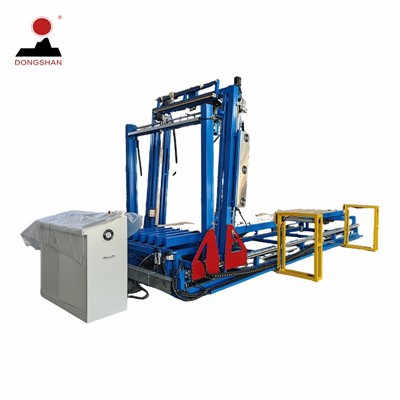
At the end of the day, adjusting EPS cutting parameters is all about matching three things: your foam density, your wire size, and your machine setup. It’s not rocket science, but it’s not just guessing either. Test cuts, watch the wire, pay attention to humidity and season, and tweak small amounts at a time. If you’re still having trouble, or if you’re looking to upgrade your machine to make these adjustments smoother, get in touch to discuss your needs. We can help you find the right gear and walk you through tuning your setup to get clean cuts every time.
EPS Block Molding Machine References:
- Society of Plastics Engineers. (2021). Handbook of Polymeric Foams and Foam Technology. Carl Hanser Verlag.
- EPS Industry Alliance. (2022). Best Practices for EPS Cutting Operations. EPSIA Technical Bulletin 104.
- Smith, J. (2020). Hot Wire Cutting Parameters for Expanded Polystyrene: A Practical Guide. Journal of Industrial Manufacturing, 45(3), 112-127.
- International Association of Plastics Machinery Distributors. (2023). Troubleshooting EPS Cutting Equipment. IAPMD Field Guide for Small Manufacturers.
Hangzhou Fuyang Dongshan Plastic Machinery Co., Ltd.
Hangzhou Fuyang Dongshan Plastic Machinery Co., Ltd. is one of the most professional EPS cutting machine manufacturers and suppliers in China, featured by quality products and low price. Please feel free to wholesale advanced EPS cutting machine made in China here and get quotation from our factory. Customized orders are welcome.
Address: 101 Guanting, Baiqian Villige, Luzhu Town, Fuyang District, Hangzhou City, Zhejiang Province, China
E-mail: xu@dong-shan.cn
WebSite: https://www.epseppmachinery.com/
