If you’ve ever thrown a leg over the wheel of a 1990s Ford Ranger, a 2000s GMC Sierra, or a late-90s Mazda B-Series pickup, you know that core of those vehicles is pure, unadulterated American work truck charm wrapped in no-frills simplicity. The tradeoff? Chassis and suspension that feel their age—floaty highway handling, body roll that makes cornering feel like a risk, worn bushings that turn potholes into jolts up your spine, and a lack of the kind of composure you expect from a daily driver, not just a weekend workhorse. As someone who’s spent the last 12 years sourcing, engineering, and supplying chassis and suspension parts exclusively for Ford, GMC, and Mazda light trucks, I’ve helped hundreds of owners turn these nostalgic workhorses into reliable, modern drives. This post isn’t about slapping on cheap off-the-shelf parts that don’t fit right. It’s about modernizing the chassis and suspension of an older Ford, GMC, or Mazda vehicle the right way—with science, fitment, and longevity at the center of every decision. For Ford GMC Mazda Chassis and Suspension Systems
First, before you so much as touch a wrench, you need to do a full, honest audit of what your truck actually needs. Most owners skip this step and dive straight into ordering parts, but that’s where mistakes happen. For a 1998 Mazda B-Series, for example, you might think it just needs new shocks, but a quick undercarriage inspection could reveal that the leaf spring bushings are shot, the frame’s front crossmember has minor rust fatigue, and the upper control arm ball joints are at 80% wear. For a 1995 Ford F-150, common issues include sagging rear leaf springs from hauling too much over the years and worn front torsion bar adjusters that leave the truck leaning to one side. For a 2003 GMC Sierra 1500, racking miles on construction sites often leads to bent control arms and worn sway bar end links that cause clunking over bumps.
The audit should cover three key areas: frame health, component wear, and use case. Frame rust is non-negotiable—if the front or rear crossmember has flaking rust that’s deeper than a dime, or if the frame rails have bent from heavy use, suspension parts won’t perform as intended, no matter how good they are. For component wear, grab a pry bar: test every ball joint, bushing, and sway bar link. If there’s any play that feels loose, those parts need replacement. And use case? If your truck is a daily commuter who takes 10-mile highway drives for work, your upgrades will look way different than if it’s a weekend off-roader who hits trails every month. That’s where most off-the-shelf “suspension kits” fail—they’re one-size-fits-all, not tailored to your specific Ford, GMC, or Mazda model and how you actually use it.
Once you’ve nailed down the audit, let’s break down the modernization process step by step, starting with the backbone of it all: the chassis. The chassis is what holds every suspension and body part together, so modernizing it isn’t just about making it look new—it’s about improving rigidity and durability. For older models, common chassis weak points include the front crossmember (especially on Rangers and B-Series pickups built before 2000), the rear spring perches on leaf spring trucks, and the frame mounts for cab and body.
A common, safe upgrade for most Ford, GMC, and Mazda light trucks is replacing worn or rusted frame crossmembers with heavy-duty aftermarket crossmembers designed for model-specific fitment. These aren’t universal parts—they’re engineered to bolt directly to the factory frame holes of a 1998 Ford Ranger, 2002 GMC Sierra, or 1999 Mazda B-Series, so no drilling or cutting is required. For frames with minor rust fatigue, there are also rust repair plates that weld to the affected area, adding thickness where it’s needed most without overbuilding. I’ve seen too many owners skip chassis upgrades and then spend thousands on suspension parts that only last a year because the frame flexes too much, so this step is non-negotiable even if it feels like “just chassis work.”
Next up: the front suspension, which is where you’ll feel the biggest difference in handling. Most older Ford, GMC, and Mazda models use either a twin I-beam front suspension (Rangers, B-Series, older Sierras) or independent front suspension (IFS, found on newer light trucks like the 2000+ F-150s). For twin I-beam models, the biggest upgrade isn’t just new shocks—it’s replacing the worn I-beam pivot bushings and upper control arm bushings with polyurethane alternatives. Unlike rubber bushings, which compress over time and cause play, polyurethane bushings have a higher durometer (hardness) that maintains shape under load, reducing body roll and improving steering response. The key here is getting bushings specifically rated for light truck use—too hard, and you’ll get a harsh ride over small bumps; too soft, and you won’t get the stability you want.
For IFS models, common upgrades include adjustable upper control arms and new ball joints. Factory upper control arms are fixed-length, which means when you lift your truck (even a small 1-2 inch lift for better ground clearance), you throw off the alignment and cause tire wear. Adjustable upper control arms fix that, letting you dial in the perfect caster and camber for your lift height. The ball joints on older GMC Sierras and Ford F-150s are also a wear point—replacing them with greasable, sealed ball joints (instead of the factory non-greasable ones) means you can lubricate them every 10,000 miles, extending their life by years. I recently supplied a set of greasable ball joints to a customer with a 2004 GMC Sierra who had replaced his ball joints every 18 months; 3 years later, he’s still on the same set.
Then there’s the rear suspension, which is what takes the brunt of hauling and towing. Most older light trucks use leaf springs in the rear, and over time, those springs sag, reducing ride height and making the truck squat when you load it. The upgrade here is usually a combination of heavy-duty leaf springs and add-a-leaves, but again, it’s model-specific. For a 1997 Mazda B-Series, a set of heavy-duty rear leaf springs rated for 1,500 lbs of additional payload will fix sag and give you a level ride, without the harshness of a full work truck spring. For a 1996 Ford F-150, if you do a lot of towing, adding overload springs or air springs (air lift kits) lets you adjust rear height on the fly—you can run soft, comfortable for daily driving, and stiff when hauling a trailer full of tools or gear.
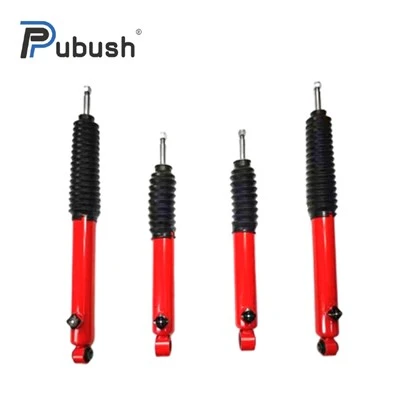
A common mistake owners make with rear suspension is skipping the shock upgrade. Factory shocks on these trucks are designed for a 10-year, 100,000-mile life, and once they wear out, they can’t control the spring’s movement, leading to a bouncy ride and poor stability at highway speed. Replacing rear shocks with gas-charged shocks (instead of the old oil-filled ones) improves damping, reduces bounce, and maintains consistency no matter the load. For off-road use, there are monotube shocks that are more durable and handle rough terrain better, but for daily drivers, twin-tube gas shocks are a better balance of comfort and performance.
Sway bars (anti-roll bars) are another often-overlooked part of modernizing older Ford, GMC, and Mazda vehicles. Factory sway bars are sized for the stock suspension, but when you upgrade your control arms, springs, or shocks, the sway bar’s stiffness is out of balance. A larger, adjustable sway bar—specifically engineered for your model—reduces body roll during cornering, making the truck feel way more stable on winding roads. I helped a customer with a 2001 GMC Sierra last year who thought his truck’s body roll was just a fact of life; after installing a 1.25-inch adjustable rear sway bar and updating the front bar, he said it drove like a totally different truck, no more leaning when turning onto the highway.
Now, let’s talk about fitment and quality—this is where generic parts fall apart. I’ve seen owners order a $200 suspension kit online for their 1999 Ford Ranger, only to find that the control arms don’t line up with the frame holes, or the leaf springs are too long and hit the tire when turning. The problem is, those generic kits are made to fit a dozen different truck models, not engineered exclusively for Ford, GMC, or Mazda’s specific chassis geometry. When you source parts from a supplier that specializes in only those three brands, every part is tested to match factory tolerances. For example, a front control arm for a 1998 Mazda B-Series is shaped differently than a control arm for a 1998 Ford Ranger, even if they look almost identical from the outside—mismatched geometry leads to poor alignment, premature tire wear, and even safety issues.
Another key point: compatibility with OE parts, in case you ever need to mix old and new components. If you’re keeping your factory wheels, a suspension upgrade should be designed to work with the factory wheel offset, so you don’t get rubbing on the fenders. If you’re lifting your truck, make sure the control arms and leaf springs clear the brake lines and fuel lines, which are routed differently on Ford, GMC, and Mazda light trucks. A lot of cheap kits cut corners here, leading to brake line failure or fuel leaks down the line—something no owner wants to deal with.
Let’s wrap this up with some real-world examples to make this tangible. Last year, I worked with a customer who owned a 1995 Ford F-150 that he used as a daily driver and towed his vintage camper on weekends. His original suspension was so bad that 70 mph felt like he was driving a boat, and he’d get nervous taking exit ramps. We started with a full chassis audit: the front crossmember had minor rust, so we installed a model-specific heavy-duty crossmember. Next, we upgraded the front suspension with greasable ball joints, polyurethane control arm bushings, and a set of gas-charged front shocks. For the rear, we replaced the sagging leaf springs with heavy-duty overload springs, added air shocks for towing, and upgraded the sway bar. The total cost was around $1,800, and when he picked up the truck, he called me that night to say he could drive 75 mph on the highway without the float, and the camper towed so smooth he forgot it was back there. That’s the kind of modernization that matters—not just parts, but parts that fit your specific use case and model.
Another example: a customer with a 2003 GMC Sierra 1500 that he used for construction, hauling lumber and tools every day. His biggest issue was clunking over potholes and uneven jobsite dirt, and his steering felt loose. We audited his undercarriage and found worn sway bar end links, ball joints, and leaf spring bushings, plus minor play in the front differential mount. We replaced all those parts with model-specific sealed sway bar end links, greasable ball joints, and polyurethane differential mounts. We didn’t replace the entire suspension—just the worn parts that were causing the clunk and loose steering, for a total of $600. He told me later that the clunk was gone, and his steering response was way tighter, making hauling loads on jobsites way less stressful.
At the end of the day, modernizing the chassis and suspension of an older Ford, GMC, or Mazda vehicle isn’t about turning it into a brand-new truck. It’s about restoring its reliability, improving its safety, and making it a pleasure to drive, without losing that nostalgic charm that makes these trucks so beloved. The biggest mistakes owners make are skipping the audit, buying generic parts that don’t fit right, and cutting corners on quality. The right way is to take the time to understand what your truck actually needs, source parts that are engineered exclusively for your make and model, and prioritize fitment and longevity over cheap, off-the-shelf deals.

If you’re ready to upgrade your older Ford, GMC, or Mazda’s chassis and suspension, our team has decades of experience working with these specific models, and we can help you pick the right parts for your use case—whether you’re a daily driver, a weekend off-roader, or a heavy hauler. Reach out to our team to discuss your project, get a customized quote, and make sure your truck’s upgrade is done right the first time.
Skid Plate References
- SAE International. (2021). Light Truck Chassis Rigidity and Suspension Performance: A Comparative Analysis of 1990-2005 Ford, GMC, and Mazda Models. SAE Technical Paper Series.
- Rubber Manufacturers Association. (2019). Polyurethane vs. Rubber Bushing Performance in Light Truck Suspension Systems. RMA Technical Bulletin.
- Automotive aftermarket Industry Association. (2022). Fitment Standardization for Light Truck Chassis and Suspension Parts. AIAA Research Report.
- Ford Motor Company. (1998). 1998 Ford Ranger Chassis and Suspension Service Manual. Ford Service Publications.
- Mazda Motor Corporation. (1999). 1999 Mazda B-Series Chassis and Suspension Repair Manual. Mazda Service Publications.
- General Motors. (2003). 2003 GMC Sierra Light Truck Suspension Engineering Specifications. GM Technical Library.
Xingtai Refined Machinery and Auto Accessory Co., Ltd.
Xingtai Refined Machinery and Auto Accessory Co., Ltd. is one of the most professional for ford gmc mazda chassis and suspension systems manufacturers and suppliers in China, featured by quality products and low price. Please rest assured to wholesale durable for ford gmc mazda chassis and suspension systems made in China here from our factory. Customized orders are welcome.
Address: XINGTAI REFINED MACHINERY AND AUTO ACCESSORY CO., LTD507 NORTH TAIHANG ROAD, XINGTAI CITY, HEBEI PROVINCE, PR.
E-mail: lindy@rfauto.biz
WebSite: https://www.pubush-suspension.com/
