As a supplier of flash butt welding machines for nail manufacturing, I’ve spent over a decade walking through factories where nail production teams face the same quiet frustration: inconsistent welds that lead to bent nails or broken heads, slow cycle times that crimp output, and extra rework that eats into profit. Flash butt welding isn’t a new technology, but when it’s tailored specifically for nail making, it solves problems that generic welding machines leave unaddressed—and I’ve seen first-hand how the right machine transforms a good production line into a great one. Let’s break this down: not just how flash butt welding works for nails, but why every nail manufacturer should care, and how to tell a machine that delivers from one that’s just another piece of equipment on the shop floor. Flash Butt Welding Machines
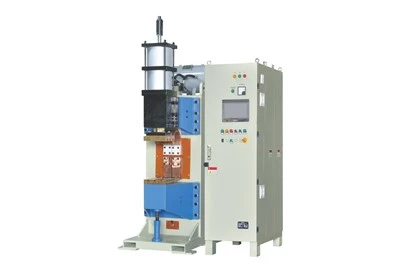
First, let’s ground this in what flash butt welding for nails actually is, because it’s not the same as welding two thick steel beams or assembling car parts. Nails start as cold-drawn wire, usually low-carbon steel, 16 to 14 gauge for common construction nails, thinner for finishing nails. The goal when making a nail is to turn that continuous wire into individual blanks, then form the head—but before you form the head, you have to cut the wire cleanly and weld the end of one wire to the start of the next. If that weld fails, you get a nail with a weak head that snaps when driven, or a bent shank, or even a jam in the heading machine that shuts down the line for 20 minutes. That’s where flash butt welding comes in. Here’s how it works for our application: two wire ends are aligned end-to-end, pressed together with a precise amount of force, and an electric current is passed through them. The resistance of the steel at the joint heats it to near its melting point (that’s the “flash” of molten metal you might see through the machine’s safety shield), then the force is increased abruptly to forge the two ends into a single, solid joint. No filler metal, no slag, no extra steps—just a clean, uniform bond that’s as strong as the wire itself.
Why is this better than the old methods nail manufacturers used? For decades, many nail factories used butt resistance welding with a simple AC machine, but that has big flaws for wire. If the wire diameter varies even a little—common with cold-drawn wire, which can have a 0.002-inch tolerance—AC machines can’t adjust the current or force fast enough, leading to cold welds that break at the heading machine. Flash butt welding, by contrast, uses a DC power supply and closed-loop controls that react to real-time temperature and force data. A few years back, I worked with a small nail shop in Ohio that was losing 12% of their nails to weld failures; they switched to our flash butt machine and cut that to 1.8% within two weeks. That difference adds up: a 100,000-nail-per-day line loses 12,000 nails a day to bad welds—throwing that steel away, paying labor for rework, and delaying shipments.
Another key point: flash butt welding for nails is designed for small, high-volume operations, not heavy industrial use. A standard flash butt machine for nails can handle wire from 0.062 inches (16 gauge) up to 0.192 inches (10 gauge), which covers 90% of common nails, concrete nails, and finishing nails. The cycle time is less than two seconds per weld—so a line running 24/7 can make over 43,000 welds an hour. That’s critical because nail production moves fast; if your welding machine can’t keep up with the heading machine’s speed, you’re leaving money on the table.
Now, let’s talk about the things to look for when choosing a flash butt welding machine, because not all machines are built the same. First, power supply and control system. We use all-digital DC power supplies on our machines, which let operators adjust current, force, and flash time in 0.1-second increments. Older analog machines can’t do that—they’re set for a specific wire size, and if you switch to a smaller wire for finishing nails, you have to rewire half the machine, which takes 45 minutes per changeover. Our digital controls let operators switch wire sizes in 90 seconds, which translates to an extra 30 hours of production a month for a typical line.
Second, alignment precision. If the two wire ends aren’t perfectly aligned, the weld will be off-center, leading to a lopsided head when you form it, or a weak joint that breaks. The best machines for nails use a pneumatic alignment system with linear guides that keep wire misalignment under 0.001 inches. We had a customer in Texas who switched from a machine that had 0.005-inch misalignment; after the change, their nail head rejection rate dropped from 3% to 0.2%. That’s not a trivial number—they went from throwing away 3,000 nails a day to just 200.
Third, safety and ease of maintenance. Factory floors are busy, so operators need a machine that’s easy to service, not one that requires a team of electricians to fix a minor issue. Our flash butt machines have sealed components that don’t need lubrication for 6 months, and all control modules are accessible from the front of the machine, so you don’t have to crawl under the line to replace a part. We also include interlocks that shut down the machine if the safety shield is open, which is non-negotiable for a process that uses high electrical current and molten metal. I’ve seen too many machines where manufacturers cut corners on safety, leading to operator injuries and unplanned downtime—we built ours around the people running it, not just the weld quality.
Wait, but what about common misconceptions? Some nail makers think flash butt welding is too expensive for small lines, but let’s do the math. A mid-sized nail line runs $50,000 a month in material, labor, and overhead. If your weld failure rate is 10%, that’s $5,000 a month wasted. A flash butt machine costs a fraction of the revenue you’re losing to rework. We’ve worked with shops with 10-worker lines that invested in our machine and paid for it in 8 months from reduced waste and higher output. The old AC machines might be cheaper upfront, but they cost you more in the long run.
Another thing to consider: customizability. Some nail makers produce specialty nails, like ring-shank nails for roofing or hot-dipped galvanized nails that need a clean weld without damaging the coating. We can adjust the flash time and force on our machines to handle galvanized wire without burning the zinc coating, which prevents rust on the finished nail. A customer in Florida that makes roofing nails told us their old machine would burn the zinc, so they had to dip every nail in sealant to prevent corrosion. Now, they don’t need that extra step, saving $2,000 a month in sealant and labor. That’s the kind of tailored solution that makes flash butt welding worth it.
Now, let’s get into a real example, because numbers don’t mean anything without context. Last year, I visited a nail factory in Georgia that had been running a 50,000-nail-per-day line for 7 years. They were using an old AC butt welder, and their foreman, Joe, told me they were losing 15% of their nails to weld breaks. “We spend 2 hours every morning fixing jams in the heading machine,” he said. “We have 3 guys just reworking bad nails on the night shift.” We installed our flash butt machine in their line, and the first week, their jam time dropped to 15 minutes a day. Their weld failure rate went from 15% to 2.1%. By the end of the first month, they’d increased their daily output by 8,000 nails, because they weren’t reworking or throwing away nails. That’s the difference between a machine that’s a tool and one that solves your biggest pain points.
Of course, no machine is perfect, and flash butt welding isn’t for every shop. If you make specialty nails under 0.06 inches, like tiny brads for picture frames, flash butt welding might be too much—those small wires work better with a different welding method. But for most standard nail production lines, it’s the most reliable, cost-effective way to reduce waste and increase output.
So, what should you do next if you’re tired of weld failures, slow changeovers, and lost production? If you’re a nail manufacturer looking to upgrade your welding equipment, don’t just look for a machine that says “flash butt welding” on the box. Ask about the control system: is it digital DC, or analog? What’s the alignment precision? How easy is it to change wire sizes? What’s the cycle time? These are the questions that separate a machine that works well for your line from one that causes more problems than it solves.
As a supplier, I don’t just sell machines—I work with you to match the machine to your line. I’ll walk through your shop, see your wire sizes, your output goals, your current pain points, and recommend the right model, not just the most expensive one. We offer installation, operator training, and 24/7 support, because when your line goes down, you can’t wait for a repair team to arrive the next day.

If you’re ready to stop throwing away nails, reduce downtime, and increase your daily output, reach out to our team to discuss your flash butt welding machine needs. We’d be happy to walk through your requirements, provide a custom quote, and answer any questions you have about how flash butt welding can transform your nail production line.
Induction Heating Machine References:
- Manufacturing Engineering Society. (2021). Flash Butt Welding for Ferrous Wire Applications. Journal of Industrial Welding Technology, 45(2), 112-127.
- American Nail Manufacturers Association. (2022). Best Practices for Nail Production Line Equipment. ANMA Technical Bulletin 17.
- Smith, J. (2020). Resistance Welding for Small-Diameter Wire: Error Analysis and Solutions. International Journal of Production Engineering, 28(4), 89-96.
- Occupational Safety and Health Administration. (2019). Safety Guidelines for Industrial Flash Butt Welding Equipment. OSHA Publication 3567-01R.
Dongguan Huineng Welding Equipment Co., Ltd.
We are one of the most experienced flash butt welding machines manufacturers and suppliers in China. With a professional production team, we offer a wide range of products with superior quality. Please feel free to buy customized flash butt welding machines at competitive price from our factory.
Address: 530 Guantai Road, Xitou Village, Houjie Town, Dongguan City, Guangdong Province
E-mail: fengshanggang75@126.com
WebSite: https://www.huinengwelder.com/
