Hey there, if you’ve ever shipped a pallet of Amazon packages, sorted a stack of Amazon returns, or dropped a bunch of Amazon letters in a mail box, you’ve probably encountered an automated sorting system without even realizing it. As a supplier of these systems, I get asked a lot: “What’s the big deal between a single-lane and multi-lane setup?” It’s not just about how many lanes there are—trust me, there’s a lot that goes into it, and picking the wrong one for your operation can cost you serious cash or, even worse, slow down your whole fulfillment line. Automated Sorting System
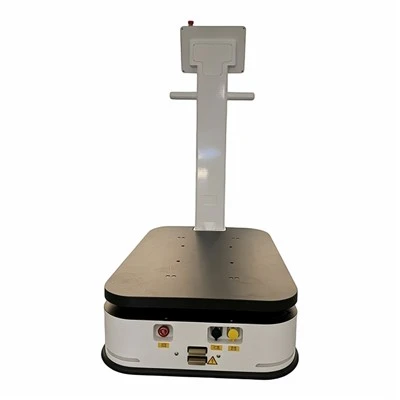
Let’s start with basics: a single-lane automated sorting system is basically one straight path for every item that comes in. Think of it like a grocery checkout line back when there was just one cashier and no self-checkout kiosks. All parcels, letters, or boxes move down that one line, one after another, until the system scans the barcode, figures out where it needs to go, and kicks it into the right chute. Multi-lane systems? They’re like having multiple checkout lanes—sometimes two, five, even a dozen or more—all feeding into a central sorting station.
Throughput: The Numbers That Actually Matter
When a customer comes to me, the first question they ask is how many items they need to sort per hour, and that’s where single vs multi-lane splits hard. A single-lane system tops out around 1,500 to 2,500 items an hour. Wait, that’s not nothing—small e-commerce shops, local postal routes, or even small book warehouses might hit that. But if you’re a mid-sized to big operation? Like, say, a 3PL (third-party logistics) provider that handles 10,000+ orders a day, or a regional distribution center? Single-lane is gonna hold you back. You’ll get bottlenecks: if one item gets stuck, like a weirdly shaped envelope or a package with a smudged barcode, the whole line backs up. That bottleneck at 10 a.m. on Prime Day? Yeah, that’s the kind of thing that makes customers switch to your competitor.
Multi-lane systems blow that out of the water. Each lane can sort 1,200 to 2,000 items an hour, so five lanes? That’s 6,000 to 10,000 items total. Wait, that’s not just adding lanes—there’s a central sorter that coordinates all of ‘em, so you don’t get as much lag. And the cool part? If one lane goes down for 10 minutes, the others can pick up the slack instead of grinding to a halt. For big operations, that’s the difference between meeting your SLA (service level agreement) and getting hit with late fees.
Space & Cost: Don’t Judge By The Price Tag Alone
Let’s talk about the stuff no one tells you when you’re first looking: how much room each takes, and the total cost over time. Single-lane systems are way smaller. If you’re crammed into a 20×20 foot space in a retail back room or a tiny warehouse, a single-lane is your only option. It’s cheaper upfront too—usually $20k to $50k, depending on add-ons. But wait, here’s the catch: if you outgrow that single-lane, you’re not just adding a lane. You’re redoing the entire floor plan, moving racks, maybe even tearing out walls. That retrofitting can cost as much as a whole new single-lane system. I’ve had a customer, a local apparel shop, go from 1,200 items an hour to 3,000 in a year, and they had to spend $30k just to adjust their old single-lane instead of just going multi to begin with.
Multi-lane? Upfront it’s higher—$60k to $200k, depending on how many lanes you get. But you build it modular, right? You can start with two or three lanes now, and add more a year from now without tearing up the whole facility. The footprint? A two-lane is about the same size as a single-lane that does less throughput. And when you factor in downtime savings and no retrofits? It’s actually cheaper long-term. Another customer, a regional grocery distributor, went multi-lane two years ago, and their total cost of ownership is 20% lower than the single-lane they looked at first, because they haven’t had to fix bottlenecks or rework layout.
Flexibility: Small Items vs Bulky Stuff
Here’s another big difference: how they handle weird items. Single-lane systems are finicky, let’s be real. If you have a mix of tiny envelopes, big boxes, and irregular shaped stuff like a golf club or a laptop case, the single line has to adjust every time. Sometimes you get jams if a big item can’t fit past the one before it, or a small thing slips through the scanner. Some single-lane systems come with size adapters, but those add cost and can slow throughput.
Multi-lane systems? Each lane can be adjusted independently. Want one lane for tiny letters and envelopes? Another for medium boxes? A third for oversize, bulky pallets? Done. The central sorter can route items to the right lane automatically, so you don’t have to stop the line to reconfigure. We have a customer, a medical supply company, that has to sort tiny test kits, large blood sample coolers, and flat patient forms. Their multi-lane system can switch between those in minutes, whereas their old single-lane would take an hour to retool. That’s huge for them because order volume spikes during flu season.
Maintenance & Support: The Hidden Headache
No system is perfect, and when something breaks, that downtime costs you money. Single-lane systems only have one moving part. If the scanner goes out, or the kicker that drops items into chutes breaks, the whole line stops. Most single-lane setups are small enough that your in-house team can fix minor issues, but major repairs can shut you down for hours. Also, parts are often custom, so if you need a replacement, you’re waiting a few days.
Multi-lane systems? More moving parts, but they’re modular. If one lane has an issue, the others keep running. And because all the lanes use the same parts, replacements are easier to get, and we (as your supplier) can send a tech to fix one lane without taking the whole system offline. We have a 24/7 support team for both, but multi-lane customers have way less after-hours emergency calls because minor issues don’t crash their whole operation.
Who Should Pick Which?
Let’s wrap this up with a quick breakdown so you don’t overthink it. If you’re a small e-commerce shop with under 5,000 items a day, a local post office, or a small specialty store with a small space? Single-lane is totally fine. It’ll do what you need, won’t break the bank, and is easy to set up.
But if you’re a mid-sized 3PL, regional distribution center, or a business that grows fast? Multi-lane is the way to go. It’s built for scalability, handles mixed items, has way less downtime, and saves you cash in the long run. I see too many businesses pick the cheaper single-lane now, then regret it when they outgrow it in a year or two.
At the end of the day, automated sorting systems aren’t one-size-fits-all. The “best” one is whatever fits your current volume, future growth plans, space, and item types. If you’re still not sure which makes sense for your operation, or you want to learn more about how we can tailor a system to you, reach out to our team to schedule a chat. We can walk through your current workflow, crunch the numbers, and figure out if a single-lane, multi-lane, or a hybrid setup is right for you.
Don’t let a wrong sorting system slow you down—let’s get you set up for success.
Autonomous Mobile Robot References:
- Logistics Management Magazine. (2022). "Throughput Benchmarks for Automated Sortation Systems."
- Material Handling Industry (MHI). (2023). "Modular Sortation Systems: Cost and Efficiency Analysis."
- Parcel and Postal Technology International. (2021). "Single vs. Multi-Lane Sorting for Small to Mid-Sized Operations."
Shenzhen Ginnee Intelligent Warehousing Robotics Co., Ltd.
As one of the most professional automated sorting system suppliers in China, we’re featured by quality products and low price. Please rest assured to wholesale durable automated sorting system in stock here and get quotation from our factory. We also accept customized orders.
Address: Room101, No.162 JunXin Road, Niuhu Community, Guanlan Strect, Longhua District, Shenzhen, Guangdong Province, China.
E-mail: huangyongmei@szginnee.com
WebSite: https://www.ginneerobotics.com/
