Let me tell you something straight from the front line of China-Australia air freight, because over the past seven years running our line, I’ve seen enough damaged shipments to know that a clear, stress-free damage claim process isn’t just a nice-to-have—it’s the difference between a client staying with us or bouncing to a competitor. Last month, we worked with a small Sydney café that had a pallet of custom coffee roasters damaged in transit from Shenzhen; they followed exactly the steps I’m about to lay out, and we resolved their claim in 12 days, no fuss, no back-and-forth. That’s the kind of result we live for, and I want every one of our clients to get that same peace of mind. China To Australia Air Freight Line

First things first: don’t wait to report damage. I know when you’re importing or exporting goods, your first instinct when a shipment arrives with scuffed boxes is to get your team unpacked and restocked, but hold off. Under the terms we all operate under in air freight—specifically the Montreal Convention, which governs most international cargo claims—you have a strict window to file a damage notice. For air freight, that’s 14 calendar days from the date the cargo is delivered to your specified location. If you miss that, you’re basically handing the claim over for our team to push against a hard deadline, and that slows everything down. Let’s be honest: no matter how professional we are, we can’t fix a claim if you come to us 4 weeks later saying “oh, I think something might be broken inside.” So step one: when your consignment lands, do a full inspection before signing for delivery. If the delivery driver offers to help unpack, politely decline—you’re the one who needs to document every inch of that shipment.
Next up: document everything like your business depends on it, because it does. I’ve had clients send me a single photo of a dented box and expect a full refund for $15,000 worth of electronics, and it just doesn’t fly. Damages can be external (crushed boxes, torn packaging) or internal (cracked glass, broken parts that don’t show on the outside), so you need proof of both. Start with the delivery receipt: note every imperfection—“box 32 has a 10cm tear on the top, box 47 has a crushed corner, all pallet straps are loose”—right there on the driver’s copy, and make sure the driver signs next to it. If they refuse? Take a photo of the receipt with their signature missing, and write a note in the comments of your own copy that you noted the damage before signing “received in apparent good order” (do not, under any circumstances, sign that. It’s a death sentence for your claim). Then, take at least 10 photos from every angle: close-ups of the damaged areas, wide shots of the entire pallet, photos of the way the shipment was loaded into the air container (if you have them—our team can provide these if you ask ahead of time). For internal damages, if you can unpack right there in front of the driver, do it; if not, unpack within 3 days and take more photos of the contents, plus a short video if you can show the broken items clearly. I always tell our new clients: the more photos you take, the faster your claim moves.
Once you’ve got your documentation together, pull together all the supporting paperwork—this is where a lot of people trip up. You need your commercial invoice that lists the value of the goods, your air waybill (AWB)—this is non-negotiable, it’s the official contract between our freight line and your business—any packing lists, and if you have insurance for the shipment, that paperwork too. Wait, before you submit, cross-check the AWB number with our booking confirmation—if the number is off by even one digit, our claims team will send it back, and that’s another delay. Also, be specific about the damage: don’t say “the shipment was ruined,” say “12 ceramic mugs are cracked, 8 metal tea tins are dented, total value of damaged goods is $1,200.” Vague claims get vague responses, and we can’t process a vague claim for our compliance team.
Now, the part that makes our line stand out: submitting the claim to the right place, the right way. A lot of our clients used to send their claim to our general support email, and that would get lost in a pile of 50 other inquiries. Here’s the trick: we have a dedicated claims inbox (I won’t post it here, but if you reach out, we’ll send it straight over) and we ask that you use the subject line: “Damage Claim – AWB [your 10-digit number] – [your company name].” That way, our claims team doesn’t have to hunt for your file—they can pull it up in 2 seconds flat. Attach all your photos, paperwork, and a 1-paragraph summary of what happened, and hit send. Our standard turnaround for acknowledging a claim is 24 business hours—no more waiting 3 days for someone to confirm they got it. I can tell you, that’s a big change from when I first started in this industry, where you’d wait a week just to get a response.
Once your claim is submitted, here’s what you can expect from our side, and what we’ll need from you. Our team will cross-check all your documentation with our flight records: when the shipment was loaded, when it was unloaded, how it was handled in transit. If there’s a discrepancy, like our loading logs saying the box was fine when it left Guangzhou, we’ll ask you for a video of the unpacking to confirm internal damage. If everything checks out, we’ll send you a claim decision within 10 business days. Most valid claims for our line get approved within that timeframe—we don’t drag our feet on paying out, because we know that’s money that’s tied up in your business. Now, a quick note on limits: under the Montreal Convention, our liability for goods is 19 Special Drawing Rights (SDR) per kilogram, which is roughly $28 Australian dollars per kg. That means if your shipment is worth more than that per kg, you’ll need to have declared a higher value at booking, or have your own cargo insurance. I always recommend our clients opt for declared value if they’re shipping high-value items like electronics or art—it’s only a small extra fee, and it covers you for the full value if something goes wrong.
Wait, let’s talk about common mistakes I see all the time, because avoiding these can save you a lot of headache. First: assuming “it’s not our fault, so we don’t need documentation.” No—even if you think the airport handling team messed up, you need proof to get reimbursed. Second: waiting to report internal damage. If you open the shipment a week after delivery and find broken parts, and you didn’t file a notice within 14 days, that claim gets denied. Third: not checking the AWB details. I’ve had clients submit claims with the wrong AWB number, and by the time our team figures it out, the 14-day window is almost gone. Fourth: overstating the damage. Don’t claim for undamaged items—our finance team cross-references your packing list, and if you put in for $500 worth of goods that were fine, that slows down the whole claim. Be honest, be specific, and you’ll get a fast resolution.
Let me share a recent example to make this real. Last quarter, a client in Melbourne shipped a container of handmade wooden furniture from Yiwu, total value $8,500. When the shipment arrived, they noticed one box had a crushed corner, but assumed the furniture inside was fine. They signed the delivery receipt, took a photo of the crushed box, and came to us 2 weeks later saying 6 chairs were split. We couldn’t process that claim—they didn’t report the damage within 14 days, and they didn’t unpack at delivery to document internal damage. We tried to work with them, but the Montreal Convention doesn’t care about our good intentions; it’s a strict set of rules. That client had to file a claim with their own insurance, which took 3 months to resolve. On the flip side, a Sydney jewelry importer sent a shipment of 20 custom silver pendants last month. They did a full inspection at delivery, noted a tear in the box, took 15 photos of the damaged and undamaged pendants, filed within 10 days, and we approved their $1,800 claim in 8 days. That’s the difference between following the steps and cutting corners.
Now, a few tips for the future to avoid damage claims entirely (we’d much rather not have to process a claim, to be honest). First, choose the right packaging. We can’t fix a shipment if you use thin cardboard boxes for heavy glass items. Our team offers free packaging advice—we’ll tell you what kind of crates or foam inserts work best for your goods, no extra charge. Second, mark your boxes clearly. Label fragile items with “FRAGILE – THIS SIDE UP” in big red letters, and use your AWB number as the ID on every box, not just the pallet. Third, track your shipment in real time through our online portal—you can see where it is at every stop, so if there’s a delay or a handling issue, you can plan for inspection at delivery.
If you’ve made it this far, you’re probably dealing with a damaged shipment right now, or you’re planning a big import/export run and want to be prepared. Our claims process is built to be as hassle-free as possible because we’re a freight line that works with small businesses and large corporations alike—we’re not a faceless corporate behemoth, we’re a team that gets how important your goods are to your bottom line. If you need help filing a claim, or if you’re a new client looking to book a China to Australia air freight shipment with clear, fair terms, reach out to our team. We’ll walk you through every step, no jargon, no runaround. We’ve built our line on transparency and reliability, and that includes standing by our clients when things go wrong.
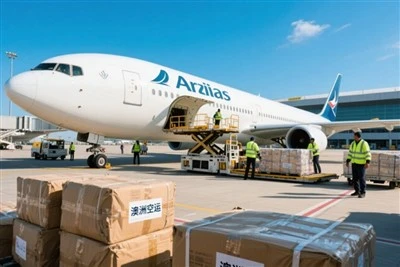
I’ll wrap this up with a final reminder: the key to a successful damage claim is speed, documentation, and specificity. Follow the 14-day reporting window, take as many photos as you need, gather all the correct paperwork, and send it to our dedicated claims inbox. If you do that, we’ll resolve your claim fairly and quickly. If you’re looking for a freight line that cares as much about your shipments as you do, don’t hesitate to connect with our team—we’re ready to help your business move goods smoothly between China and Australia, every single time.
Large-item Logistics From China To Australia References
- Montreal Convention for the Unification of Certain Rules for International Carriage by Air, 1999
- International Air Transport Association (IATA) Cargo Claims Resolution Guide, 2023
- Australian Competition and Consumer Commission (ACCC) Guidelines for International Freight Damage Claims, 2022
- China-Australia Air Freight Association Operational Standards, 2024
Shenzhen Kuaihui International Logistics Co., Ltd.
Shenzhen Kuaihui International Logistics Co., Ltd. is a leading China-Australia dedicated logistics service provider in China. As a professional agent and platform, we are committed to providing high quality china to australia air freight line with low price. Welcome to contact us for pricelist.
Address: 3rd Floor, Building 6, Nanbiantou Industrial Zone, Xifang, Songgang Street, Bao’an District, Shenzhen City, Guangdong Province
E-mail: info@kkhwl.com
WebSite: https://www.kuaihuiexp.com/
