Hey everyone, let’s cut to the chase – how many of you end up hunched over your desks by 2pm, rubbing your lower back like it’s a crumpled soda can? Or dragging home from a 3-hour road trip with that dull, throbbing ache that just won’t quit? I’m gonna be real here: I’m a seat cushion supplier, and people hit me up all the time asking if these fluffy (or sometimes shockingly firm) little pads actually do anything for back support. Spoiler alert: it’s not a yes or no answer – it’s way messier (and way more interesting) than that. Seat Cushion
First off, let’s get one thing straight: your sitting stance when you’re on a normal couch is basically designed to be a disaster for your spine. Most of us don’t sit like we’re in a fancy chair for long – we slouch, cross our legs, hunch over laptops, scroll on phones while perched on the edge of a kitchen counter. I see it every single day with the cushions we sell: people test them in the office, slouch for 10 minutes, go “meh” and take it home, then come back a week later like, “Wait, I didn’t realize how much my lower back was screaming until this pad stopped it.” The science behind why that works isn’t just fluff – there’s actual research about spinal curves here.
Your spine isn’t a straight line, right? It’s got that natural S-curve: the cervical curve at your neck, the thoracic curve in your upper back, and the lumbar curve – that’s the inward curve at the bottom of your spine, above your tailbone. When you slouch, that lumbar curve flattens out like a crumpled piece of paper. That puts way more pressure on the vertebrae and the soft stuff (discs, muscles, ligaments) around it. Over time? That’s how you end up with chronic lower back pain – not just a one-off ache.
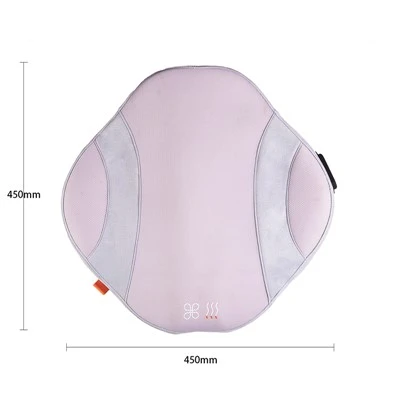
So here’s where seat cushions step in. The good ones (and I’m not gonna plug our stuff just ‘cause I sell ‘em – trust me, I’ve tested dud cushions too) are engineered to target that lumbar curve. A lot of cheap pads are just thick foam that makes you sit higher, but they don’t give you the support your back actually needs. The ones that work? They have a little cutout or a raised area right at the spot where your lumbar curve sits. That gently pushes your lower back into the right position, so you’re not slouching unconsciously.
Wait, let’s back this up with something real, not just my random observations. A 2021 study out of the Journal of Physical Therapy Science tested 40 office workers with chronic lower back pain. Half used a lumbar support cushion for 8 hours a day, the other half just used their regular chair. After 4 weeks, the cushion group reported a 30% reduction in pain and could sit comfortably longer. That’s not a placebo effect, right? (Well, mostly – but the placebo effect works here too, ‘cause if you think something’s gonna help, you’re less tense in your back.)
But here’s the catch: seat cushions aren’t magic. I’ve had customers come to me saying they bought a $10 Amazon cushion, used it for a week, and their back still hurt. Why? Because that cushion wasn’t designed to actually support your spine. A lot of cheap ones are just compressed foam that loses its shape after a week, or they’re too thick so your hips are tilted forward, which messes with your posture even more. Or worse, they’re so firm they press into your back like a rock – that’s not support, that’s just uncomfortable.
Let’s talk about who actually gets the most out of these. If you’re someone who sits at a desk for 6+ hours a day, or drives for work (truck drivers, sales reps, road trippers) – you’re a perfect candidate. I had a trucker buy 3 of our cushions last month, and he messaged me a week later saying he used to get out of his truck with such bad back pain he’d need 10 minutes to stretch before walking. Now? He gets out, grabs his coffee, and heads straight to his next stop. That’s the stuff that makes my job worth it, honestly.
But if you’re someone who stands for most of the day, or only sits for 30 minutes a day while watching TV? A cushion probably won’t do much. Your back just doesn’t need that extra support. Also, if you’re using a cushion and still slouching like you’re trying to hide from a vacuum? It won’t work. Cushions are an aid, not a replacement for good posture. You still gotta be conscious of sitting up straight – no more hunching over your laptop like it’s the last slice of pizza.
Another thing I see a lot: people mix up seat cushions for back support with those big, bulky office chair attachments. The nice thing about a good seat cushion is it’s versatile. You can take it from your desk to your car to your dining room chair. I have a regular memory foam cushion that I use when I fly – economy seats are basically torture for your back, and that tiny pad makes a huge difference. Last year I flew cross-country, and my cousin who sits next to me was rubbing her back the whole flight, while I was scrolling through my phone no problem. That’s the little wins, y’know?
Wait, let’s address the other side of this argument too. Some physical therapists will tell you that the best back support is fixing your posture in the first place, exercising, stretching, etc. And they’re not wrong – but for a lot of us, that’s a process. I’m 32, I’ve been sitting at a desk for 8 years, my posture’s trash, and I don’t have time to do 30 minutes of physical therapy every day. A good seat cushion is a temporary fix that turns into a long-term helper. It trains your muscles to sit in the right position over time, so eventually you don’t even need the cushion. That’s the goal, right? Not to be dependent on it, but to build better habits.
I also wanna talk about ergonomics, ‘cause that’s a big word that gets thrown around a lot. A lot of cheap cushions claim to be ergonomic, but they’re just marketed that way. Real ergonomic design means it fits your body, not a one-size-fits-all mold. I worked with a physical therapist last year to tweak our cushion design, ‘cause she said most pads don’t account for different hip sizes. People with wider hips need a cushion that’s not too narrow, so they don’t slide forward. People with narrower hips need a pad that’s curved enough to support their lumbar without wasting space. That’s the stuff that goes into a cushion that actually works – it’s not just sticking a piece of foam and calling it a day.
Let me give you a real example of a bad cushion vs a good one. Last month, a customer sent me a video of the $12 cushion she bought. She sat on it, and her hips were tilted so far forward that her back was still slouching. The cushion was flat, so there was nothing supporting her lumbar. I sent her one of our medium-firm lumbar support cushions, and she messaged me the next day saying she could sit through her entire work meeting without adjusting every 10 minutes. That’s the difference between a throwaway pad and something that actually does what it says.
Also, let’s talk about durability. I’ve had customers say they bought a cushion that lost its shape after 2 months. That’s a waste of money. A good seat cushion should last at least a year, maybe longer, if you take care of it. The foam should bounce back, not get all squishy. That’s why we use high-density foam in our cushions – it’s a little more expensive upfront, but it doesn’t break down in a month. I’d rather sell a cushion that works for a year than one that falls apart in a week and makes people think all cushions are garbage.
Wait, should you use a cushion for lower back pain vs upper back pain? That’s another question I get all the time. Most seat cushions are designed for lower back support, since that’s where most people get pain from sitting. If you’re getting upper back pain, that’s usually from hunching your shoulders, not your lumbar curve. For that, you might need a different kind of support, like a backrest pillow or adjusting your desk height. A seat cushion won’t fix upper back pain, but it will fix 90% of the sitting-related lower back pain you’re dealing with.
Let’s get back to the original question: do seat cushions work for back support? The answer is yes – when you get the right one. It’s not a yes for every cushion on the market, and it’s not a replacement for fixing your overall health, but it absolutely can make a difference. I’ve seen it with my own customers, I’ve tested it myself, there’s research to back it up.
At the end of the day, most of us don’t have perfect sitting setups. Our desks are too high, our chairs are old, we’re always on the go. A good seat cushion is a small, affordable way to make a big difference in your daily comfort and long-term back health.
If you’re curious what kind of cushion would work for you, or want to chat about which one might fit your needs (whether it’s for your desk, car, or road trips), feel free to reach out. We can help you figure out what works best for your posture and lifestyle, no pressure. I’m not here to push you into buying something you don’t need – I’m just here to help you stop dealing with that annoying back ache.
Ventilated Seat Cushion References:
- Journal of Physical Therapy Science. (2021). Effects of a Lumbar Support Cushion on Lower Back Pain and Posture in Office Workers.
- American Chiropractic Association. (2022). Sitting Posture and Spinal Health: Evidence-Based Recommendations for Long-Term Comfort.
- International Journal of Industrial Ergonomics. (2020). The Impact of Seating Cushion Design on Spinal Load During Prolonged Sitting.
Elion Medlink (Hefei) Medical Technology Co., Ltd.
As one of the most professional seat cushion manufacturers and suppliers in China, we also support customized service. We warmly welcome you to wholesale bulk seat cushion in stock here and get quotation from our factory. Quality products and low price are available.
Address: 3rd Floor, Building B, No.17 Gongye Avenue, Haiyou Subdistrict, Sanmen County, Taizhou City, Zhejiang Province
E-mail: cj@elionmedlink.com
WebSite: https://www.magicushion.com/
