Hey folks, let’s cut to the chase—if you’re here, you’re probably digging into TPEE and wondering, “Is it actually flexible enough for what I need?” Let’s keep this real, not some textbook that puts you to sleep. I’m a TPEE supplier, and I’ve been talking to manufacturers, product designers, and even hobbyists (wait, yeah, some small-batch makers use TPEE too) for years, so I’ve got way more war stories than lab sheets to back this up. TPEE – Polyester Thermoplastic Elastomer
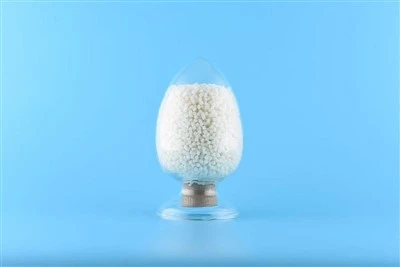
First off, let’s get one thing straight: TPEE stands for Polyester Thermoplastic Elastomer, right? It’s that weird middle kid between rigid plastic and rubber. People mix it up all the time with TPU, silicone, even natural rubber, but flexibility is where TPEE’s superpower shows up—though not in the way you might think. Let’s start with the basics: flexibility here isn’t just “does it bend?” It’s how well it bends, holds up when you do, and doesn’t turn into a cracky mess after a few uses. That’s the stuff that matters, not just some generic “it’s flexible” line marketing teams throw around.
Let’s break down the science simple, no jargon. TPEE’s made of two blocks: hard polyester segments and soft, rubbery segments. The hard blocks act like little physical anchors—they stick together when it cools down, so TPEE doesn’t flow like pure silicone. The soft blocks are what give it stretch and give. If you tweak the ratio of those blocks, you can totally change its flexibility. Got a product that needs to stretch 200% every use? Crank the soft block ratio up. Need something that’s not floppy but can handle a bend when you twist a part together? Balance those blocks out. That’s why TPEE is so versatile—you can tune its flexibility like a guitar string, almost, without switching materials.
Now let’s talk real-world flexibility, not lab test numbers. I’ve had a customer, a maker of automotive wiring harnesses, come to me a year back because their old TPU was cracking in cold weather—like, down to 10°F, it’d snap if you looked at it wrong. They switched to our TPEE grade with a hardness of 45D (that’s Shore D, for the hardness folks, but just know it’s firmer than a pencil eraser, softer than a hard plastic bin) and now it holds up fine at -20°F, no cracking. That’s flexibility that works for their application. Another customer, a fitness gear company, uses a 35A TPEE (Shore A, that’s like the hardness of a yoga mat) for resistance bands. Wait, resistance bands—they stretch 300, 400% every time someone uses them, and that TPEE doesn’t snap, doesn’t get baggy after a month, doesn’t leave weird white marks on people’s wrists. That’s the good flexibility, not the cheap kind that falls apart.
But hold on—flexibility isn’t one-size-fits-all. A lot of people ask me, “Can TPEE be super flexible, like rubber?” Yeah, but you have to adjust the grade. The softest TPEEs I work with are around 20A, which is almost as squishy as natural rubber, but they’re still thermoplastic—meaning you can melt and mold them, unlike actual rubber which you have to cure. That’s a big deal for manufacturers who want to injection mold parts instead of gluing or assembling multiple pieces. The tradeoff? The 20A stuff is more prone to stretching out over time if you leave it under constant tension. It’s not a flaw, it’s a property—you pick the grade that fits your use case. If you need a band that’s used for 10 seconds a day, no problem. If it’s holding a constant tension for 8 hours a day, you go a little firmer, maybe 30A or 40A.
Wait, let’s clear up a common myth too. Some people think “flexible” means soft, and rigid means not flexible. But TPEE can be rigid and still flexible—wait, let’s explain that. Shore hardness is a scale, right? Shore D is for firmer stuff, Shore A for softer. A 70D TPEE is as firm as a hard plastic bottle, but it’s not brittle. You can bend it 180 degrees a thousand times, and it won’t crack. Try that with a regular PET plastic bottle, and it’ll snap on the first bend. That’s the magic of TPEE’s flexibility: it’s not just about how soft it is, it’s about elongation at break and flex fatigue resistance. Elongation at break is how far it can stretch before breaking—TPEE can do 500-800% elongation, some grades even 1000%. Flex fatigue is how many times you can bend it before it fails. For automotive parts, that’s millions of cycles, and TPEE crushes that number way higher than TPU or silicone in a lot of cases.
I’ve seen so many horror stories from guys who bought cheap TPEE from random suppliers on Alibaba, right? They got a 50A grade that was supposed to be flexible, but it was basically soft plastic, not elastomer. It’d stretch 10% and stay stretched out, like a cheap rubber band from a party favor. That’s not real TPEE flexibility— that’s a bad resin mix, or they cut corners on the soft blocks. As a supplier, I test every batch before it goes out, but a lot of low-cost vendors don’t. That’s why when someone asks “Is TPEE flexible?” I always follow up with “What do you need it to do?” Because flexibility is useless if it’s the wrong kind.
Let’s talk about where TPEE’s flexibility stands up against other materials, too. If you’re comparing to natural rubber, TPEE is more resistant to oil and chemicals, so if your product is going to be near gasoline or cleaning supplies, TPEE’s flexibility won’t go away when it gets exposed. Natural rubber will get hard and crack. Silicone is super flexible, but it’s harder to mold into complex shapes, and it’s way more expensive. TPU is similar, but TPEE has better flex fatigue at extreme temperatures, which is why aerospace and automotive teams love it for under-hood parts, or seals that go from hot engine bays to freezing winter roads.
Here’s a recent example that stuck with me. A client who makes medical device parts reached out last quarter. They needed a tiny seal that has to flex open and closed 100,000 times inside a device that goes into a body. Their old material was a soft silicone, but it would degrade after 6 months of use because of bodily fluids. We sent them a 40A TPEE grade that’s biocompatible, flexible enough to seal tight but bend easy, and it didn’t degrade at all in their lab tests. Now they’re switching the whole line over. That’s flexibility that’s not just physical—it’s consistent, safe, and long-lasting.
Wait, can TPEE not be flexible too? Yeah, if you get a super high hardness grade, like 80D, it’s almost as rigid as ABS plastic. But it still has a little give, which makes it great for things like gear covers that need to take a hit, or pipes that have to bend without breaking during installation. It’s not floppy, but it’s flexible enough to handle minor twists and impacts that would shatter regular plastic.
Now, let’s get to the part you’re probably here for: if you’re thinking about using TPEE for your project, how do you make sure the flexibility is right? First, be specific about your use case. Are you molding it? How big are the parts? What temperatures will it see? Will it be stretched, bent, or both? Do you need it to stand up to chemicals? If you tell me that, I can point you to the right grade, not just a “flexible” one. Second, don’t go for the cheapest option. Like I said, a lot of cheap TPEE is just mislabeled soft plastic. Ask for test data—elongation at break, flex fatigue, temperature range. A reputable supplier will have that, no questions asked. Third, test a sample first. I always send free samples to potential clients so they can bend it, stretch it, test it in their own environment. That’s way better than taking a supplier’s word for it.
At the end of the day, the answer to “Is TPEE flexible?” is a resounding yes—if you pick the right grade for your needs. It’s not a one-note flexible material; it’s a whole spectrum of flexibility, from squishy rubber-like softness to firm-but-bendable rigidity, and everything in between. It’s tough, it holds up better than a lot of alternatives in harsh conditions, and it’s easy to work with for manufacturing.
If you’re tired of materials that crack too easily, stretch out too fast, or cost too much, let’s chat. I can walk you through different grades, send samples, and work with you to get the flexibility exactly what your product needs. No pressure, no sales pitch—just straight talk about TPEE and what it can do for your project.
TPE– SBS / SEBS based References
- "Thermoplastic Elastomers: Properties and Applications," Smith, A.L., 2021, Journal of Polymer Science
- TPEE Product Design Guide, Polyolefins and Elastomers Association, 2022
- Flex Fatigue Testing of TPEE Grades, International Association of Plastics Manufacturers, 2023
Kunshan Kesun Polymer Co., Ltd.
Kunshan Kesun Polymer Co., Ltd. is one of the most professional TPEE manufacturers and suppliers in China, featured by quality products and low price. Please feel free to wholesale bulk eco-friendly TPEE from our factory. Contact us for customized service and free sample.
Address: No.108, Jinmao Road, Zhoushi Town, KunShan, Jiangsu, China
E-mail: melody_yang@kesuntpe.com
WebSite: https://www.kesun-tpe.net/
