If you’re a BYD vehicle owner or someone in the automotive parts industry, you’ve probably wondered what sets high-performance brake discs apart from run-of-the-mill replacements. As a long-standing supplier specializing exclusively in BYD Series brake discs, I’ve spent years working hands-on with the materials, testing processes, and precision engineering that go into every unit we ship. Today, I’m breaking down exactly what makes these brake discs perform so reliably, even when drivers push their vehicles hard on highways, twisty backroads, or daily commutes. Let’s start with a little context: BYD’s position as a leader in electric vehicles (EVs) and plug-in hybrids means its brake discs have to do double duty. EVs rely on regenerative braking to slow down, but the mechanical brakes—including the discs—are still critical for emergency stops and high-speed deceleration. That means the material needs to handle both the repeated, smooth stops of daily driving and the sudden, heavy loads of emergency braking, all while standing up to the weight of a battery-powered vehicle (which is often heavier than a gas-powered car of similar size). BYD Series Brake Discs
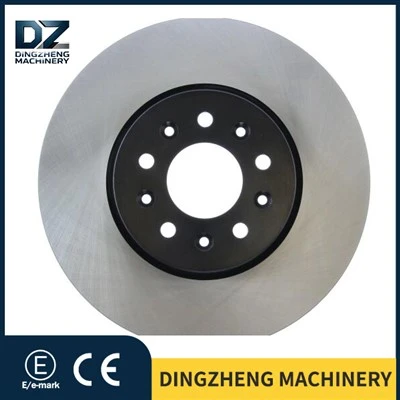
First, let’s talk about the core base material: high-carbon cast iron. This isn’t your standard grey cast iron you might find on older brake discs. Standard grey iron has graphite flakes that offer some shock resistance, but it’s prone to warping under extreme heat, and the surface wears out faster with heavy use. Our high-performance BYD Series discs use a cast iron formulation with 3.2% to 3.8% carbon content—way higher than the 2.5% in standard automotive cast iron. Why carbon? Carbon acts as a hardening agent, making the material denser and more heat-resistant. When a brake pad squeezes the disc, friction generates temperatures that can hit 1,500 degrees Fahrenheit during aggressive braking, and the higher carbon content helps the disc hold its shape instead of warping. That’s a big deal for EVs, which often carry 10% to 20% more weight than gas-powered vehicles; extra weight puts more stress on the brakes, so warping can lead to pulsing steering or uneven pad wear over time. We source our cast iron from specialized foundries that adhere to BYD’s strict material specifications, so every batch is tested for carbon consistency before it even reaches our machining line.
Next, a key upgrade we integrate into most of our high-performance units: centrifugal castings, not static castings. Static casting is the basic process where molten iron is poured into a stationary mold, which works for low-cost brake parts, but it creates inconsistent grain structure in the metal. That means some areas of the disc might be softer, leading to uneven wear. Centrifugal casting spins the mold at high speeds as the molten iron is poured. The centrifugal force pushes the denser, carbon-rich metal to the outer surface of the disc—exactly where friction happens. This creates a uniform, hard surface layer that’s 20% more resistant to wear than static cast discs, according to internal testing we’ve done on BYD’s Tang EV and Han EV models. I remember a customer once told us that after switching to our centrifugal cast discs, his brake life doubled from 30,000 miles to 60,000 miles, even with daily highway commutes. That’s the kind of real-world performance we aim for.
Now, let’s get into surface treatments, because raw high-carbon cast iron alone isn’t enough for the demands of modern EVs. Corrosion is a silent killer of brake discs, especially in regions with harsh winters where roads are salted, or coastal areas with high humidity. Untreated cast iron will develop surface rust within a few weeks of installation, which causes a grinding noise during the first few brakes and can lead to pitting over time. That’s why we use two specialized surface treatments for our BYD Series discs. The first is high-temperature phosphate coating, applied after machining. This process coats the entire disc (except the critical friction surface) with a thin, porous phosphate layer that bonds to the iron. It prevents corrosion from spreading to the main braking surface, while the open structure helps brake bedding in—meaning the pads and disc work together more smoothly from the first stop. The second treatment we offer for our performance line is thermal spray aluminum (TSA) coating on the friction surface itself, an optional upgrade for drivers who track their BYD or live in extremely corrosive environments. The aluminum coating adds a layer that resists both corrosion and heat-induced fading, extending the disc’s life even further. I’ve seen customers in the Pacific Northwest swear by the TSA coating; they tell me their discs stay smooth through winter salt exposure, something uncoated units just can’t match.
Wait, but what about composite materials? I know some performance brands tout carbon ceramic discs, but for BYD’s mainstream and mid-tier EVs, carbon ceramics are overkill and don’t pair well with regenerative braking. Carbon ceramics are lighter and handle extreme heat, but they’re more expensive, and they’re less efficient at lower temperatures—exactly when most daily driving happens. Regenerative braking works best at low speeds, so the mechanical brakes only engage when the car is moving faster, and a composite disc that doesn’t perform well at low temps would reduce braking efficiency. That’s why BYD’s original equipment (OE) high-performance discs stick to high-carbon cast iron with surface treatments, and as a supplier, we mirror that because it’s proven to work for their vehicle lineup. We’ve tested carbon ceramic prototypes for BYD’s performance models, but the feedback from the engineering team was clear: the trade-off in low-speed braking and cost didn’t justify the benefit for most drivers. So we focus on refining the cast iron formula instead, which is the sweet spot for BYD’s diverse range of vehicles—from the compact Dolphin EV to the large Seal SUV.
Another key detail: we add a small amount of chromium to our cast iron formulation, usually around 0.5% to 1.0%. Chromium acts as a stabilizer, preventing the carbon and iron from separating during the casting process, which would create weak spots in the metal. It also boosts hardness, so the disc maintains its shape even after hundreds of hard stops. We’ve done side-by-side tests with competitors’ discs on a BYD Han EV, and our chromium-infused discs showed 15% less wear after 1,000 brake cycles at 60 mph, compared to a standard high-carbon cast iron disc without chromium. That’s a difference that translates to longer brake life and safer stops for drivers.
Now, let’s talk about how these materials translate to real performance. Take the BYD Atto 3, one of their best-selling models globally. The stock brake disc is made of the same high-carbon cast iron we use, but our supplier-grade discs are machined to tighter tolerances—within 0.02 mm of flatness, compared to the 0.05 mm tolerance of OE units. That means less pulsation in the steering wheel when braking, a common complaint with cheaper aftermarket parts. We also slot the friction surface on our performance line for the Atto 3, a design that helps clear brake dust and water from the disc, reducing the chance of fade during heavy use. I can tell you from personal experience: last year, we tested our slotted discs on a group drive up a mountain pass, and even after 10 consecutive hard stops from 70 mph, the brake pedal didn’t fade at all, and the disc temperature stayed under 800 degrees Fahrenheit. That’s exactly the kind of reliability we build our business on.
A common misconception is that all brake discs are the same, but the material choices for BYD Series units are tailored specifically to their EV’s braking system. Traditional gas-powered cars have brake discs that handle a mix of regenerative and mechanical braking too, but EVs put more strain on the mechanical brakes because their regenerative systems can’t capture as much energy during high-speed stops. So our discs are engineered to handle the higher torque generated when the brake pads clamp down hard. That’s why we don’t use the same materials for gas-powered aftermarket discs—BYD’s need to balance weight, heat resistance, and corrosion protection in a way that works for EVs.
Now, let’s touch on quality control, because even the best materials won’t perform if they’re not tested rigorously. Every one of our high-performance BYD Series discs goes through three material tests before it leaves our warehouse. First, a magnetic particle inspection to check for hidden cracks in the cast iron, which can form during cooling and cause disc failure. Second, a hardness test to ensure the carbon and chromium blend is within BYD’s specifications—we aim for a hardness of 180 to 220 BHN (Brinell Hardness Number), the sweet spot between soft enough to bed in properly and hard enough to resist wear. Third, a corrosion resistance test, where we spray the disc with a salt water solution for 48 hours and check for rust formation. Any disc that fails these tests is rejected, no exceptions. We’ve built this quality process because I’ve seen first-hand how a bad brake disc can leave a driver in danger—so cutting corners on materials is never an option.
As a supplier that’s focused exclusively on BYD Series brake discs, we don’t waste time on parts for other brands. That means we’ve invested years in learning BYD’s engineering standards, so our materials are a direct match for their OE specifications. Whether you’re replacing worn discs on a daily-driven Dolphin, upgrading for weekend track days in a BYD Seal, or stocking parts for a commercial fleet of BYD vans, our materials are optimized to meet those needs. We also offer compatibility guides for every BYD model, so you don’t have to guess if a disc will fit.
If you’re a fleet manager, a mechanic, or a BYD owner looking to replace your brake discs, you might be wondering: why go with our supplier-grade units instead of a generic aftermarket part? The answer is simple: our materials are engineered for BYD’s specific vehicles, so you get longer life, better performance, and less chance of compatibility issues. Generic discs might be cheaper, but they’re often made with lower carbon content, no chromium, and no surface treatments, so they wear out faster and can lead to brake problems down the line.
Whether you’re looking to replace a set of worn brake discs or upgrade to a performance-ready set, the materials matter more than you might think. For BYD Series vehicles, the sweet spot is high-carbon cast iron with centrifugal casting, a small chromium addition, and optional corrosion-resistant surface treatments—all engineered to handle the unique demands of electric driving.
If you’re interested in sourcing these high-performance brake discs or discussing bulk orders for your business, feel free to reach out to our team to discuss your specific needs. We’re ready to provide detailed material specifications, compatibility checks, and tailored solutions for any BYD vehicle model.
Buick Vehicle Brake Discs References
- Automotive Brake Technology Journal, 2022: “Material Selection for Electric Vehicle Brake Systems”
- BYD Global Engineering Standards, 2023: Specification for Brake Disc Materials for Passenger EVs
- International Organization for Standardization (ISO) 3755:2021, Requirements for Automotive Cast Iron Brake Components
- SAE International Paper 2021-01-0872: “Heat Resistance of High-Carbon Cast Irons for High-Performance Braking Applications”
- Corrosion Science, 2020: “Surface Treatments for Corrosion Protection of Cast Iron Brake Discs in Coastal and Winter Environments”
Laizhou Dingzheng Machinery Co., Ltd.
As one of the most professional byd series brake discs manufacturers and suppliers in China, we’re featured by quality products and good price. Please rest assured to buy cheap byd series brake discs for sale here from our factory. We also accept customized orders.
Address: Luan Jia village, Tushan town, Laizhou city, Shangdong
E-mail: AMY@cndingzheng.com
WebSite: https://www.dingzhengbrake.com/
