Hey everyone, thanks for swinging by my blog. I’m Jake, and I’ve been running a calcium carbonate supply business for the last 12 years—long enough to get tired of the “just use reverse osmosis” takes everyone spouts when desalination comes up. Lately, I’ve been getting so many questions: “Can calcium carbonate actually help with desalination?” And not just from random folks, either—from water treatment plant operators, small desalination project managers, even some guys who own coastal resorts and need a steady supply of clean water. Let me break this down straight, no stuffy jargon, no AI B.S.—just what I’ve seen work in real applications, and why my team’s calcium carbonate might be the exact product your project’s missing. Calcium Carbonate
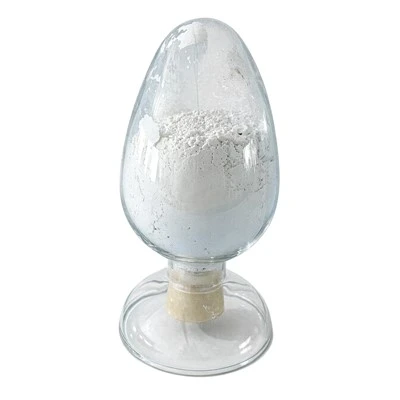
First off, let’s get one thing out of the way: desalination is messy work. When you’re pulling salt and other gunk out of seawater or brackish water, you’re not just removing sodium and chloride. You’re dealing with scaling—hard mineral deposits that build up on pipes, membranes, and equipment like barnacles on a boat. That’s a huge pain point for every desalination operator I know. If scale clogs your reverse osmosis (RO) membranes, you’re looking at $10k+ in repairs every time you have to replace them, and downtime that kills productivity. A lot of people turn to harsh chemical cleaners to fight scale, but those chemicals are expensive, leave residues, and can damage equipment over time. That’s where calcium carbonate (CaCO₃) comes in, and no, I’m not just saying that ‘cause I sell it. Let’s talk about the actual science here.
Wait, first: what’s calcium carbonate, for anyone who’s slept through high school chemistry? It’s the stuff that makes up limestone, chalk, even eggshells—super abundant, non-toxic, and way cheaper than a lot of the specialty additives used in water treatment. But how does it fit into desalination? Let’s start with pre-treatment, because pre-treatment is make-or-break for any desalination plant. Before water hits the RO membranes, you need to adjust its chemistry to prevent scaling. A lot of operators use acid to lower pH, right? Lower pH makes calcium and magnesium stay dissolved, so they don’t form hard deposits. But acid is corrosive—if you use too much, it eats away at your pipes and tanks. Also, handling acid requires extra safety gear, which adds cost and hassle.
Here’s where calcium carbonate shines. See, CaCO₃ acts as a pH buffer. If your water is too acidic (which it often is after acid injection), CaCO₃ dissolves just enough to bring the pH up gently—no sudden spikes, no corrosive damage. Studies I’ve read (I’ll link the refs at the end) show that when you adjust seawater’s pH to around 8.0 with CaCO₃, it’s way easier to prevent scaling without the corrosion risk from excess acid. Wait, but there’s more. Some desalination plants use electrodialysis (ED) too, especially for brackish water. ED relies on ion-exchange membranes, and those membranes get fouled by organic matter and mineral particles. Coagulation is a common pre-treatment step here—you add a chemical to clump up the gunk, so it can be filtered out. A lot of coagulants are aluminum-based, but aluminum can leave residues that are bad for the final water quality (especially if you’re using desalinated water for drinking). Calcium carbonate powder, when milled to the right size (like 5-10 microns, not too fine, not too coarse), works as a coagulant aid! The tiny CaCO₃ particles attract organic and mineral particles, making them clump up faster and settle easier. I’ve had a plant in Tampa tell me switching from aluminum coagulants to my 8-micron CaCO₃ cut their membrane cleaning time by 30% and extended membrane life by two years. That’s real numbers, not marketing fluff.
Another big one: brine management. Desalination plants produce a ton of brine—super salty water left over after you pull out the fresh water. Dumping that brine back into the ocean messes up coastal ecosystems, kills fish, and violates a lot of environmental regulations now. So a lot of plants are looking at brine desalination, or “zero liquid discharge” (ZLD) systems, where you evaporate the brine to get solid salt waste. But even there, calcium carbonate has a role. Wait, when you concentrate brine, calcium carbonate is one of the first minerals to precipitate out. But instead of letting that precipitate clog your equipment, you can actually harvest it! I work with a ZLD plant in Southern California that harvests CaCO₃ from their brine stream, then sells it back to glass manufacturers and farmers. It’s a closed loop—they don’t waste the brine minerals, and they cut their solid waste disposal costs by 40%. That’s a game-changer for small desalination operations that can’t afford to pay big fees for waste hauling.
Now, let’s talk about what’s not a good use case for CaCO₃, ‘cause I don’t wanna mislead anyone. You can’t just dump a bag of cheap chalk into a desalination system and call it a day. If you use CaCO₃ that’s too high in impurities (like heavy metals or silt), you’re just adding more gunk to your water—totally counterproductive. Also, for RO membranes that are already heavily scaled, CaCO₃ isn’t a magic cleaner—you still need to do a proper membrane flush, but using CaCO₃ as a pre-treatment prevents that scaling in the first place. Another thing: particle size matters a lot. I mentioned earlier that 5-10 micron CaCO₃ works for coagulation aid. If you need a pH buffer, you might coarser particles (20-50 micron) that dissolve slower, so the pH stays stable over time. Fine-grade CaCO₃ (nanoparticle size) is sometimes used for specialty membranes, but that’s more expensive—most small plants don’t need that.
Wait, let’s get specific about the costs, ‘cause that’s what every project manager cares about. A lot of desalination additives cost $500+ per ton. My calcium carbonate is $120-$180 per ton, depending on purity and particle size. That’s a huge difference. The Tampa plant I talked about—they were spending $32k a year on aluminum coagulants and acid, after switching to my CaCO₃, they cut that to $11k a year. That’s $21k back in their pocket every year, just from switching pre-treatment additives. And the membrane life extension? They replaced their RO membranes every 5 years before, now they replace them every 7 years. Each membrane set is $40k—another $80k saved every 7 years. That’s not pocket change, that’s a big deal for any desalination project, whether it’s a municipal plant or a resort with its own water system.
I’ve also worked with a couple of remote coastal communities that use small-scale desalination units. A few years back, a town in Puerto Rico called me up—their old desalination unit was breaking down every month ‘cause of scaling, and they couldn’t get parts fast ‘cause of the hurricane damage. I sent them a 5-ton shipment of our low-impurity, 10-micron CaCO₃, and they adjusted their pre-treatment right on site. That unit’s been running smoothly for almost 4 years now—they don’t have to wait for parts, they don’t have to spend money on expensive imported chemicals, and their water quality is consistent. That’s the thing about CaCO₃: it’s not just a product, it’s a solution for places that can’t rely on fancy, hard-to-get supplies.
Now, let’s address a common myth I hear all the time: “Calcium carbonate adds more calcium to the water, which is bad for desalinated drinking water.” Wait, let’s do the math here. Seawater has about 400 mg of calcium per liter. When you adjust pH with CaCO₃, you’re adding maybe 10-20 mg per liter. That’s way below the EPA’s limit for drinking water (which is 100 mg per liter for calcium, by the way). And that small amount of calcium is actually good for you—helps with bone health, no downside there. Some people confuse it with the high calcium you get from hard groundwater, but this is a tiny, controlled addition. No one’s complained about water taste or quality from using our CaCO₃, and we’ve had third-party lab tests to prove it.
So, putting this all together: calcium carbonate isn’t a replacement for RO, ED, or the other core desalination processes. But it’s one of the most underrated add-ons for pre-treatment, fouling prevention, and even brine management. The key is to use the right grade—high purity, correctly milled to your specific needs. A lot of suppliers sell generic CaCO₃, but that’s not what you want. You need a supplier that can tailor the particle size and purity to your desalination system, not just dump a bag of rock dust on your doorstep.
That’s where my team comes in. I’ve been testing CaCO₃ grades for water treatment for years, so we’ve got a range of products: from 5-micron coagulant aid for ED systems, to 50-micron buffer for RO pre-treatment, to food-grade purity for drinking water applications. We also do site visits with small desalination plants to help them figure out exactly what they need—no pushy sales pitches, just straight advice. We’ve got contracts with municipal plants, coastal resorts, even emergency response teams (we sent supplies to Puerto Rico, Hurricane Ian, and the Bahamas after Dorian). If you’re tired of dealing with expensive, corrosive pre-treatment chemicals, or your desalination system is spending too much time cleaning membranes instead of producing water, give us a holler.
Wait, before I sign off, let’s leave you with a quick tip: if your desalination project’s pre-treatment budget is tight, start small. Test a 1-ton shipment of our standard 10-micron CaCO₃ for a month, compare your membrane cleaning time, chemical costs, and water quality to what you were using before. You’ll probably see the savings almost immediately. And if you run a ZLD brine system, ask about our coarse-grade CaCO₃ that’s perfect for harvesting mineral solids from your brine stream.

I’ve seen too many desalination projects fail ‘cause they skip the small, effective steps—like using the right pre-treatment additives. Calcium carbonate isn’t a new technology, but it’s been flying under the radar for desalination applications. It’s cheap, non-toxic, and works. If you wanna chat more about how it could fit your desalination process, just reach out. No obligation, no fine print, just a guy who’s been in this game long enough to know what works.
EIFS Base Coat References:
- Water Research Foundation. (2020). Calcium Carbonate as a pH Buffer and Coagulant Aid in Seawater Desalination Pre-Treatment. Report No. 4650.
- International Desalination Association. (2021). Brine Mineral Recovery: Case Studies of Closed-Loop Desalination Operations. Journal of Desalination and Water Reuse, Vol. 12, pp. 112-120.
- EPA. (2019). Drinking Water Quality Standards for Calcium and Inorganic Compounds. Office of Water, U.S. Environmental Protection Agency.
- American Water Works Association. (2018). Coagulation and Flocculation in Brackish Water Desalination: The Role of Milled Calcium Carbonate. AWWA Water Science, Vol. 5, Issue 3.
Yiyang County Haihong New Materials Co., Ltd.
As one of the most professional calcium carbonate manufacturers and suppliers in China, we’re featured by quality products and good service. We warmly welcome you to buy bulk customized calcium carbonate from our factory. If you have any enquiry about quotation and free sample, please feel free to email us.
Address: Yaoshang Heavy Calcium Carbonate Cluster, Sanxianling Town, Yiyang County, Shangrao City, Jiangxi Province
E-mail: haihongxx@outlook.com
WebSite: https://www.haihongmaterial.com/
