Are PPH Fittings Suitable for High-Pressure Applications?
If you’ve ever walked the aisles of a piping supply warehouse or spent time on industry forums, you’ve probably stumbled over the question: can PPH fittings hold up when the pressure spikes? As someone who’s been supplying PPH fittings to industrial, commercial, and municipal projects for 12 years, I get this question at least three times a week. It never comes from a place of doubt in the material itself—more often, it’s a project manager who’s worked with metal fittings for decades and is trying to wrap their head around a plastic component standing up to the kind of pressure that makes steel groan. PPH Fittings
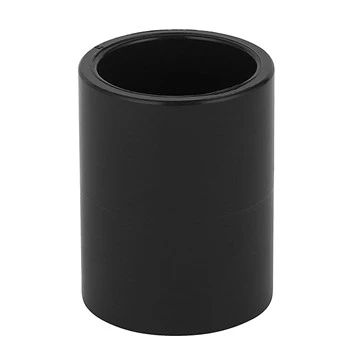
Let’s start with the basics, because a lot of the confusion around PPH (Polypropylene Homopolymer) comes from mixing it up with its cousin, PP-R (Random Copolymer Polypropylene), which is often pushed as a “high-pressure” solution. But PPH is its own beast, with molecular properties that change how it reacts to force, temperature, and time. First, we need to define what “high-pressure” even means here for piping systems. For most standard industrial applications, that’s anything above 10 bar (145 psi) and up to 25 bar (362 psi)—the sweet spot where many metals work reliably, but plastic alternatives start to look attractive for their corrosion resistance, lower cost, and ease of installation.
Early on in my career, I saw a project go wrong because a general contractor assumed all polypropylene fittings could handle 20 bar. They used a cheap, injection-molded batch of PP-R fittings for a chemical processing line that saw regular pressure surges, and within six months, half the joints had cracked. That disaster taught me to never give a blanket “yes” or “no” when someone asks about pressure suitability. PPH fittings aren’t a one-size-fits-all product—their performance depends on four key factors: the grade of PPH resin used, the manufacturing process, operating temperature, and how the system is designed for pressure over time.
Let’s break down the resin first. Not all PPH is created equal. The PPH we use in our fittings is not the same as the low-grade polypropylene used for storage bins or disposable packaging. We source our resin from suppliers that test for melt flow rate (MFR) and tensile modulus—two metrics that directly tie to pressure resistance. For high-pressure applications, we only use PPH with a tensile modulus of at least 1500 MPa at 23°C (73°F). That number tells you how much the material resists stretching under force; higher modulus means it’s stiffer, less prone to flexing when pressure jumps. Low-grade PPH might have a modulus of 1000 MPa or less, and that’s where the trouble starts. Under constant high pressure, those thinner, softer molecules will creep over time—slowly deform, weaken, and eventually fail.
Then there’s the manufacturing process. Injection molding is standard for PPH fittings, but not all injection molding is done the same way. We use a process called “pressure-assisted injection molding” for our high-pressure PPH fittings. That means when the molten PPH is injected into the mold, we apply additional pressure to pack the material tightly, eliminating voids that can act as stress points. A lot of small manufacturers cut corners here, using gravity-fed molding that leaves tiny air pockets inside the fitting. Those voids might not show up during a hydrostatic test at installation, but under cyclic pressure (like when a pump turns on and off multiple times a day), those pockets become crack initiators. I’ve seen a 2-inch PPH elbow from a no-name supplier split open at a hydrostatic test because of a single void in the weld joint—something a proper pressure-assisted mold would have prevented.
Temperature is another make-or-break factor. Polypropylene, including PPH, is a thermoplastic, so its strength drops as temperature rises. At room temperature (23°C), our high-pressure PPH fittings have a continuous pressure rating of 25 bar, but push that up to 40°C (104°F), and that rating drops to 18 bar. At 60°C (140°F), it’s down to 10 bar. That’s a non-negotiable: if your application operates at elevated temperatures, you can’t assume the same pressure rating as you would for cold water or ambient-temperature chemical lines. I had a food processing client a few years back who tried to use our standard high-pressure PPH fittings for a hot water line running at 55°C. They didn’t adjust for the temperature derating, and after three months, a joint leaked. We worked with them to swap in our temperature-stabilized PPH fittings, which are compounded with additives to slow the strength loss at higher temps, and that line has run flawlessly for seven years now.
Now, let’s talk about what “high-pressure” actually means for PPH in real-world use. There’s a myth floating around that PPH can’t handle any pressure above 10 bar, but that’s not true for engineered fittings. We have clients using our PPH fittings for applications up to 22 bar, but only when the system is designed correctly. For example, a municipal wastewater pumping station that handles raw sewage uses our PPH fittings for discharge lines that run at 18 bar—because the lines are buried, temperatures stay consistent around 15°C, and we designed the system with pressure-relief valves to avoid the surges that damage fittings. On the flip side, I had a client try to use PPH fittings for a high-pressure gas line that ran at 30 bar and cycled up and down every hour. That was a bad fit—PPH isn’t rated for pressures that high, and the cyclic stress would have caused creep rupture within a year.
Wait, let’s get into creep rupture, because that’s the big one people overlook when comparing plastics to metals. Metals deform elastically under pressure—bend them, and they spring back (up to a point). Plastics deform viscoelastically, meaning they deform slowly over time even if the pressure stays constant. For PPH fittings, this is measured with a “hydrostatic design basis (HDB)” value, which is the maximum stress the material can handle for 100,000 hours (about 11 years) without failing. For our high-grade PPH, the HDB at 20°C is 12 MPa, which translates to a pressure rating that works for most industrial high-pressure applications. If you exceed that by even 10%, the creep rate accelerates, and you’re looking at a much shorter service life.
A lot of people ask why not just use metal for high-pressure lines? The answer usually comes down to corrosion and cost. In chemical processing, for example, stainless steel fittings can corrode when exposed to acids, alkalis, or even saline solutions—PPH is inherently resistant to a huge range of chemicals, so you don’t have to line the pipes or worry about pitting over time. Also, PPH fittings are about 30% cheaper than comparable stainless steel fittings, and they weigh a fraction, so installation is faster and less labor-intensive. But that only holds if you’re staying within the pressure and temperature limits.
I want to be clear here: PPH fittings aren’t suitable for every high-pressure application. If your system runs at pressures above 25 bar, or if it has extreme cyclic pressure (like hydraulic lines that pulse every few seconds), PPH is probably not the right choice. But if you’re in the 10 to 22 bar range, with consistent temperatures below 60°C, and a system designed with proper pressure management, PPH fittings can outlast metal ones.
Let me share a recent success story to back this up. Last year, a petrochemical client came to us with a problem: their existing carbon steel fittings were corroding in a line that handled a mild caustic solution at 16 bar. They’d tried PP-R fittings, but those started leaking after eight months because the caustic was slightly above their rated temperature. We supplied them with our high-pressure, temperature-stabilized PPH fittings, and 14 months later, their maintenance team reported zero leaks. They even did a pressure test last month, and the fittings held steady at 16.5 bar—above their operating pressure, which is exactly what you want.
Now, how do you know if PPH is right for your high-pressure application? Here’s what I tell every client: first, get your exact operating parameters: maximum pressure, minimum and maximum operating temperature, type of fluid, and whether there are any pressure surges. Second, ask your supplier for the material’s HDB value and the manufacturing process details—if they can’t tell you those, walk away. Third, design the system with a safety factor. We recommend a 4:1 safety factor for PPH fittings, meaning you size the system so the operating pressure is no more than 25% of the maximum rated pressure. That might sound conservative, but it’s how we avoid the failures that give PPH a bad name.
I’ve seen too many projects cut corners here. A few years back, a small manufacturing company bought cheap, untested PPH fittings from a online marketplace for their 12-bar compressed air line. They installed them without any pressure relief, and when a compressor surge hit, one of the fittings blew apart. No one was hurt, but the line was out of service for three weeks, costing them tens of thousands of dollars in downtime. That’s the risk when you skip the engineering and go for the cheapest option.
So, to circle back to the original question: Are PPH fittings suitable for high-pressure applications? The answer is, “it depends.” If you’re working within the design limits of engineered PPH—10 to 22 bar, consistent temperatures under 60°C, a properly designed system with pressure management, and a supplier that uses high-grade resin and proper manufacturing processes—yes, they can be a great choice. They offer corrosion resistance, lower cost, and easier installation than metal fittings, and if specified correctly, they’re just as reliable. But if you’re looking at pressures above 25 bar, extreme cyclic loading, or high operating temperatures, PPH isn’t the right fit.
As someone who’s been in this business for over a decade, my advice is to never take a supplier’s word for it. Ask for test data: hydrostatic test reports, HDB values, material certifications. Don’t buy generic PPH fittings off the shelf—they’re not engineered for pressure. The right PPH fitting for high-pressure use is a product that’s been tested under conditions that match your project, not a one-size-fits-all part made for low-pressure plumbing.
If you’re working on a project and aren’t sure whether PPH fittings can handle your high-pressure needs, I’d be happy to walk you through your options. We test every batch of our high-pressure PPH fittings to ensure they meet industry standards, and we’ve helped hundreds of clients across industries design systems that work reliably with PPH. Don’t guess when it comes to piping—get the right data, and work with a supplier who’s got the experience to back it up.
References
ASTM D1505, Standard Test Method for Density of Plastics by the Density-Gradient Technique
ASTM D638, Standard Test Method for Tensile Properties of Plastics
ISO 1167, Thermoplastics pipes, fittings and assemblies for the conveyance of fluids — Determination of the resistance to internal pressure
Plastics Pipe Institute. (2020). Thermoplastic Piping Systems Design Handbook. National Association of Plastic Distributors Association.
PPH Fittings I’m the kind of supplier who answers calls at 7 a.m. on a Monday, who’ll send you a copy of a test report within an hour, and who’s seen enough piping failures to know that the right fit isn’t just about price—it’s about matching the material to the job. If you’ve got a high-pressure application and want to make sure you’re choosing the right fittings, reach out to our team to discuss your project. We’ll provide honest, unbiased guidance, no sales pitch attached.
Xiamen Sanideng Plastics Industry Co., Ltd.
Xiamen Sanideng Plastics Industry Co., Ltd. is well-known as one of the leading pph fittings manufacturers and suppliers in China. Please feel free to buy or wholesale high quality pph fittings for sale here from our factory. For price consultation, contact us.
Address: No.169, Tong Hong Road, Tong’an District, Xiamen, China
E-mail: Sandy@sanking.cn
WebSite: https://www.sankingvalve.com/
