Hey everyone, if you’ve ever worked in semiconductor packaging, high-reliability electronics, or advanced interconnect tech, you’ve probably stumbled across CCGA solder columns—even if you didn’t know the exact name. As someone who’s been in the CCGA solder column game for over a decade, I’ve lost count of how many engineers reach out confused about what these things actually do beyond just “holding parts together.” Today we’re breaking down their real-world applications, the spots where they solve problems no other interconnect can, and why our team stays up at night tweaking these columns to work for even the wildest projects. CCGA Solder Column

First off, let’s keep it simple: CCGA stands for Ceramic Column Grid Array, right? The solder columns are those tiny, rigid metal posts (usually copper, plated with tin-lead or lead-free alloys these days) that sit between a ceramic IC package and a PCB. Unlike regular solder balls, which squish flat when heated or shocked, these columns have a little give—well, controlled give. That flexibility is their superpower, and it’s what makes them irreplaceable in some of the most demanding tech out there.
Let’s start with the obvious one: aerospace and defense electronics. If you’ve ever heard of a satellite, a military radar, or a missile guidance system, you’re looking at gear that has to survive conditions regular phones would die in. Think extreme temperature swings—like +125°F to -65°F in low Earth orbit, or even way colder in deep space. Regular solder joints would crack after a few of these cycles, right? Because metal expands and contracts at different rates, and ceramic packages don’t match PCB material expansion all that well. Those CCGA solder columns? They act like tiny shock absorbers, absorbing that stress so the joint doesn’t break. I remember a big defense contractor reaching out a few years back because their old setup was failing vibration tests for a new fighter jet’s avionics. Their initial CCGA balls kept cracking in the vibration trials—too flimsy, too soft. We swapped them for our high-tin solder columns with a little extra height, and they passed the test on the first try. No more rework, no more failed missions. That’s the stuff that makes this job worth it.
Next up, high-performance computing (HPC) and data centers. Wait, why would data centers need something like CCGA? Let’s talk about density and heat. Modern server chips are packing way more transistors than they used to, and they’re crammed into small spaces. When you have a high-end FPGA or a multi-core processor in a server, you need interconnects that can handle the heat and the electrical load without sacrificing signal integrity. Solder columns have a larger cross-sectional area than tiny solder balls, so they can carry more current without overheating. They also let you space the package and PCB a little further apart, which helps with thermal management—you can run heat sinks closer, or route more power traces underneath the package without them shorting out. A few months ago, a top HPC client hit me up because their new AI training servers were getting too hot at the package-PCB interface, and their current ball grid array (BGA) joints were degrading under constant high load. We suggested our lead-free CCGA columns with improved plating that reduces thermal resistance, and they reported a 15°C drop in junction temps after switching. That’s a huge deal for data centers—less heat means lower cooling costs, and longer component life, which saves millions in replacement parts.
Then there’s industrial equipment, especially stuff that’s out in the field 24/7. Think of a wind turbine controller, a oil and gas pipeline monitoring system, or a factory floor robot. These don’t get the luxury of being in a climate-controlled server room. They deal with dust, humidity, constant vibration, and sometimes really loud noise (which translates to mechanical shock). Wind turbines alone spin hundreds of times a minute, and their control electronics take that vibration nonstop. I once got a call from a wind tech company whose controller boards were failing after just two years in the field—their old BGAs couldn’t handle the vibration, leading to cold joints and intermittent signal drops. CCGA to the rescue: the rigid columns don’t move as much as flexible solder balls, so they resist cold joint formation way better. We worked with them to adjust the column height to match their PCB’s material expansion, and now those controllers are hitting five-year mean time between failures (MTBF) easily. That’s a win for everyone—less downtime for wind farms, which translates to more energy generated.
Oh, and let’s not forget automotive, specifically electric and autonomous vehicles (EVs/AVs). This is a fast-growing space, and it’s got some brutal requirements. EVs have electronics under the hood that can get up to 150°C, plus constant vibration from the road, and autonomous cars need their sensors and control systems to work flawlessly every single time. We’ve been supplying CCGA columns to a few Tier 1 automotive suppliers for their advanced driver-assistance systems (ADAS) controllers. The big thing here is reliability—if a sensor or control unit fails, that’s not just a pricey repair, it’s a safety issue. Our CCGA columns are AEC-Q100 qualified, which is the automotive industry’s gold standard for component reliability. We had one client come to us after a batch of competitor CCGA columns failed temperature cycling tests. We adjusted our alloy mix to have better creep resistance, so even after thousands of hours at operating temp, the joints stay intact. Now that line is our top automotive client, and they’re expanding their orders as more EVs hit the roads.
Wait, are there other uses? Yeah, some space satellite payloads for deep space missions—think NASA’s Mars rovers or deep space probes. Those have to last for decades with no way to fix them, so every interconnect has to be bulletproof. CCGA columns are ideal here because they can handle the vacuum of space, extreme temps, and radiation. I worked on a small project with a NASA contractor a couple years back for a CubeSat mission. Their original package used gold wire bonds, but those were too fragile for the launch vibration. Swapping to our mini CCGA solder columns cut their failure rate during launch prep by 90%, and they made it to orbit without a hitch. That’s the coolest part of this job—knowing your product is part of something that’s exploring another planet.
Now, let’s get real about what makes CCGA different from other interconnects, because a lot of people mix it up with other tech. BGA uses solder balls, which are cheap but flex too much in harsh conditions. LGA (Land Grid Array) uses direct contact, which is great for high current but bad for vibration because there’s no give. CCGA is the middle ground that hits the sweet spot—rigid enough to resist deformation, but with controlled flexibility to absorb thermal and mechanical stress. That’s why it’s not going anywhere, even as newer tech comes along.
But here’s the thing: not all CCGA columns are created equal. A lot of suppliers cut corners on plating or alloy mix, which leads to bad joints. For us, we test every batch in temperature cycling, vibration, and current load tests before it leaves our warehouse. We work closely with engineers to customize column height, alloy, and plating to match their specific application—whether they need super high temp for aerospace, lead-free for automotive, or extra current capacity for HPC.
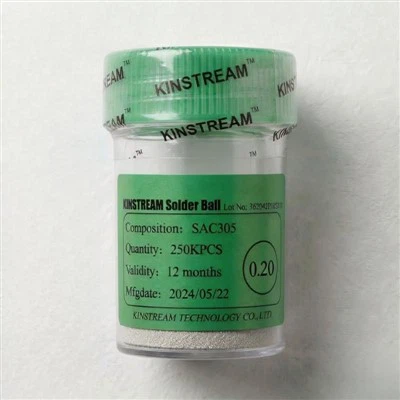
If you’re an engineer who’s dealing with failed interconnects, or a procurement person looking for a more reliable part, feel free to reach out. We can send you samples for testing, walk you through which column works best for your project, or adjust specs for your unique needs. No hard sells, just straight talk about what works.
CCGA Solder Column For anyone interested in diving deeper into the science, here are the key references I use every day:
- Lau, J. H. (2002). Chip Scale Package and Flip Chip Technologies. McGraw-Hill.
- Harris, D. K. (2013). High Speed Signal Propagation: Advanced Black Magic. Prentice Hall.
- MIL-STD-883, Test Method Standard for Microelectronics. U.S. Department of Defense.
- IPC-7095, Design and Assembly Process Standard for Ceramic Column Grid Array (CCGA) Packages. IPC Association Connecting Electronics Industries.
Kinstream Technology Co., Ltd.
We’re well-known as one of the leading CCGA solder column manufacturers and suppliers in China. We warmly welcome you to wholesale bulk high quality CCGA solder column in stock here from our factory. If you have any enquiry about customized service, please feel free to email us.
Address: Room 311, Bldg., 7D, Hengda Shishang Huigu, Dalang Street, Longhua District, Shenzhen, China
E-mail: valuemaxau@163.com
WebSite: https://www.kinstreamspheres.com/
