If you’ve ever stood in a substation control room, watching a secondary circuit tester send precise signal pulses and log fault response times in real time, you know the work isn’t just about flipping switches or reading meters. It’s about bridging hardware that’s built to survive decades of harsh field conditions and software that keeps test data accurate, compliant, and actionable for years. As a supplier of secondary circuit testing equipment, I get this balance more than most—I spend half my days troubleshooting why a tester won’t sync with a substation’s SCADA system, and the other half walking customers through calibrating software that will make their next audit go off without a hitch. Let’s cut through the jargon and talk about what software actually plays nice with the tools we build, because a tester is only as good as the ecosystem it works with. Secondary Circuit Testing Equipment
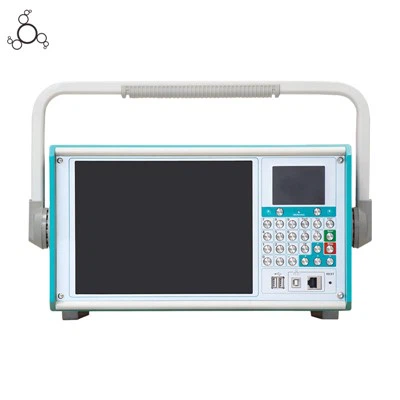
First, let’s ground this: secondary circuit testing equipment includes everything from multifunction relay testers (the workhorses that test overcurrent, voltage, and protection logic) to circuit breaker analyzers and ground fault testers. None of these exist in a vacuum. The software that drives compatibility breaks down into three core categories: native software built specifically for our hardware, industry-standard utility software that every grid operator relies on, and third-party tools for data management and analytics. I’ve seen firsthand how a misstep in any of these can delay a commissioning job, throw a maintenance report off, or even lead to a missed regulatory audit.
Let’s start with native software—this is the software we build exclusively for our testing gear, and it’s where 90% of compatibility problems get solved (or created, if you skip regular updates). For example, when we launched our latest line of portable multifunction relay testers three years ago, we designed native software that runs on both Windows-based field laptops and rugged Android tablets, two tools our customers already own. The key here is that this software isn’t generic: it’s calibrated to our tester’s signal output ranges, so when you run a test on a distribution relay, the software automatically adjusts voltage and current thresholds to match the specific relay model you’re working on. No more manually inputting a 120V threshold for a 480V relay and causing a bad test result.
Here’s a common scenario I see with new customers: they’ll show up to a substation with our tester, plug in the native software on their laptop, and realize their laptop runs Windows 11, and our native software still only supports Windows 10. That’s not a flaw—it’s an old version gap. We addressed that last year with a free over-the-air update that made the native software compatible with Windows 11, and even added a feature that lets you transfer test results directly to your substation’s mainframe via Bluetooth without a physical cable. The mistake some suppliers make is charging for these updates; we’ve found that building ongoing compatibility into native software is non-negotiable for long-term partner relationships.
Next, industry-standard utility software—this is the software every power grid operator, maintenance team, and third-party auditor uses, and it’s where most of the cross-compatibility questions come in. The big three here are SCADA (Supervisory Control and Data Acquisition) systems, outage management systems (OMS), and relay configuration software from major manufacturers like Siemens, ABB, and GE. Let’s break each down because this is where things get technical, and getting it right can mean the difference between a test that takes 2 hours and one that takes 8.
SCADA systems are the brain of the grid, so your secondary circuit tester has to play nice with them, or your test data is useless. The good news is that most modern SCADA systems use IEC 61850 communication protocol, which is the global standard for substation automation. Our native software is fully IEC 61850-compliant, which means you can pull real-time data from your tester directly into the SCADA system, not just store it on your laptop. For example, when you test a feeder relay, the software sends the test’s fault current signature, trip time, and success status straight to the SCADA log—so when the next grid audit rolls around, you don’t have to scan through 100 pages of test printouts to find what you need.
I once worked with a large municipal utility in Ohio that had a problem: their old relay tester worked with their 10-year-old SCADA system, but when they upgraded to a new IEC 61850-based system two years ago, their old tester was obsolete. They reached out to us because they’d heard we offered a firmware upgrade that let our testers sync with their new SCADA without buying new hardware. That upgrade took us three weeks to build, but it saved them over $20,000 in new equipment costs and three months of planning downtime. That’s the kind of compatibility that matters—its not just about making two tools work together today, it’s about future-proofing your investment.
Then there’s relay configuration software from manufacturers. Most secondary circuits use relays from Siemens, ABB, or Schweitzer Engineering Laboratories (SEL), and their proprietary configuration software is non-negotiable. Here’s the catch: your tester has to be able to match the data format these programs use, so you don’t have to manually re-enter relay settings after a test. Our native software is pre-loaded with libraries for over 2,000 relay models from these top manufacturers, so when you connect your tester to a relay, the software automatically pulls the relay’s current configuration, runs the test against that exact setup, and logs the result as a pass or fail compared to the manufacturer’s specifications. No manual data entry, no human error.
I’ve heard horror stories from technicians who showed up to a job with a cheap generic tester, and when they tried to sync it with their ABB relay’s configuration software, the test results were off by 15%. That’s because generic software doesn’t have the manufacturer’s calibration data built in—only the software designed to work with our testers includes those libraries, which we update quarterly as new relay models hit the market. This is why we emphasize that buying a secondary circuit tester isn’t just about the hardware; it’s about the software ecosystem that comes with it.
The third category is third-party data management and analytics software, which is becoming more important as utilities move toward predictive maintenance. A few years ago, all test data was stored on a local laptop or a printed report, but now utilities use platforms like Grid Analytics Software (GAS) and PowerPlan to aggregate test data from hundreds of substations, identify trends, and schedule maintenance before a failure happens. The good news is that our native software is compatible with these platforms via CSV and XML exports, and we even offer an API integration for customers who want to build custom dashboards for their own teams.
For example, a wind farm operator in Texas uses our tester for their 20+ substation secondary circuits, and they’ve built a custom dashboard that pulls test data into their own maintenance management system. The dashboard alerts their team when a relay’s trip time is trending outside of normal parameters, so they can replace it before it causes a wind turbine outage. That’s the power of good compatibility: it turns a one-time test into long-term grid reliability data.
Now, let’s talk about common pitfalls to avoid, because I’ve seen so many teams waste time and money on software that doesn’t work. First, don’t assume that all “industry-standard” software is the same. I’ve had customers tell me they tried to use a $500 generic testing software with our equipment, and it couldn’t sync with their SCADA system because it didn’t have the correct IEC 61850 extensions. Always ask your tester supplier what protocols their software supports, and confirm that it’s compatible with the specific version of SCADA or relay software you use—different versions can have small, easy-to-miss compatibility gaps.
Second, don’t ignore update cycles. Software, like hardware, ages. A tester that worked with Windows 7 in 2015 might not work with Windows 11 in 2025, so make sure your supplier offers free, regular software updates that include compatibility patches. We send out quarterly update emails to all our customers, detailing new compatibility with the latest SCADA versions, relay models, and data platforms, and we never charge for these updates. It’s part of what we consider fair partner support.
Third, test before you buy. A lot of customers wait to test compatibility until they’re on-site, which leads to delays. We offer a 2-week free trial of our native software, so you can test it with your own SCADA system, relay configuration software, or data platform before you buy any hardware. I recommend every customer do this—even if you think two tools will work together, a 2-hour test can save you days of headaches later.
At the end of the day, secondary circuit testing is all about keeping the grid running safely and reliably. The software that works with your testing equipment isn’t just a convenience—it’s the backbone of accurate test data, compliance with regulatory standards, and long-term maintenance planning. If you’re in the market for secondary circuit testing equipment, don’t just look at the hardware specs. Ask about what software it works with, what protocols are supported, and whether the supplier offers ongoing compatibility updates.
If you’re ready to chat about what equipment and software will work best for your grid, substation, or industrial facility, our team is here to help. We’ve worked with utilities across North America, from small municipal systems to large wind and solar farms, and we can help you find a solution that fits your current software ecosystem and future growth plans. Reach out to us to start the conversation.
HV Insulation Oil Tester and Oil Moisture Meter References
- International Electrotechnical Commission. (2019). IEC 61850: Communication networks and systems for power utility automation.
- North American Electric Reliability Corporation. (2022). Transmission Reliability Standards: Substation Automation and Testing Requirements.
- Schweitzer Engineering Laboratories. (2021). Relay Testing Best Practices: Compatibility and Data Management for Secondary Circuit Testers.
- Institute of Electrical and Electronics Engineers. (2020). IEEE C37.118: Synchrophasor Measurements for Power Systems.
Wuhan Jiuhua Jingce Power Equipment Co., Ltd.
As one of the most experienced secondary circuit testing equipment manufacturers in China, we offer a wide range of products with superior quality. Please feel free to wholesale bulk durable secondary circuit testing equipment from our factory. For price consultation, contact us.
Address: 601,Unit 1,Building D4-02,Optics Valley Center,303 OpticsValley Avenue,Wuhan
E-mail: market@wuhanjhjc.com
WebSite: https://www.powertransformertester.com/
